
9 Heat-Tolerant Flowers Georgia Gardeners Can Still Plant in July

In July, Georgia’s red clay bakes hard by noon, and many gardeners quit planting.
But that hot, stubborn ground is exactly where a certain set of summer flowers thrives.
Full sun and thick humidity suit them fine.
These are the flowers worth planting in the thick of a Georgia summer.
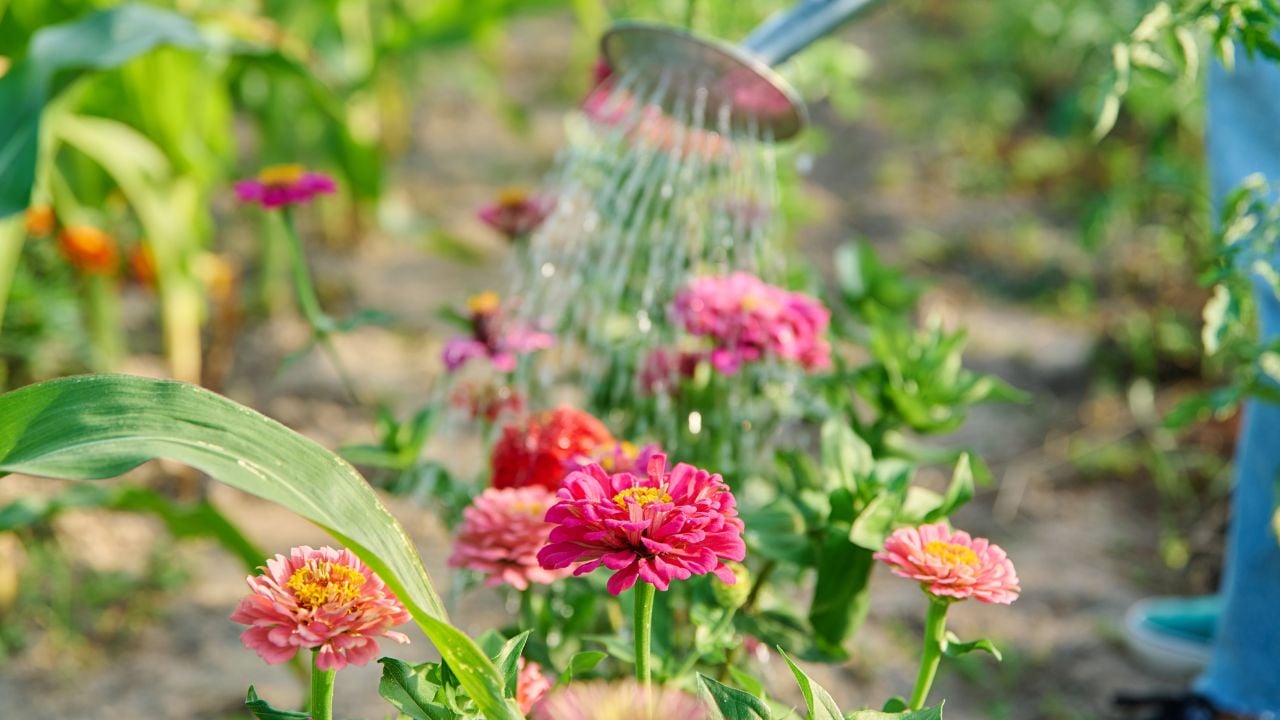
1. Zinnias
Zinnias might be the easiest heat-tolerant flower to start from seed in a Georgia July.
You scatter the seeds on loosened soil, water them in, and walk away.
They sprout fast in warm ground and bloom in under two months. So, a handful sown this week brings color by early September.
Full sun is the only real demand, and the more of it the better.
The ‘Profusion’ and ‘Zahara’ types hold up best against the mildew that creeps in with Southern humidity.
Cut a few for the kitchen table, and more buds open to take their place.
2. Periwinkle
Madagascar periwinkle, the annual vinca sold at every garden center, hits its stride in July heat.
The worse the soil, the better.
The University of Georgia rates it heat- and drought-tolerant and notes that it even grows on poor soils, which is a kind way to describe hard red clay.
Give it full sun to light shade, and it blooms from now straight through to frost.
The ‘Cora’ and ‘Nirvana’ series resist the leaf spot that hit older kinds hard.
Water it too much, and you’ll do more harm than any dry spell could.
One caveat: Wait until the soil is good and warm, which in July is a given.
3. Lantana
Lantana turns a hot, neglected corner into the busiest patch in the yard.
Butterflies and hummingbirds work it all day long.
It wants full sun and almost nothing else, thriving on the same dry heat that stresses everything around it.
Most kinds grow as annuals in the state, but the ‘Miss Huff’ variety survives as far north as zone 7b, which covers nearly all of Georgia.
Plant ‘Miss Huff,’ and it comes back bigger every spring from the Piedmont to the coast.
The clusters shift color as they age, red to orange to yellow on a single stem.
It asks for nothing after that.
4. Angelonia
Angelonia goes by summer snapdragon, and the nickname tells you exactly when it does its best work.
It keeps flowering through the kind of summer heat and humidity that melts a spring pansy.
The spikes stand a foot or so tall in purple, white, and soft pink, holding steady when an afternoon thunderstorm rolls across the Piedmont.
No deadheading required.
It sails from June into September without you snipping a single spent bloom.
Full sun and decent drainage are all it asks, which is why you’ll spot it lining walkways and mailbox beds from Marietta to Macon.
Bees find it fast.
5. Pentas
Pentas cover themselves in star-shaped clusters that hummingbirds can’t leave alone.
The red kind is their first choice.
This is a butterfly magnet with real drought tolerance once it settles into warm soil.
It runs as an annual across most of Georgia and blooms right through summer and fall.
Full sun brings the most flowers, though down in the Coastal Plain a little afternoon shade keeps them from scorching.
Plant a cluster by a porch or kitchen window in metro Atlanta, and you’ll trade the view for a steady stream of hummingbirds.
That’s the best seat in the yard.
Psst! How much do you know about Georgia’s flowers, red clay, and pollinators? Take our quiz and see if you can ace it.
Quiz
Georgia Garden IQ
Answer nine questions on Georgia’s flowers, soil, and pollinators. We bet you can’t get them all right. Prove us wrong?
Georgia named the Cherokee rose its state flower in 1916. Where is the plant originally from?
6. Moss Rose
Moss rose, the low portulaca that spills over edges, might be the toughest flower on this list.
The University of Georgia says few annuals can match it in hot, dry spots.
Its fleshy leaves store water like a succulent, so a dry week does nothing to it.
The flowers open in hot sun and close by evening, in neon pink, orange, and yellow.
Plant it on a baking slope, a rock border, or the strip along a driveway where nothing else lives.
Red clay bank? Perfect.
It reseeds itself, so next summer you may not plant it at all.
7. Globe Amaranth
Globe amaranth, or gomphrena, keeps blooming through August, when heat has fried everything else in the bed.
The papery, clover-shaped blooms hold up to heat, drought, and the thick humidity that settles over the coast.
They come in purple, pink, and white on wiry stems.
Cut them and they dry stiff, holding their color for months in a vase.
Full sun and poor soil are plenty.
Pollinators still work the little globes deep into the dog days.
It's the flower left standing at the end of a Valdosta summer.
8. Celosia
Celosia is the flower that makes people stop and ask what it is.
The plumes look like frozen flames in red, orange, and gold, and a crested type curls like coral or a brain.
Strange, we know.
It thrives in full sun and the muggy heat that settles over the Piedmont by July.
Poor drainage is the one thing that kills it, so keep it out of low, soggy ground.
Kids reach out to touch the velvety plumes every time they pass.
The color holds right up to frost.
9. Sunflowers
Sunflowers feel like a spring crop, but July still leaves a long runway in Georgia.
Sow the seed now, and short-season varieties bloom in under two months, well ahead of the first fall frost.
The 'ProCut' and other quick types are made for a late start like this.
Give them full sun and elbow room, and the stalks shoot up fast in warm soil.
Summer heat only speeds them along.
Birds and bees will find every open head.
A back fence, a mailbox post, a row along the garden's edge, and you've got a wall of gold by early fall.
Leave the spent heads standing, and finches will pick them clean through the first cold snap.
7 Georgia State Parks Locals Swear By
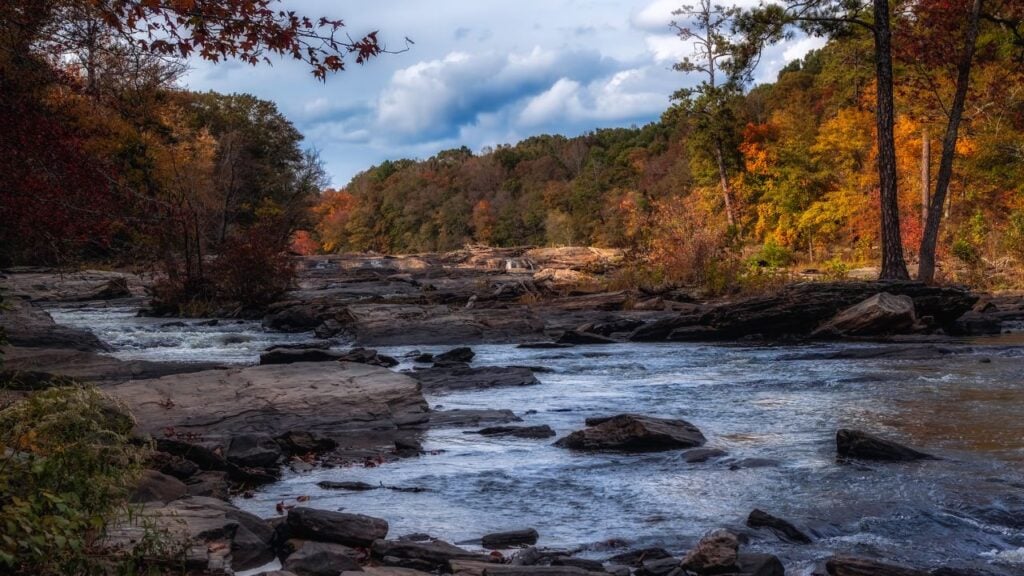
Georgia keeps more than 60 state parks, and the crowds pile into maybe five of them.
That leaves the best hiking, paddling, and stargazing to the locals who know which gravel road to turn down.
7 Georgia State Parks Locals Say Beat the Famous Ones
10 Georgia Sayings That Baffle Outsiders
A tourist pulls into a Macon gas station, asks for the fastest way north, and drives off with no idea what the clerk just told him.
The words all sound familiar, but strung together the Georgia way, they leave outsiders completely lost.
