

9 Hotel Charges Nevada Travelers Often Don’t Notice Until Checkout

A federal rule that took full effect in May 2025 forces any hotel charging a mandatory resort fee to show it in the price before booking.
That rule has limits.
Many charges never surface until the folio prints at checkout, long after the card is already on file.
These are the hotel charges Nevada travelers often don’t notice until checkout.
Note: This is general information, not legal or financial advice. Hotel fees, disclosure rules, and taxes are subject to change.
1. Paying to Park on the Strip
Self-parking on the Las Vegas Strip is a charge that never appears at a gate or a payment kiosk, the way it does at a typical parking garage.
Nevada’s tourism authority estimated 38.5 million visitors arrived in Las Vegas last year, a figure that counts every day-tripper and local resident along with every guest who booked a room.
Nevada resorts bill a self-parking fee straight to the room folio instead of collecting it at the garage.
A driver who never sees a toll arm or a payment screen can come and go all week without a second thought.
The charge is stacking up the whole time, and it doesn’t show until the bill prints at checkout.
Self-parking commonly runs $20 a night on weekdays and $25 on weekends at MGM Resorts and Caesars Entertainment properties, the two operators that control much of the Strip’s garage space.
That’s according to Las Vegas Review-Journal reporting on the rate structure.
Not every hotel does this.
Sahara Las Vegas skips the charge, advertising free valet and self-parking for every guest.
That’s a savings of up to $50 a day compared to neighboring Strip hotels that still bill for it.
What the Federal Fee Rule Covers in Nevada
The Federal Trade Commission’s (FTC) rule on unfair or deceptive fees reached full effect on May 12, 2025, and it applies to every Nevada hotel.
The rule only forces a mandatory charge, mainly the resort fee, into the price a guest sees before booking.
A charge tied to something optional, like parking, a pet, or a guaranteed early key, doesn’t count as mandatory, so a resort can add it later without breaking the rule.
2. Resort Fee on a Free Room
A Nevada resort fee doesn’t disappear just because a casino host hands over a free room.
Free rarely means free.
Comped rooms typically still carry the nightly resort fee unless the guest holds a top loyalty tier.
Caesars Diamond status and The Cosmopolitan’s Gold or Platinum tier are two examples that waive it, per the longtime Vegas insider guide Las Vegas Advisor.
A host or the rewards desk can waive that fee as a goodwill gesture, especially for a guest who spent time at the tables or the slots.
Asking rarely hurts.
3. Buying Back the Clock
Guaranteed early check-in and late checkout both carry a price tag at several Las Vegas resorts.
The clock costs extra.
Treasure Island charges $40 plus tax for priority check-in as early as 11 a.m., well ahead of the standard 3 p.m. window.
The same $40-plus-tax rate extends checkout to 3 p.m. instead of the standard 11 a.m., per the hotel’s posted terms.
A traveler who gets a friendly nod at the front desk for an early key or a few extra hours often assumes the favor is free.
A late checkout sometimes is free, after all, when the hotel isn’t full.
That assumption, not a refusal to ask, is what lands the $40 on the folio at checkout instead of on the reservation up front.
4. Minibar’s Motion Sensor
A Las Vegas Strip minibar can charge a guest before they’ve decided to buy anything.
Several Strip resorts have used a sensor system for years that bills an item automatically once it’s lifted for more than about 45 seconds.
That’s per Las Vegas Review-Journal reporting on the technology.
The sensor charges even if the item goes right back where it was.
Curiosity has a price.
A single item removed and replaced can still post a charge.
Caesars Palace and The Cromwell are the only two Strip resorts with minibars, according to the same reporting.
Both can bill a guest up to $75 for their “personal use” storage of outside food and drinks.
MGM’s comparable properties, including Aria, Bellagio, and Mandalay Bay, price that same option at $50, per the same report.
That charge lands on the same folio as the room and the resort fee.
The charge reads like a surprise at checkout even though the sensor did its job the moment a hand touched the shelf.
5. Bellagio’s Smoking Cleanup Fee
Bellagio doesn’t need a guest to admit anything before charging for evidence of smoking in a non-smoking room.
The room comes first.
Bellagio’s posted hotel policy sets a minimum deep-cleaning fee of $500 for a standard room and $1,000 for a suite, plus tax.
That fee applies when housekeeping finds evidence of smoking, vaping, or marijuana use.
That inspection happens after a guest has already checked out, not during the stay.
The charge shows up on the final folio, or a credit card statement, days after a traveler has already left Nevada.
Nevada’s Indoor Air Act only bans smoking in enclosed public places, so a hotel’s room-by-room smoking policy is a separate, private rule each resort sets and enforces.
A traveler who steps onto a balcony or cracks a window, thinking that solves the problem, can still trigger the fee if the smell or a sensor gives it away.
6. Nonrefundable Pet Fee
A pet-friendly Nevada hotel doesn’t waive its cleaning charge just because a guest already paid a deposit.
Westgate Las Vegas Resort & Casino charges a mandatory $150 nonrefundable cleaning fee for a dog reported at the front desk.
That’s separate from its refundable $150 pet deposit.
Both charges apply to the same pet, on the same reservation.
The nonrefundable half posts the moment the front desk logs the pet.
Pets still cost extra.
The refundable deposit only becomes a cost if the room comes back damaged.
A traveler budgeting for one $150 charge can be caught off guard seeing two identical numbers on the same folio.
7. Third Adult in the Room
A third or fourth adult sharing a room can trigger a nightly charge at Nevada casino resorts.
Grand Sierra Resort in Reno adds $25 per person, per night, for a third or fourth adult staying in a room booked for double occupancy.
The search never mentioned it.
A group splitting one room to save money can end up paying nearly as much as two rooms would have cost.
That’s what happens once the per-person charge compounds across a multi-night stay.
8. Reno’s Tourism District Surcharge
Reno adds a charge to its hotel bills that a Las Vegas resort fee doesn’t carry: A government tourism-district surcharge layered on top of the room.
Grand Sierra Resort charges a $42.95 nightly resort fee plus 13% room tax, a charge the FTC’s fee rule already forces into the price a guest sees before booking, the same as on the Strip.
On top of that, Grand Sierra adds a separate $2 daily Reno-Sparks Convention and Visitors Authority (RSCVA) surcharge.
That’s a government-collected tourism assessment rather than a hotel-set fee, per the property’s posted terms.
It stays easy to miss.
This charge belongs to the RSCVA, not to Grand Sierra, so a rate comparison built around a hotel’s advertised resort fee often misses it entirely.
A traveler who budgeted for a single resort fee based on Grand Sierra’s advertised total can still find this second, smaller charge riding along on the Reno folio.
9. Grand Sierra’s Optional Housekeeping Fee
Grand Sierra Resort’s optional housekeeping charge can show up on a bill even though a guest never discussed it at check-in.
Grand Sierra Resort’s posted terms list an optional $1.99-a-night housekeeping fee that applies to all rooms and suites, without spelling out whether a guest has to decline it up front or can have it removed after the fact.
That wording leaves room for the fee to appear on a bill a guest never remembers discussing.
Front desk staff who explain the fee clearly at check-in are more likely to remove it on request.
That ambiguity favors the resort.
A resort fee already covers plenty, but it doesn’t include a gratuity for housekeeping.
This separate line does different work, even though it looks like more of the same charge.
Psst! Which of these Nevada hotel fee claims are true, and which just sound true? Flip each card to find out.
Nevada Travelers Have More Leverage Than They Think
Nevada’s hotel charges leave travelers more leverage than the folio suggests.
Asking works.
A host or the rewards desk can remove a resort fee or another charge as a gesture of goodwill.
Active players succeed more often than casual guests expect, per Las Vegas Advisor’s coverage of the practice.
Las Vegas Advisor’s guidance on resort-fee disputes points to solid proof as the key.
A booking confirmation that advertises “free Wi-Fi” on top of a fee that already bills for Wi-Fi is one example.
That kind of documentation gives a guest a shot at a credit-card refund after checkout.
The same guidance names casino hosts, not front-desk clerks, as the employees likely to have the authority to drop a fee like this.
That authority usually kicks in before a guest ever settles the folio.
7 Nevada Ghost Town Finds That Are Illegal to Remove
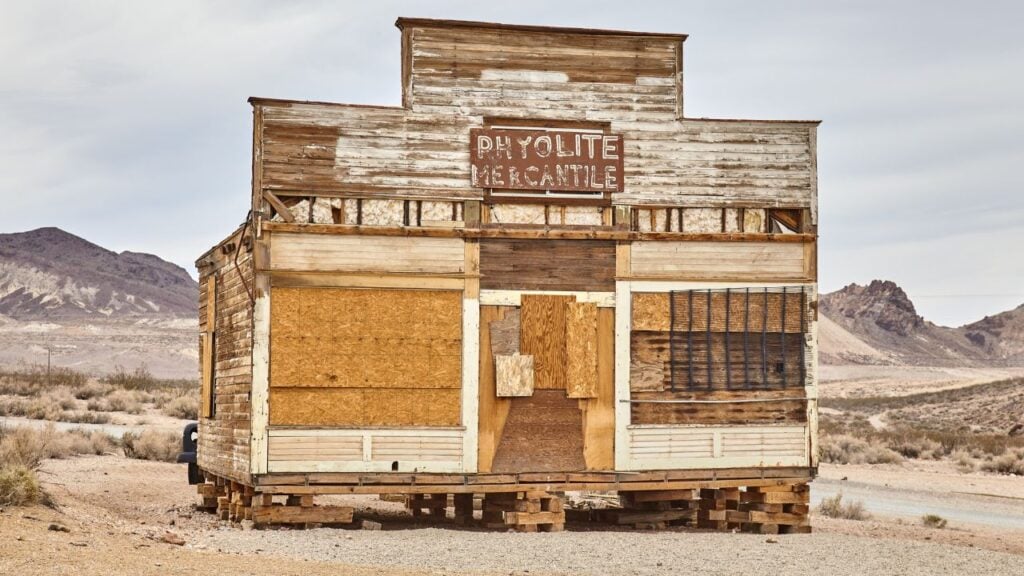
A hiker crouched at the edge of Rhyolite’s old Bottle House might see a shard of green glass and think it’s litter.
Federal law calls it evidence of a vanished mining boom, and pocketing it can turn a day trip into a felony case.
7 Nevada Ghost Town Finds That Are Illegal to Remove
8 WinCo Bulk Bin Mistakes That Cost Nevada Shoppers More Than They Save
WinCo’s prices are still some of the lowest in Nevada, and its bulk bins deserve some of the credit.
But not every scoop works out in a shopper’s favor, and a few common bulk-bin habits end up costing more than they save.
8 WinCo Bulk Bin Mistakes That Cost Nevada Shoppers More Than They Save
