
9 Idaho Foods That Horrify Everyone From Out of State

Some of the food Idaho serves makes out-of-state visitors set their fork down mid-bite, while locals ask for seconds without a moment’s hesitation.
These are the Idaho foods that horrify everyone from out of state.
1. Rocky Mountain Oysters
Idaho’s Rocky Mountain oysters aren’t seafood.
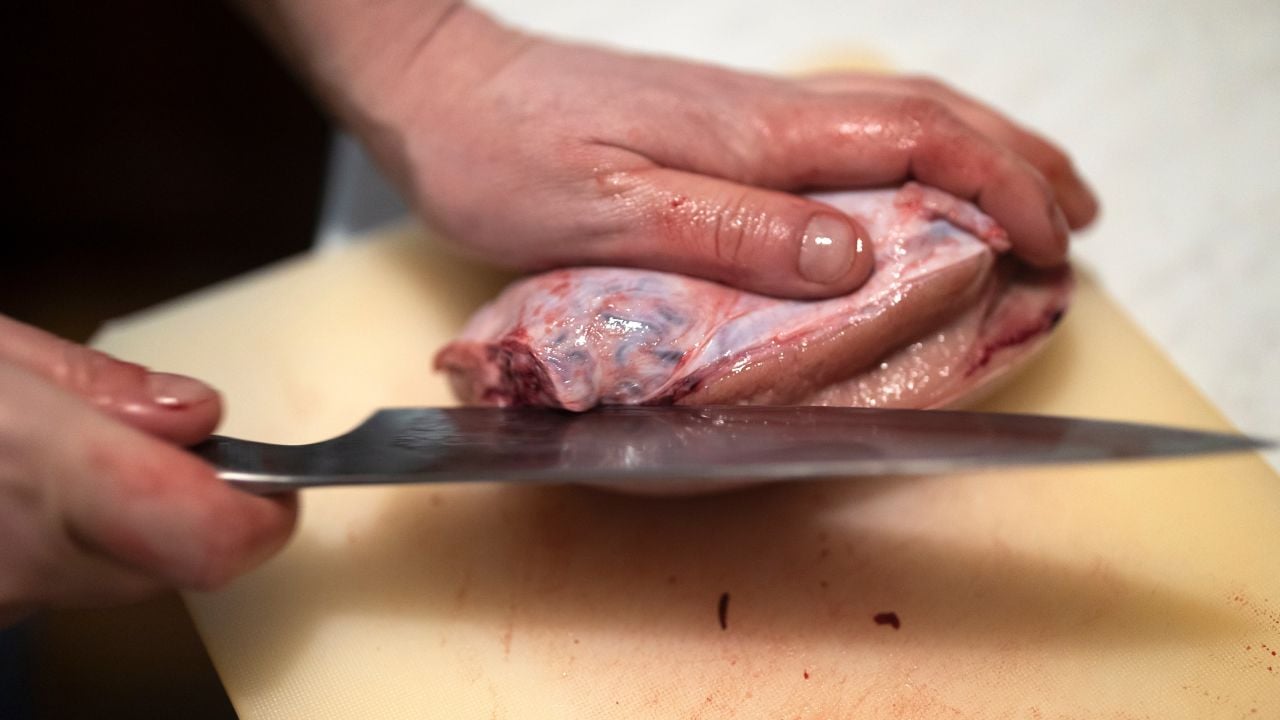
They’re deep-fried bull testicles, breaded and served as a starter at ranch-country restaurants like Indian Creek Steakhouse in Caldwell and Anderson Reserve in Sweet.
Ranchers came up with the dish generations ago, when castrating young bulls left behind parts nobody wanted to throw out.
Nothing goes to waste.
Locals warn newcomers about the dish before they order it, and a few brave souls order it anyway to say they did.
What ‘Prairie Oyster’ Means
Idaho ranchers use a handful of names for the same dish: Rocky Mountain oysters, prairie oysters, calf fries, and cowboy caviar.
All four point to the same fried bull or calf testicles.
A different dish called a prairie oyster is an old hangover-cure cocktail built on a raw egg yolk.
It has nothing to do with the fried version on an Idaho menu.
2. Finger Steaks
Finger steaks arrive at the table looking like a basket of chicken tenders, not the slab of meat the name “steak” promises.
A Boise meat cutter named Mylo Bybee invented them at the Torch Lounge in the late 1950s, according to the Idaho Beef Council.
Nobody explains that up front.
He used steak trimmings that would otherwise have gone to waste, cutting them into strips, breading them, and dropping the strips into the fryer.
Out-of-staters expect a steak to arrive as a slab with grill marks, not as a basket of fried strips next to a pile of fries.
It’s still called a steak dinner on the menu.
3. Fry Sauce
Fry sauce blends ketchup and mayonnaise into a single pink sauce.
The color is the first thing that stops many out-of-state visitors before they dip a fry.
It’s an acquired taste.
Diners and drive-ins hand it over as the default dip for fries, onion rings, and finger steaks alike.
Visitors who grew up choosing between ketchup and ranch don’t understand why locals skipped the choice and mixed both bottles into one.
The condiment’s exact birthplace is disputed with Utah, where Arctic Circle also claims it, but Idaho counters have served it as a matter of course for decades.
The sauce stays cold while the fries stay hot, and that contrast is exactly what throws first-timers off.
4. Idaho Scones
Idaho scones share almost nothing with the crumbly British pastry the name promises, and the mismatch catches out-of-staters off guard before the first bite.
A scone at a local diner is a pillow of deep-fried yeast dough, closer in size to a dinner plate than to a teacake.
It’s served hot with honey butter and jam on the side.
It’s enormous.
Out-of-staters who order it expecting a light, dry biscuit get a plate that could feed two people, with room left for a scoop of ice cream on top.
The Chuck Wagon Restaurant in Lava Hot Springs has served the fried dough slab under the name “scone” for decades.
The name never prepares anyone for what lands on the table.
5. Ice Cream Potato
Idaho’s Ice Cream Potato, served at Boise’s Westside Drive-In, is convincing enough that first-time diners have mistaken it for an actual loaded baked potato before the first bite.
Chef Lou hand-rolls vanilla ice cream in cocoa powder to mimic a potato’s brown skin.
Dessert wins every time.
Whipped cream, crushed cookies, and nuts finish the illusion, right down to the toppings a loaded baked potato would carry.
The drive-in sells more than 60 of them on an average day, according to Mix106.
First-timers hesitate before the first bite every single time, unsure whether dinner or dessert is coming.
Some send the plate back before anyone tells them what it is.
Psst! How much do you know about Idaho? Take our quiz and see if you can ace it.
Quiz
Idaho State IQ
Answer these questions on Idaho geography and history. We bet you can’t get them all right. Prove us wrong?
Which Idaho landmark did National Aeronautics and Space Administration (NASA) astronauts train at before walking on the moon?
6. Idaho Spud
The Idaho Spud candy bar looks less like something from a candy aisle and more like a potato somebody tracked in from the garden.
Chocolate and coconut flakes coat a cocoa-flavored marshmallow center, and the oblong, brown, textured shape reads as a dirt-crusted potato from across the store.
It looks dirty.
Some visitors won't pick up the bar at all.
Idaho Candy Company has made it in Boise since 1918.
It's still the top seller among the company's whole lineup, made from the same downtown building it has used for more than a century.
Out-of-staters who don't know the joke often assume somebody dropped an actual potato in the candy aisle by mistake.
7. Idaho Caviar
Idaho farms sturgeon and sells fish eggs as caviar, in a state many people picture as nothing but potato fields and mountains.
Magic Valley fish farms raise white sturgeon in the region's clean spring water and harvest the roe for caviar.
It's an industry the state's fish farmers built up starting in the 1980s.
Idaho ranks second in the country for caviar production, according to the University of Idaho.
The roe comes out olive and brown with pale flecks, not the glossy black many people picture.
A single ounce runs over $100.
Few visitors guess right.
Visitors who picture Idaho as farmland and mountains don't expect fish eggs among its exports.
They don't expect a delicacy that costs more per ounce than a ribeye.
8. Basque Chorizo
Idaho's Basque chorizo shares almost nothing with the Mexican-style chorizo many Americans picture when they hear the word.
Idaho's Basque Block in Boise exists because the city has the largest concentration of Basque descendants anywhere in the country.
That traces back to sheepherders who immigrated from northern Spain and southern France more than a century ago.
It never matches expectations.
Bar Gernika serves the sausage on a French roll: Firm, garlicky, and cured, closer to a dry Spanish sausage than the loose, crumbly chorizo many Americans expect.
Out-of-staters order it expecting one texture and get a completely different sausage on their plate.
The letdown hits at the first bite, long before anyone explains why.
9. Wildfire Morels
Morel mushrooms push up through the ash within a year of a wildfire, and pickers who know the burn maps get there first.
The honeycombed caps look almost alien, hollow all the way through, nothing like a mushroom from a grocery store bin.
They earn a second look.
Raw or undercooked morels commonly cause stomach cramps and vomiting within hours.
A full cook is the only thing that neutralizes them.
The state's national forests attract commercial pickers by the truckload after a big burn.
Each picker races to fill totes before the mushrooms dry out or a competitor beats them to the same patch.
Roadside buying stations spring up within days of a fire going out, paying by the pound to whoever shows up with the fullest bucket.
8 Ways Out-of-Staters Break Buc-ee's Etiquette Before They Reach the Brisket
A loudspeaker announces fresh, hot brisket, and half the store turns toward the counter at once.
Regulars already know the drill, and out-of-staters find out the hard way exactly which rule they just broke.
8 Ways Out-of-Staters Break Buc-ee's Etiquette Before They Reach the Brisket
