
9 Little-Known Texas History Stories Even Longtime Texans Haven’t Heard About

Ask a lifelong Texan to name every battle fought on their own soil, and most stop at two: The Alamo and San Jacinto.
There were dozens more.
A war between neighboring counties, a ranch that once covered ten counties, and a U.S. Army program that swapped horses for camels never made it into the textbook.
The stories below never made it past a Texas history footnote.
1. Texas’ Deadliest Battle
Ask Texans which battle killed the most people on their home ground, and many will guess the Alamo.
Wrong battle.
On August 18, 1813, a rebel army fighting to free Texas from Spain ran into a royalist force under Gen. Joaquín de Arredondo in an oak forest twenty miles south of San Antonio.
The rebels lost.
Arredondo’s army lost fifty-five men that day.
The rebel force lost more than 1,300, cut down in the fighting or executed in the days that followed.
Their bodies stayed where they fell for nine years, until a new Mexican governor finally ordered the bones gathered and buried in 1822.
More Texans died that one afternoon than during the entire Alamo siege twenty-three years later.
Most people outside a history class have never heard the battle’s name.
2. Army’s Camel Corps
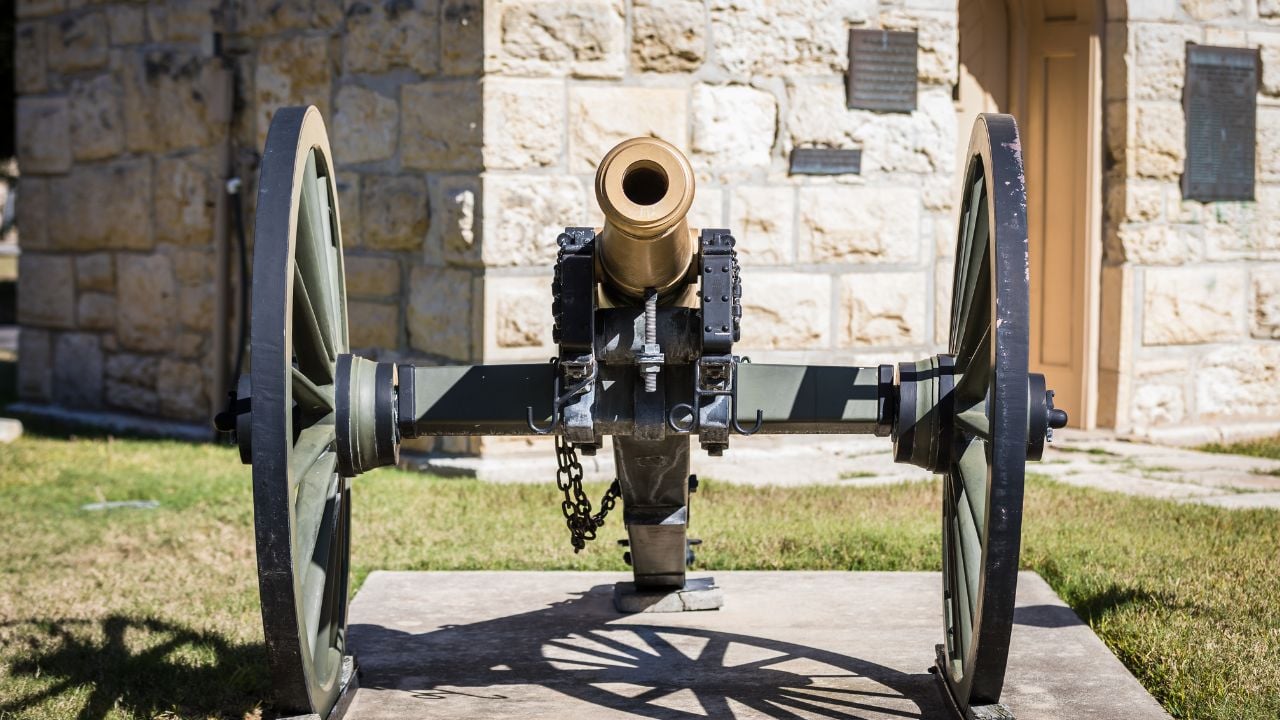
Camp Verde sat in the Texas Hill Country, sixty miles north of San Antonio, and for a few years it looked nothing like an Army post.
It looked like a caravan.
Secretary of War Jefferson Davis pushed Congress to buy camels for desert transport, and in 1856 the first shipment landed on the Texas coast and marched to Camp Verde for training.
Camp Verde became headquarters to forty camels.
The camels needed less water and less forage than mules, and officers who tested them on survey missions across West Texas wrote back impressed.
Then the Civil War hit.
Confederate troops took over the post in 1861, and by the time the Army got it back, nobody in Washington cared about camels anymore.
The herd scattered, sold off, or turned loose.
Texas ranchers spent decades telling stories about wild camels wandering the brush country.
3. Comfort’s Frozen Flag
In the small town of Comfort, an American flag has flown at half-staff for more than a century and a half.
It never goes back up.
The flag marks a mass grave from an ambush in the Texas Hill Country, when Confederate soldiers caught a group of German settlers trying to reach Mexico rather than fight for the Confederacy.
It happened in August 1862, and Texans call it the Battle of the Nueces.
Nineteen died in the fighting.
Confederate soldiers executed nine more, wounded and captured, a few hours later.
Locals gathered the remains after the war and buried them at Comfort, under the Treue der Union monument, German for “loyalty to the Union.”
It’s the only monument of its kind built on former Confederate ground, a Union memorial standing over the men it honors.
By long tradition, that flag has never gone back to full staff since.
4. Sam Houston’s Forgotten War
Shelby and Harrison counties sit in the piney woods of East Texas, and for five years in the 1840s, neither one had a working court system.
Neighbors killed neighbors instead.
The Regulator-Moderator War started as a land dispute and grew into ambushes, lynchings, and street fights between two rival factions, killing more than thirty men by 1844.
Sam Houston, then president of the Republic of Texas, first joked that he’d just declare the region its own country and let the feuding families sort it out.
He changed his mind.
Houston rode into East Texas himself in August 1844, set up headquarters at San Augustine, and talked both sides into a peace treaty.
5. Civil War’s Last Battle
Robert E. Lee surrendered at Appomattox on April 9, 1865, and most history books treat the Civil War as finished from that day forward.
Nobody told South Texas.
On May 12 and 13, 1865, more than a month later, Confederate and Union troops fought the Battle of Palmito Ranch along the Rio Grande, thirteen miles east of Brownsville.
The Confederates won.
Col. John “Rip” Ford led about 300 Confederate troops against a Union force under Col. Theodore Barrett, and Barrett’s men retreated after a hard artillery push.
Thirteen days later, Confederate forces in Galveston surrendered for good, ending the war on the same stretch of Texas coastline where Confederate troops had kept the fighting going a month past Lee’s surrender.
Psst! How much do you know about Texas’ history? Take our quiz and see if you can ace it.
Quiz
Texas History IQ
Answer these questions on Texas’ founding, missions, and Rangers. We bet you can’t get them all right. Prove us wrong?
How long did the decisive Battle of San Jacinto last, the fight that won Texas its independence in 1836?
6. Texas' Forgotten Cart War
Mexican and Tejano teamsters ran the freight business between the port of Indianola and San Antonio through the 1850s, hauling goods faster and cheaper than their Anglo competitors could manage.
Anglo haulers didn't take the competition well.
Starting in mid-1857, gangs along the road began burning carts, stealing freight, and killing or wounding Mexican drivers in what came to be called the Cart War.
Local authorities looked away.
Mexico's minister in Washington filed a formal protest, and Gov. Elisha Pease told state lawmakers he could no longer guarantee the safety of anyone hauling freight along that road.
Lawmakers approved militia funding within weeks, and once armed escorts began riding with the cart trains, the violence stopped almost as fast as it had started.
7. Blast That Changed Gas Safety
Natural gas has no smell on its own.
Every American who's ever caught a whiff of a gas leak and called for help owes that warning to a Texas tragedy most people outside the state have never heard of.
On March 18, 1937, an odorless gas leak beneath the school in New London ignited and killed close to 300 students and teachers, still the deadliest school disaster in American history.
The school had tapped a cheaper, unmetered gas line to save about $300 a month.
Nobody smelled the leak building up beneath the building because raw natural gas doesn't smell like anything.
Texas lawmakers responded fast.
Within months, the state required a distinct odor added to every gas line in Texas, a rule other states copied, which is why a gas leak still smells like rotten eggs today.
8. Wartime Prisoners on Texas Soil
By the end of World War II, Texas was holding more enemy prisoners than anywhere else in the country.
Nearly 79,000 of them.
The Geneva Convention required captured soldiers to serve their time somewhere with a climate similar to where they'd been caught, and the Army decided Texas was close enough to North Africa for the Germans rounded up there.
Camps went up fast.
By mid-1944, thirty-three camps were running across the state, at installations like Camp Bowie, Camp Maxey, and Camp Swift, roughly double what any other state held.
Many prisoners worked Texas farms and cotton fields while American men were off fighting, and some wrote home that the food and the open sky beat anything they'd known in the war.
9. Navy That Fought for Yucatán
The Republic of Texas had its own small navy, and for a stretch in the early 1840s, it fought for Mexico's breakaway Yucatán instead of its own coastline.
When the Yucatán peninsula declared independence from Mexico in 1841, President Mirabeau Lamar let the Texas Navy hire itself out to the rebels for $8,000 a month, defending Yucatán's coast from Mexican warships.
Sam Houston hated the deal.
He took office soon after and tried to call the fleet home, but the ships stayed in the fight anyway.
In May 1843, Texas warships Austin and Wharton squared off against the Mexican Navy at the Battle of Campeche and forced the blockade to lift.
A country that barely had a navy of its own had just helped force back somebody else's national fleet.
9 Texas Laws Still on the Books That Sound Made Up
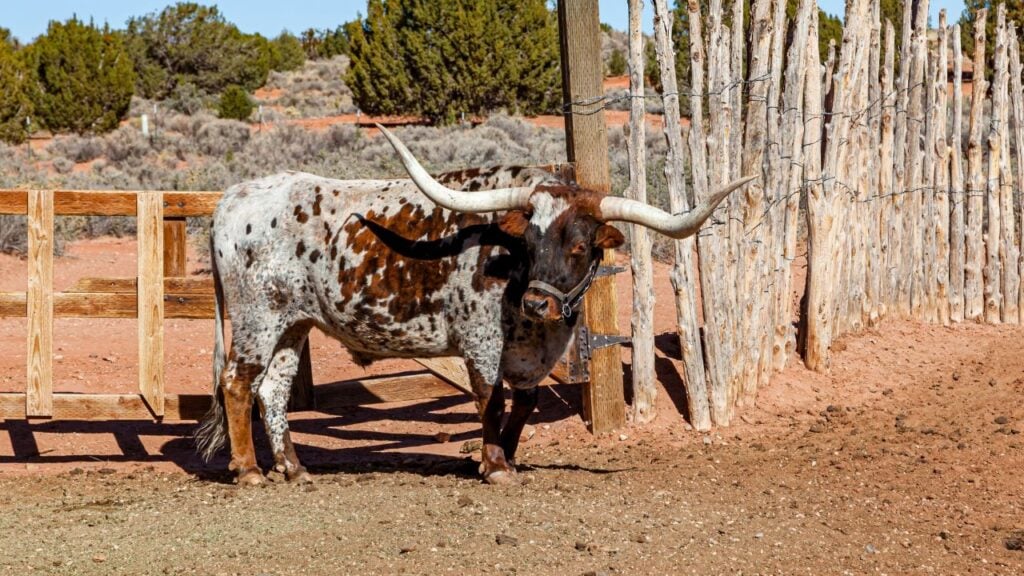
Texas' statute books are still packed with rules the courts gutted years ago, and nobody ever bothered to erase them.
A few of them would get a modern Texan laughed out of the room for even asking.
9 Texas Laws Still on the Books That Sound Made Up
9 Foods Texans Swear by That the Rest of America Won't Touch
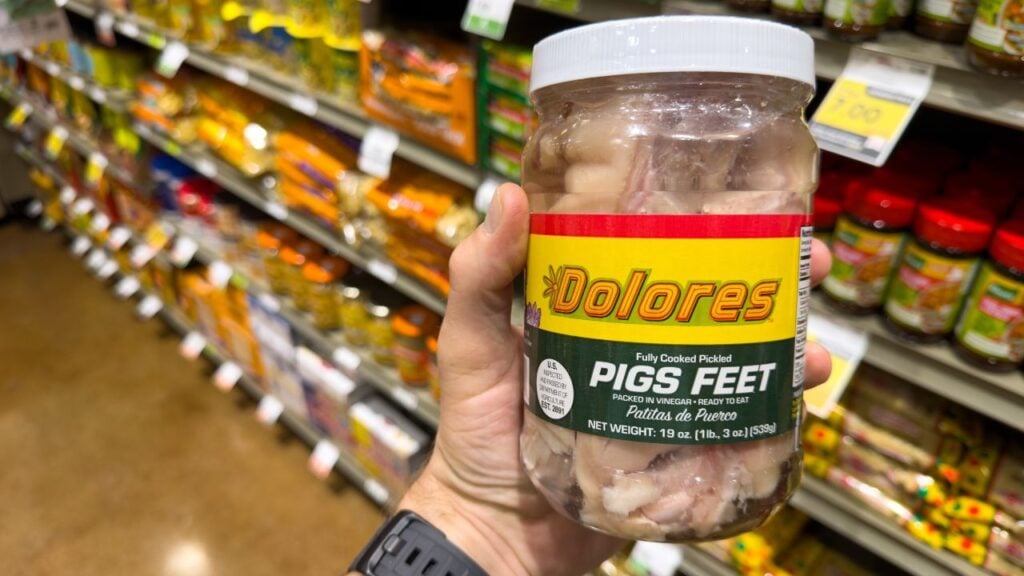
A newcomer sits down at a Texas breakfast table, and the host hands her a bowl she can't identify.
She takes one bite, works out what's inside it, and decides toast is safer.
9 Foods Texans Swear by That the Rest of America Won't Touch
