
9 Maryland Foods That Horrify the Rest of the Country

A cook on Maryland’s Eastern Shore fries a slice of scrapple and slides it next to some eggs.
Tourists are better off asking what’s in it after they’ve eaten.
These are the Maryland plates that horrify the rest of the country.
1. Muskrat for Dinner
Out in the marsh country of Dorchester County, people eat muskrat.
Fire halls and church suppers serve it stewed with sage and red pepper until the meat slides off the bone.
The National Outdoor Show in Golden Hill has run since 1938.
It crowns a men’s and a women’s world champion muskrat skinner on the last weekend of February, in front of a full house.
The 2026 program also ran a muskrat skinning demo on stage and a wild game tasting over in the exhibit hall.
Some trappers call it marsh rabbit.
The name fools nobody.
2. Eating the Mustard
Crack a steamed crab in Maryland, and you’ll find a bright yellow paste inside.
Locals go after it before they touch the claws.
Out-of-staters assume it’s mustard that leaked in off the table.
It’s an organ.
The hepatopancreas does the work of a liver and a pancreas in a blue crab, and Chesapeake families have argued for decades over whether to eat it or scrape it away.
Marylanders who eat it call it the sweetest bite at the table.
Tell a guest from Nebraska what they just swallowed, and the picking stops cold.
3. Snapping Turtle Soup
Turtle soup never left the Eastern Shore.
Hunters’ Tavern, inside Easton’s Tidewater Inn, still serves snapping turtle soup with a carafe of sherry beside the bowl.
You add the sherry yourself.
Maryland licenses a commercial snapping turtle harvest in tidal water.
A shell has to measure at least 11 inches before anyone can sell the turtle.
Gilded Age dining rooms went through so much diamondback terrapin that they nearly wiped out the species.
Marylanders order the snapper soup without a pause.
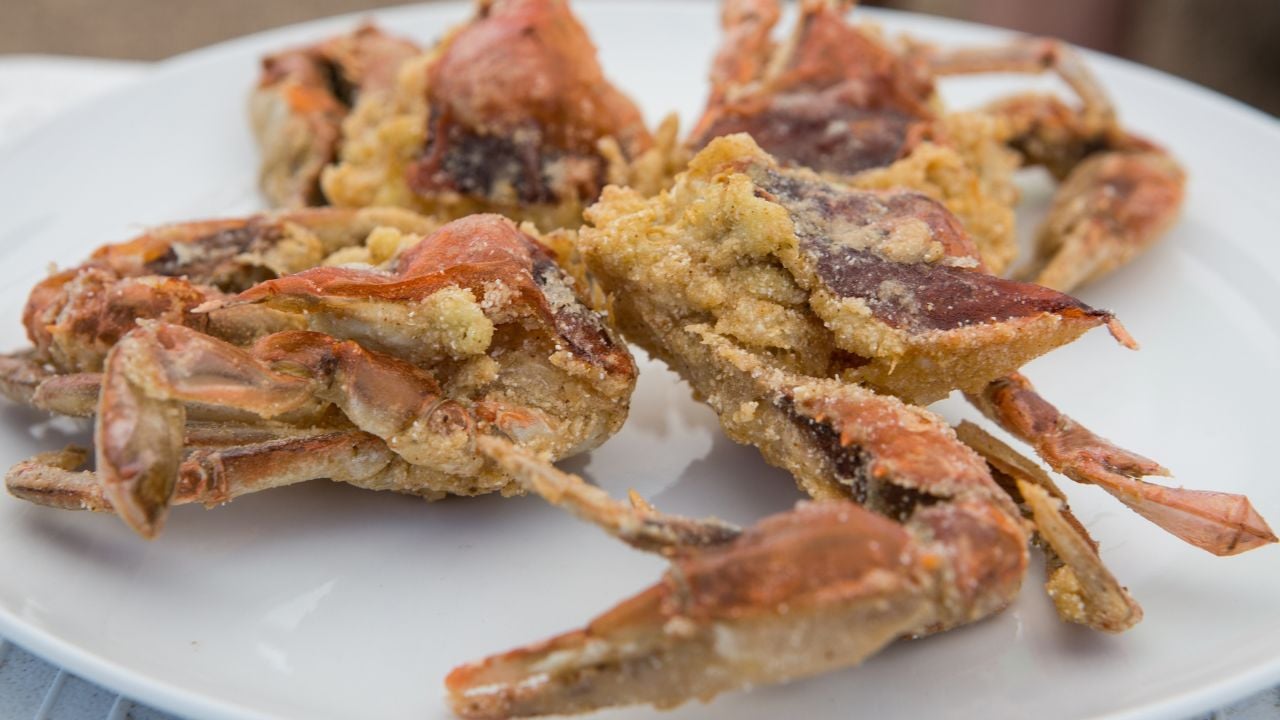
4. Whole Soft-Shell Crabs
Maryland’s own crab eaters can’t agree on soft-shell crabs.
You eat the crab whole, shell and legs and all, between two slices of white bread, with the legs hanging out past the crust on both sides.
Of the state’s hard-crab eaters, only about half will touch a soft crab, the owner of Conrad’s Crabs in Parkville told the Baltimore Sun.
The other half say ick.
Many of the holdouts have never tried a soft crab.
Blue crabs shed their shells to grow, and watermen work the short window before the new shell hardens.
The season runs six to eight weeks.
That argument outlasts it every year.
5. Scrapple for Breakfast
Many Marylanders eat scrapple beside their eggs, from Baltimore rowhouses out to the farms along the Choptank.
Snouts, livers and hearts go in, ground with cornmeal, pressed into a loaf, chilled, then sliced and fried until the edges crackle.
Nothing goes to waste.
The Baltimore Sun calls it the city’s favorite breakfast meat, which tells you how settled the question is.
Eastern Shore families pick sides on scrapple brands.
Then they start in on ketchup versus syrup.
6. Sauerkraut With Your Turkey
Baltimore families set a bowl of sauerkraut on the Thanksgiving table, right between the mashed potatoes and the gravy.
Marry into one of those families, and that bowl is the first thing you’ll ask about.
German immigrants brought the kraut.
By the time Thanksgiving became a national holiday in 1863, about a quarter of the city had come from Germany.
The habit outlasted the language.
Locals defend it on flavor, since the tang cuts straight through a plate of gravy.
Guests from out of town hear that defense every November and pass the bowl along untouched.
The bowl comes back around.
Psst! How much do you know about Maryland food? Call each card before you flip it and see how many you can get right.
7. Lake Trout That Isn’t Trout
Carryout counters across Baltimore sell a fried fish sandwich called lake trout.
It never came from a lake.
There’s no trout in it, either.
It’s whiting, breaded, deep fried, and handed over on two slices of white bread.
Nobody in Baltimore is confused.
Newspaper ads were already selling whiting as lake trout back in 1937, and restaurants kept the prettier name because it moved more fish.
The sandwich still comes with fries and a shake of hot sauce.
8. Stuffed Ham Served Cold
Cooks in St. Mary’s County pack a cured ham with kale, cabbage, onion, and enough crushed red pepper to make your eyes water.
Then they boil it for hours and let it go cold before anyone gets a slice.
It’s meant to be cold.
Oral tradition traces the dish to enslaved cooks in the county in the early 1700s, working with the scraps a plantation smokehouse handed down.
A historic marker went up at the St. Clement’s Island Museum in March 2026 naming St. Mary’s the birthplace of stuffed ham.
Families slice it thin onto rolls at Easter and at Christmas.
9. Old Bay on Ice Cream
Many Marylanders stopped saving Old Bay for crabs a long time ago.
It goes on popcorn, corn on the cob, french fries, watermelon, and, yes, ice cream.
The Daily Scoop in Pasadena scoops Old Bay ice cream, and Smith Island Baking Company sells its own out of Crisfield.
Gustav Brunn opened a spice shop across from the wholesale fish market after landing in Baltimore in 1938.
He worked out the blend that became Old Bay during World War II, and McCormick bought the recipe in 1990.
A visitor tastes celery salt and paprika in a dessert and stops halfway through the cup.
Locals order a second scoop.
Marshmallow in the Middle
A Maryland snowball is finely shaved ice in a cup.
Locals want it topped with melted marshmallow.
The marshmallow goes inside.
Snowball stands bury it in the middle so it doesn’t run down a kid’s arm, and first-timers hand the cup back, sure the stand forgot the marshmallow.
Lisa Soudry, who runs the Summer Shack in Lutherville, put marshmallow orders at 60 percent of her customers.
She also remembers a woman from Florida telling her that asking for marshmallow back home got her a look like she had three heads.
Bill Gay, who still runs Icy Delights stands from Dundalk to Parkville, told the same magazine in 2016 that his seven shops went through 30 five-gallon buckets of marshmallow a week.
Egg custard is the flavor underneath most of it.
Peppermint Stick in a Lemon
The lemon stick is half a lemon with a peppermint stick pushed down into the middle, and you pull the juice up through the candy.
It works like a straw.
The porous kind of peppermint stick draws the juice through, while a hard candy cane won’t pull anything up at all.
Flower Mart in Mount Vernon has handed them out since 1911.
Organizers came into the 2026 festival with 8,000 of them prepped, after selling 7,200 the year before.
That’s a lot of lemons.
The candy softens as it sits, so the last few pulls taste more like peppermint than lemon.
Bite it in half too early, though, and you’re standing in Mount Vernon holding a broken candy stick and a lemon.
Two Saltines and a Fish Cake
Before crab cakes took over Baltimore menus, corner stores ran on coddies.
A coddie is salt cod mashed with potato, fried into a patty, then set between two saltines with a stripe of yellow mustard.
You eat the crackers too.
Fannie Cohen worked out the recipe in the early 1900s, when her husband, Leonard, wanted to sell crab cakes at their Bel Air Market stall and she wanted something kosher on the counter instead.
The Cohens sold coddies off trucks around the city.
Shops kept a tray on the counter into the 1970s.
A few delis have brought them back, mustard and all.
A Cookie Buried in Fudge
The Berger cookie is a thin round of cake under a thick slab of chocolate fudge.
You barely see the cake.
Henry Berger opened a bakery in East Baltimore in 1835, and the cookie outlasted the family bakery.
Grocery stores across Maryland stock them, and the bakery ships boxes to people who moved away and miss them.
Leave a box in a hot car for an afternoon, and you’ll spend the evening scraping fudge off the wrapper.
16 Childhood Snacks Marylanders Swore Were Gourmet
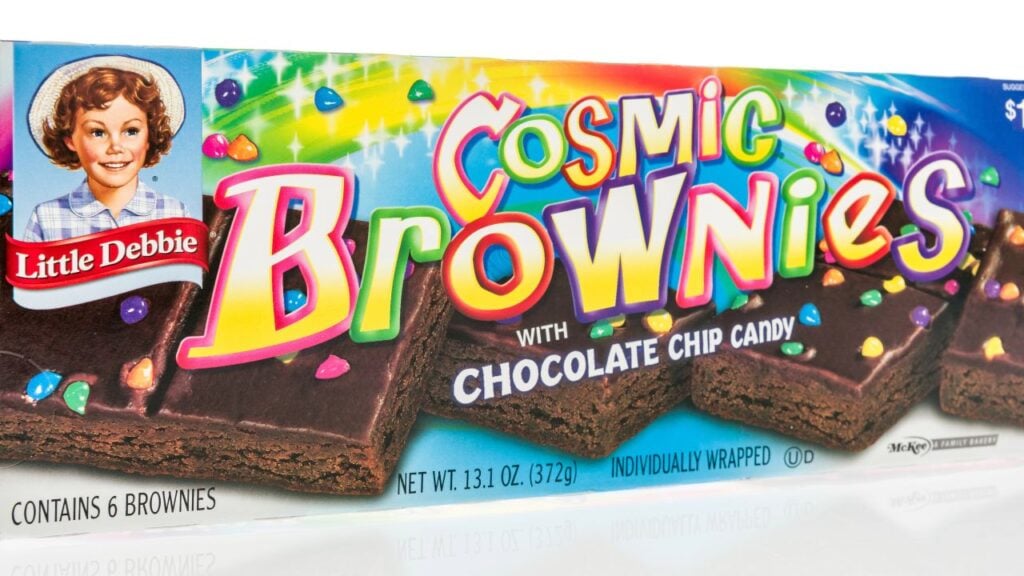
A Lunchable felt like a five-star spread, and a neon cup of Jell-O passed for fancy.
None of it held up, and every kid who packed it swore otherwise.
16 Childhood Snacks Marylanders Swore Were Gourmet Even Though They Weren’t
17 Mistakes Marylanders Make in Target’s Grocery Aisle

Target’s grocery aisle rings up higher than the shelf tags led you to believe.
A few habits at checkout cost Marylanders more than the impulse buys ever do.

Have you ever heard of chocolate soup. My grandma from Poland used to make it. It’s a sweet dark soup with egg noodles. I found out later it’s duck blood and I don’t know if it’s even available anymore