

9 Nebraska Sayings That Leave Out-of-Staters Completely Lost

You’re a couple of states from home, chatting with someone new, and a word totally normal to you slips out.
Suddenly the person you’re talking to is nodding politely and clearly puzzled.
It can happen to any Nebraskan.
These are the Nebraska words and sayings that leave out-of-staters completely lost.
1. Runza
Runza names both a bread pocket baked around ground beef, onions, and cabbage, and the Lincoln-based chain that sells it.
The cabbage isn’t optional.
If you order a runza two states over, don’t be surprised by a puzzled look and a longer explanation than a sandwich should need.
Volga German immigrants brought the recipe in the 1870s, and a University of Nebraska at Kearney history lesson says the same pocket goes by bierock outside the state.
By the company’s account, the first Runza restaurant opened in 1949 near Pioneers Park in Lincoln, started by Sally Everett and still run by her family.
The chain chose not to go national so the bread you get stays fresh.
2. Tanking
Cross into Nebraska, and tanking stops meaning a losing season.
It means floating a river in a round livestock watering tank.
Nebraska Game and Parks traces the idea to the Sandhills, where the tank is ordinary ranch equipment.
Outfitters fit each tank with benches or a small picnic table for three to six riders, running seven to ten feet across in hard plastic or galvanized metal.
A trip lasts two to six hours on rivers like the Middle Loup, the Calamus, the Elkhorn, and the Niobrara.
Bring a cooler and some snacks.
A coworker in Georgia probably won’t picture a river when you mention tanking.
They’ll picture a scoreboard first.
3. Cheese Frenchee
Cheese frenchee is the name for a grilled cheese sandwich, battered whole and dropped straight into the deep fryer.
A restaurant historian’s account traces the frenchee to King’s Food Host, which started as a Lincoln drive-in in 1955.
The chain ran more than a hundred stores by the early 1970s, then filed for bankruptcy in 1974 and never emerged from it.
Say “frenchee” in Vermont, and don’t be surprised if your server hears an order for fries instead.
Visit Nebraska, the state tourism office, puts it on its list of six traditional Nebraskan foods.
Try Don & Millie’s for a frenchee, with tomato soup, ranch, and ketchup on the side.
The sandwich outlived the chain.
4. Dorothy Lynch
Dorothy Lynch sounds like a neighbor, and across the state it’s the name of an orange salad dressing built on tomato soup.
Flatwater Free Press reports that Dorothy Lynch first served the dressing in 1952 at the American Legion club she ran with her husband, Arthur, in St. Paul, Nebraska.
The Lynches sold the recipe in 1964 to Mac Hull, a recent law graduate, who built the Tasty Toppings factory in Columbus and later moved it to Duncan.
The dressing is still made in Duncan today.
The dressing’s reputation is split down the middle: Many love it, many love to hate it.
Almost nobody outside the state recognizes the name, even though the company now ships it nationwide.
You’ll find it poured over taco salad, pizza, and fries, plus casseroles and marinades.
The color is the giveaway.
Grow Nebraska, a local product promoter, sent the dressing to all 50 states and 11 countries in the year before Flatwater’s 2026 story.
Ask for it by name in Denver, and the blank look you get traces straight back to that recognition gap.
5. Pivot
Pivot is farm-talk shorthand for a long sprinkler arm on wheels that rolls in a slow circle around a well.
Frank Zybach of Platte County built the first one in 1948 and received his patent in 1952.
The early machines came out of Columbus.
Zybach sold the manufacturing rights to Valley Manufacturing, now Valmont Industries, in 1954, and Nebraska Extension calls it the oldest center pivot manufacturer.
That’s homegrown engineering.
Irrigated acres in Nebraska grew from about 4 million in 1960 to more than 9.3 million in 2022.
That kind of density is why the word became local shorthand for finding your way around.
With pivots this common, giving directions by them counts as normal here, the way it wouldn’t anywhere with fewer of them.
Say it at a cookout outside farm country, and many people will picture a basketball move before a sprinkler.
Those are the green circles you see from a window seat.
If a farmer tells you to turn past the third pivot, you now know what to look for.
6. Sandhills
Sandhills is the everyday name for the state’s ranching country.
Say it out loud to an out-of-stater, and you’ll watch them guess beach before ranch.
The name covers a stretch of north-central Nebraska of roughly 19,300 square miles that Nebraska Game and Parks calls the largest stabilized dune system in the Western Hemisphere.
Grass holds the sand down, so what you see is rolling green hills and what you’re standing on is dune.
That’s cattle country.
The native plant count is nearly 700 species, and the region is one of the largest intact native grasslands in North America.
Beneath the grass sits the Ogallala Aquifer, which the same agency estimates at 700 to 800 million acre-feet of groundwater.
The next time you hear someone mention the Sandhills, picture pasture and windmills, not surf.
7. Unicameral
Nebraskans call their state legislature the Unicameral, and the name comes from its one house.
Say “my senator” in Nebraska, and you mean a state lawmaker.
Say it almost anywhere else, and people assume you mean Washington.
Nebraska’s Legislature describes itself as the only single-house state legislature in the country.
Voters approved the switch in 1934, 286,086 to 193,152, after George Norris of McCook drove the state campaigning for it and wore out two sets of tires.
The first one-house session met in 1937.
Every member is a senator.
Party labels stay off the ballot too, another unique feature of Nebraska’s system.
How the Unicameral Is Built
Nebraska’s Unicameral seats 49 senators today, up from 43 in its first session.
That first session in 1937 ran 98 days and passed 214 bills.
That single-house setup is also why “my senator” means something different here than it does anywhere with two legislative chambers.
8. Butter Brickle
Butter brickle is an ice cream flavor, toffee folded into vanilla, and Visit Nebraska credits Omaha’s Blackstone Hotel with inventing it in the 1920s.
That same hotel kitchen also gets credit for the 1925 Reuben sandwich, though brickle is the word that matters here.
One kitchen claims both.
Ask for butter brickle outside the Midwest, and you’ll likely stall on the name itself, not the toffee-and-vanilla scoop underneath it.
If your ice cream shop has never heard of it, that tracks with how the name works outside Nebraska.
9. The Good Life
“The Good Life” took hold as a phrase in the early 1970s, a Nebraska TV station reports.
The Nebraska Examiner notes the legal state slogan is something else: “Welcome to NEBRASKAland: Where the West Begins,” on the books since 1963.
When a 2014 proposal would have pulled “The Good Life” off the signs, the reaction was later called a firestorm.
The phrase survived.
The tourism commission then tried “it’s not for everyone,” while the economic development office ran a different line, “The Good Life is Calling.”
In 2024, lawmakers passed Legislative Bill 624, 41 to 1, aimed at getting the two agencies to coordinate their messaging.
Say “the good life” in Colorado, and your listener will picture a retirement ad, not a state slogan.
Say it at a Husker tailgate, and you’ve named the state.
Psst! How much do you know about Nebraska’s landmarks and inventions? Take our quiz and see if you can score 100%.
Quiz
Nebraska Trivia Test
Answer these questions on Nebraska’s landmarks, inventions, and firsts. We bet you can’t get them all right. Prove us wrong?
Kool-Aid was developed in which Nebraska town?
The Bugeater Years
Bugeater came before Cornhusker as the statewide nickname, and History Nebraska traces it to the bull bats, birds that fed on the state's plentiful bugs.
The name also fit the poverty-stricken look of parts of the state at the time.
A Lincoln sports editor named Cy Sherman started calling the university team the Cornhuskers in 1900, and by 1907 the name had stuck.
The university's athletic board handed him an inscribed gold football in 1933 for it.
That's a heavy thank-you.
A longtime fan who calls the team the Bugeaters is reaching for a name more than a century out of date.
If you drop "Bugeaters" at a tailgate, someone will either explain it to you or ask you to explain it.
9 Signs Someone Was Raised in Nebraska, Even Decades After They Left
A kid raised on Husker Saturdays carries more than a football habit out of the state.
Some of the signs show up years later, in a kitchen a thousand miles away.
9 Signs Someone Was Raised in Nebraska, Even Decades After They Left
7 Things That Confuse Everyone Who Moves to Nebraska
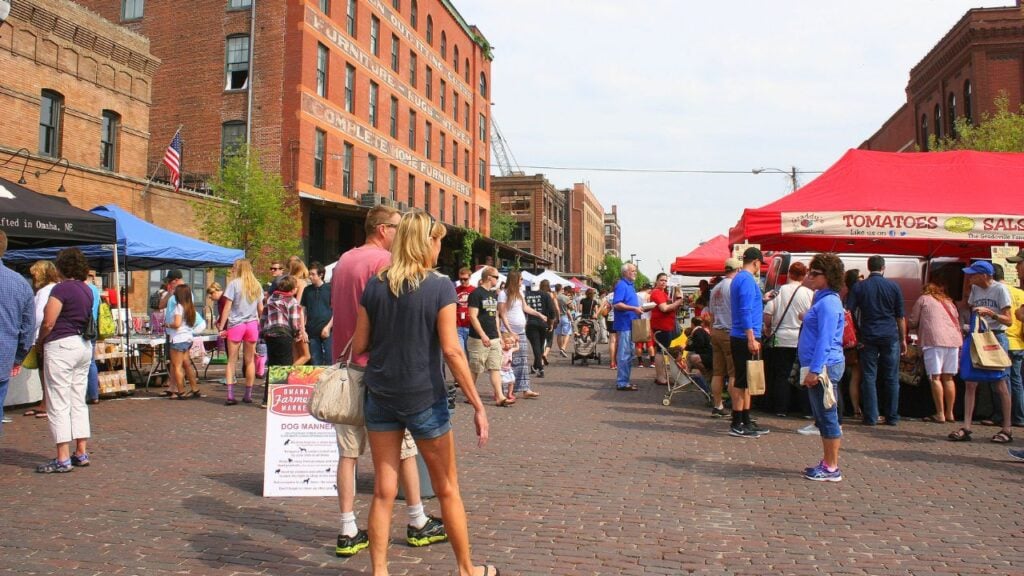
You unpack the moving truck in Omaha, and the confusion starts before the boxes are empty.
Some of the mix-ups are seasonal, and some are about food.
