
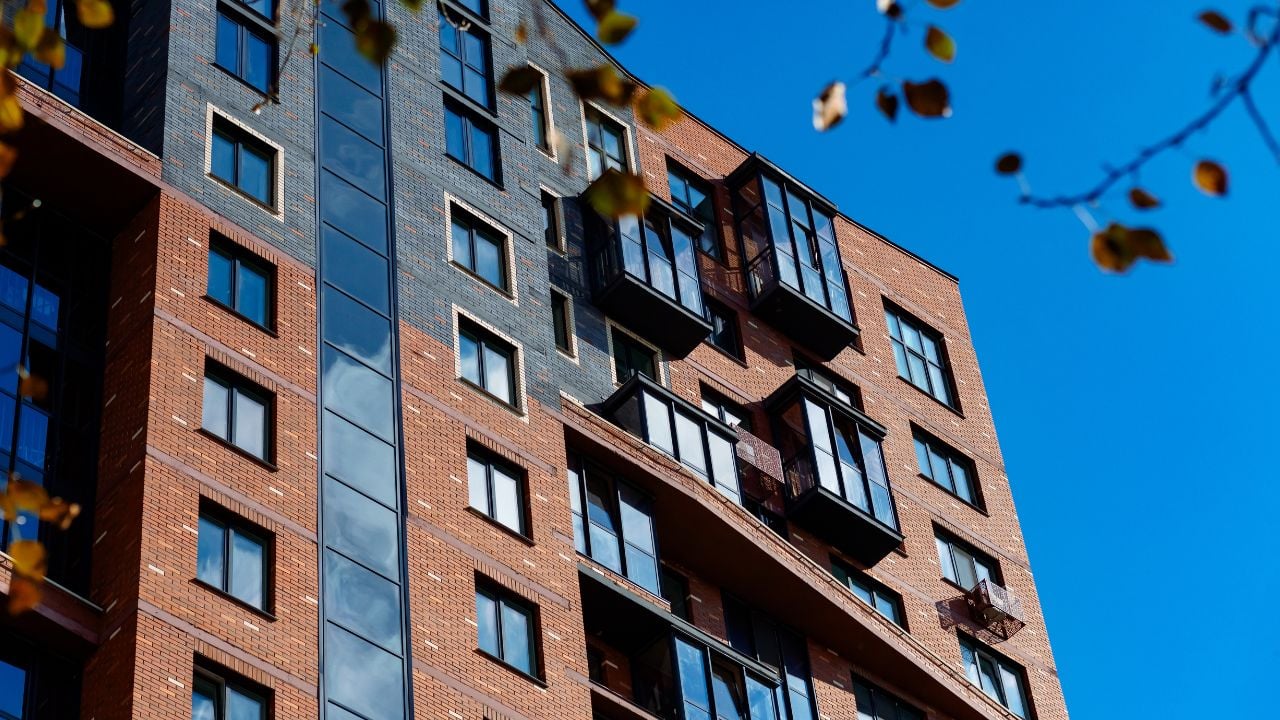
9 New York Co-op and Condo Fees That Blindside First-Time Buyers

A single extra dollar can trigger a New York State tax bill worth thousands.
That’s the mansion tax, and it catches far more first-time buyers than the name suggests.
These are the New York co-op and condo fees first-time buyers rarely see coming.
Note: This is general information, not financial, tax, or legal advice. Fees, tax rates, and building policies are subject to change.
1. Mortgage Recording Tax
Mortgage recording tax is the single largest closing fee on a New York City condo purchase, and it’s a fee an identical co-op purchase never pays.
New York State and New York City combine to charge roughly 1.8% of the loan amount on a mortgage under $500,000, and 1.925% on anything higher.
On an $800,000 mortgage, that’s more than $15,000 due at the closing table.
Co-op buyers skip it completely.
A co-op share isn’t real estate under New York law, so the tax that applies to a house, a condo, or a townhouse never touches a co-op purchase, no matter the loan size.
First-time buyers comparing a condo listing to a co-op listing rarely factor that gap in until their attorney sends the closing statement.
Co-op Vs. Condo Closing Gap
New York City’s mortgage recording tax is only half of what separates a co-op closing from a condo closing.
A buyer financing $800,000 on a condo owes about $15,400 in combined mortgage recording tax alone.
That same $800,000 loan on a co-op owes nothing, since a share isn’t real estate under state law.
Total closing costs for a New York co-op buyer typically run 2% to 3% of the purchase price, according to Brick Underground.
A condo buyer’s bill rises to 3% to 4% of the purchase price, and as high as 5% on a brand-new condo.
On the identical price tag, the condo buyer’s closing bill can run several thousand dollars heavier than the co-op buyer’s.
2. Mansion Tax
New York’s mansion tax ranks among the largest closing fees a first-time buyer faces, and it adds a flat 1% state tax the moment a co-op or condo purchase reaches $1 million.
That 1% doesn’t stay flat once a New York City sale price passes $2 million.
The same state tax rises in steps from there, to 1.25% past $2 million, 1.5% past $3 million, and as high as 3.9% on a sale of $25 million or more.
That’s not a luxury threshold anymore in Manhattan.
A one-bedroom condo near the $1 million line pays the same percentage as a much bigger apartment pays at its own bracket.
First-time buyers often shop with a $999,000 ceiling in mind and never realize the number that changes everything is exactly $1 million.
Cross it by a single dollar, and the mansion tax applies to the entire purchase price, not just the amount over the line.
On a $1,000,001 apartment, that’s more than $10,000 due at closing that a buyer one dollar lower never owes.
One dollar decides it.
3. Working Capital Contribution
A working capital contribution catches New York condo buyers off guard in a way most closing costs don’t.
Many show up in the disclosures before a buyer ever signs.
This one often arrives only after the purchase contract is already signed, tacked onto the closing statement by the condo sponsor.
Many condo sponsors ask new buyers to fund 1-2 months of common charges into the building’s working capital fund at closing.
On a condo with $2,000 monthly common charges, that fee alone can run $2,000 to $4,000.
Unlike a security deposit, a buyer never gets this contribution back.
It’s gone for good.
It funds the building, not the buyer’s future move-out.
A real estate attorney worth hiring checks for it as part of due diligence, since not every listing discloses it upfront.
4. Board Application Fee
Board application fees hit New York co-op and condo buyers whether or not the board ever says yes.
Buildings routinely charge $300 to $1,000, sometimes more, just to process a buyer’s board package.
That fee doesn’t come back.
A board can reject a buyer after months of paperwork, and the building still keeps the money.
Buildings can also require a separate credit-check or move-in coordination fee layered on top of the base application charge, so the total bill often lands higher than the number a buyer first hears.
5. Move-In Deposit
Why do New York co-op and condo buyers owe money before they even get their keys?
Move-in deposits are why.
Buildings commonly collect a deposit in excess of $1,000 before move day, meant to cover damage to hallways, elevators, and lobbies during the move.
A portion typically comes back after a post-move inspection finds no damage.
Not all of it comes back, though.
Buildings can also keep part of it to cover normal wear on common areas, even when nothing is technically broken.
First-time buyers who assume a deposit is fully refundable are often surprised at how much a building keeps.
6. Title Insurance Gap
Title insurance adds thousands to a New York City condo closing that a co-op closing never carries.
A condo buyer typically pays around $3,750 per $1 million of coverage, so a $1.2 million condo can carry a title insurance bill near $4,500.
Co-op buyers pay nothing close to that.
Since a co-op sale transfers shares rather than a deed, there’s no title to insure.
An attorney orders a lien search on the shares instead, typically $200 to $500.
A fraction of the cost.
That single line item is one of the biggest reasons a condo closing statement can run heavier than a co-op closing statement on the exact same price.
7. Co-op Flip Tax
The co-op flip tax rarely shows up in the listing, but it’s often buried in the proprietary lease a first-time buyer signs at closing.
Many co-op buildings charge 1% to 2% of the eventual sale price when a shareholder resells, and buildings on Central Park West, Park Avenue, and Fifth Avenue can charge as much as 3.5%.
That’s a bill first-time buyers rarely notice until years later, the day they finally list their own apartment.
Then it lands.
Some Housing Development Fund Corporation (HDFC) co-ops, the city’s income-restricted buildings, charge higher than 10% of the sale price to keep units affordable for the next buyer.
Who pays it, buyer or seller, is negotiable, and in a slower market some buyers agree to cover part of it just to get the deal done.
8. Sublet Fee
Sublet fees surprise New York co-op buyers who plan on renting their unit out down the road.
A co-op board can charge 10% to 30% of the monthly maintenance just for permission to sublet, on top of whatever rent the buyer collects.
That fee is common in New York co-ops, and some boards raise the percentage the longer a shareholder keeps subletting.
A shareholder who assumed becoming a landlord meant pure profit finds the co-op takes a cut first.
That profit shrinks fast.
Condo owners usually have an easier path, since many condo bylaws let an owner rent out the unit without paying the building any cut at all.
Psst! How much do you know about the history behind New York’s co-ops and condos? Take our quiz and see how many you can get right.
Quiz
NYC Co-op & Condo IQ
Answer these questions on New York co-op and condo history. We bet you can’t get them all right. Prove us wrong?
What did developer Philip Hubert call his pioneering co-op ownership concept when he built The Rembrandt in 1881, considered the first cooperative apartment building in the U.S.?
9. Special Assessments
Special assessments turn a New York co-op or condo owner's predictable monthly bill into a surprise lump-sum fee, layered on top of whatever they already pay in maintenance or common charges.
A board facing a failing roof, a boiler replacement, or a looming Local Law 97 penalty can vote to charge each owner a set amount, sometimes payable over months, sometimes due all at once.
Boards aren't required to give any warning before that vote.
The bill still comes.
New York City's Local Law 97 is pushing more of these assessment fees through board votes right now.
Large buildings that exceed their carbon emissions cap face a penalty of $268 per metric ton over the limit every year they stay over, and boards often pass that cost to owners as a special assessment instead of raising maintenance for good.
An assessment can end once the project is paid off, which is why boards favor it over a permanent maintenance increase.
A first-time buyer who signs a purchase contract in January can be voting on next year's assessment before their first anniversary in the building.
8 Reasons People Are Leaving New York in 2026
More than 400,000 people packed up and left New York for another state in a single year, a group roughly the size of Tampa walking out the door in twelve months.
Taxes lead the list of reasons people give for going, but the full list runs longer than a paycheck.
8 Reasons People Are Leaving New York in 2026
9 Things New York Landlords Can Legally Do That Renters Assume Are Illegal
New York's Good Cause Eviction law has spread to more than a dozen cities since it passed in 2024.
Many renters assume it covers every corner of the state by now.
It doesn't, and landlords still have several legal moves that surprise tenants who think the law is fully on their side.
9 Things New York Landlords Can Legally Do That Renters Assume Are Illegal
