
9 North Carolina Foods and Drinks Locals Grew Up On That Outsiders Don’t Get

North Carolina kids grow up ordering Cheerwine like it’s a fifth food group.
Ask a tourist to guess the flavor based on the name, and they never land on cherry cola.
These are the foods North Carolinians grew up on that outsiders don’t understand until they’ve tried them.
1. Livermush and Eggs
A North Carolina kid learns the word livermush before some kids learn the word sausage.
It’s pork liver, head meat, cornmeal, and spices, cooked down and pressed into a loaf you slice thin and fry crisp at the edges.
Piedmont kitchens have served it for breakfast for generations, usually next to scrambled eggs and a biscuit.
The dish runs deep enough that North Carolina lawmakers named it two official festivals, Shelby’s each fall and Marion’s each spring.
Two festivals.
Hand a slice to a first-time visitor without saying the name, and most guess sausage, then ask a lot of follow-up questions once you tell them.
2. Eastern Carolina Barbecue
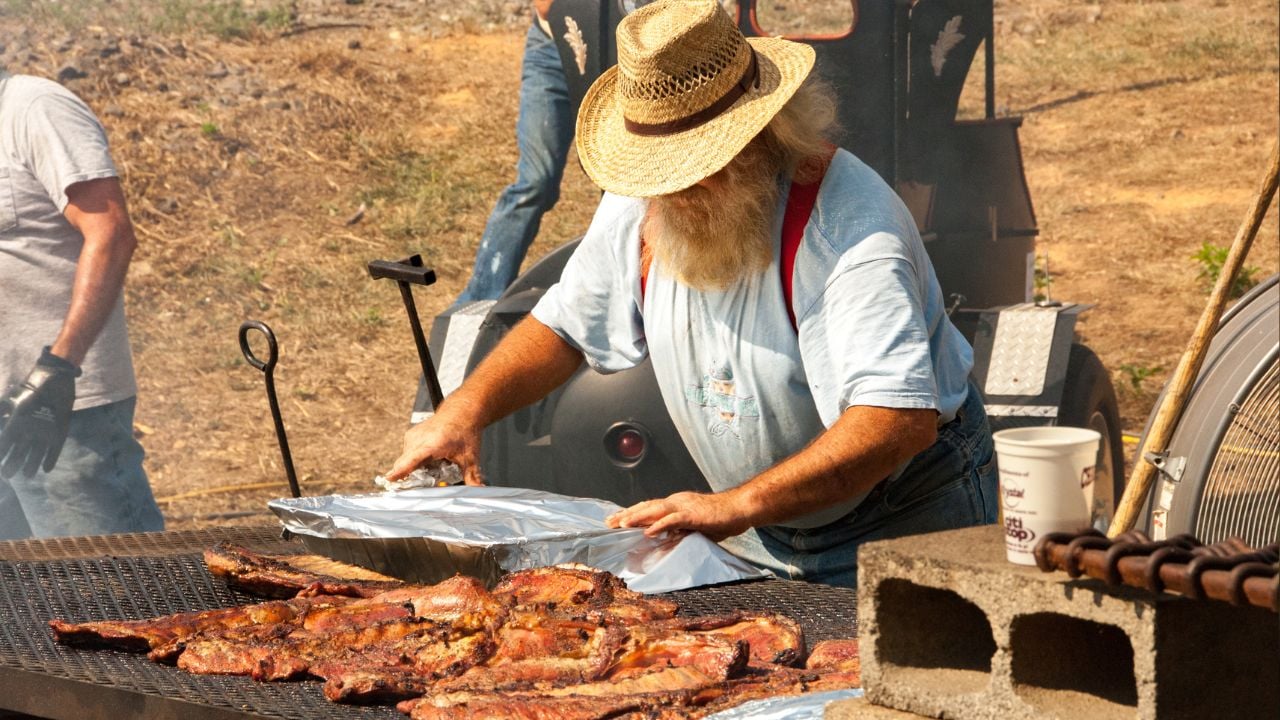
Barbecue in the eastern half of North Carolina means the whole hog, chopped fine, and a sauce with no tomato anywhere near it.
Just vinegar, pepper, and salt, thin enough to soak into the meat instead of coating it.
That mop dates back to a time before refrigeration, when the acid helped a whole hog stay safe to eat over days of slow smoking, and North Carolina’s tourism office calls whole-hog cooking the original food of North Carolina.
No excuses needed.
A kid raised near the coast grows up assuming every plate of barbecue looks like shredded pork with pepper flecks floating in a thin, sharp sauce, and stops short the first time a plate shows up red.
3. Lexington-Style Dip
Drive two hours inland from the coast, and North Carolina barbecue changes completely.
Lexington-style cooks focus on the pork shoulder instead of the whole hog, and the sauce gets a streak of tomato mixed into the vinegar base, a mix locals just call dip.
It comes with red slaw, coleslaw dyed pink from that same dip instead of mayonnaise.
Red, not white.
Kids from Lexington grow up thinking mayo-based slaw is the weird version, and kids from the coast think the same thing in reverse, and neither side is backing down anytime soon.
4. Cheerwine by the Case
North Carolina has its own soda, and it isn’t shy about it.
Pharmacist L.D. Peeler mixed up Cheerwine in Salisbury in 1917, working around a wartime sugar shortage by leaning on wild cherry flavoring instead.
The company still belongs to his descendants.
Local families keep a case in the garage the way other households keep bottled water, and a birthday party without a two-liter of it feels incomplete to anyone who grew up drinking it cold from a glass bottle.
Take one to a cookout outside the Carolinas, and somebody always asks if it’s cough syrup.
It isn’t.
5. Hushpuppies at the Fish Camp
Hushpuppies show up at nearly every North Carolina fish fry, and the story behind them starts on the docks.
Fishing families along the Calabash River fried up their catch each evening in the 1930s, then stretched the leftover cornmeal batter into little balls to fry alongside it so nothing went to waste.
That practice is part of why the town became known as the Seafood Capital of the World.
Nothing fancy.
A North Carolina kid learns to eat them plain, straight off the tray, while a first-time visitor keeps hunting for a dipping sauce that was never coming.
Psst! How much do you know about North Carolina’s food history? Take our quiz and see if you can ace it.
Quiz
North Carolina Food IQ
Answer these questions on North Carolina food history and hometown brands. We bet you can’t get them all right. Prove us wrong?
Which North Carolina town is considered the birthplace of Pepsi-Cola?
6. Moravian Cookies at Christmas
Winston-Salem kids grow up around cookies thin enough to see light through.
Moravian settlers carried the recipe with them when they moved into central North Carolina in 1753, and bakers still roll the spice, ginger, and molasses dough down to about a millimeter thick.
One millimeter.
Old Salem bakeries turn out more than a million pounds of them every year, and a North Carolina family's holiday tin usually holds a stack that snaps rather than bends.
A cousin from out of state grabs one expecting it to bend and ends up with cookie dust down their shirt instead.
7. Calabash-Style Seafood
Coastal North Carolina kids grow up on seafood dusted light and fried crisp, never buried under a thick batter.
Cook Lucy Coleman dredged fresh shrimp and flounder in seasoned flour and fried it in a lard-filled kettle by the Calabash River in the 1930s, and the method still carries her town's name.
Light and crisp.
Calabash-style still means the coating stays thin enough to taste the shrimp underneath it, and a coastal kid can spot a heavy, greasy batter from across the restaurant.
Try to serve them a thick, breaded fillet somewhere up north, and they'll ask what happened to it.
8. Sweet Potatoes on Every Table
North Carolina has grown more sweet potatoes than any other state since 1971, mostly out of Wilson and Johnston counties.
That's over half a century at the top.
State lawmakers made the sweet potato the official state vegetable in 1995 after fourth graders in Wilson petitioned for it themselves.
Fourth graders got a law passed.
A North Carolina kid grows up eating them candied at Thanksgiving, mashed into a casserole with a marshmallow top, and baked plain on a weeknight, and never once thinks of them as a special-occasion food the way visitors sometimes do.
9. Pimento Cheese Sandwiches
Every North Carolina kid has eaten a pimento cheese sandwich cut into triangles at least once a week for an entire childhood.
The spread started as a New York dairy product in the early 1900s, but the Carolinas adopted it so thoroughly that locals now call it Carolina caviar.
Cary hosts the country's only annual festival built around it.
Sharp cheddar, mayonnaise, and diced pimentos, stirred by hand in a mixing bowl the family never fully scrubs clean between batches.
Every family guards its own ratio like a secret, and a North Carolina kid can tell within one bite whether a batch came from a jar or a grandmother's kitchen.
Ask that same kid to explain why a cracker just isn't the same as a slice of white bread for it, and they won't have a real answer beyond that it just isn't.
11 Things North Carolinians Say That Confuse the Rest of the Country

In the North Carolina high country, the word "boomer" has nothing to do with anybody's age.
That's the kind of mix-up waiting from the mountains clear to the Outer Banks.
11 Things North Carolinians Say That Confuse the Rest of the Country
12 Thrift Store Finds North Carolinians Donate Without Knowing What They're Worth
Think that homely brown jug on the church-sale table is worth the fifty-cent sticker somebody slapped on it?
Guess again. Old pottery like that has sold for four figures at auction even though it looks like something built to hold rusty nails.
12 Thrift Store Finds North Carolinians Donate Without Knowing What They're Worth
