

9 North Carolina Legends Residents Have Been Getting Wrong for Years

Blackbeard died off North Carolina’s coast in 1718.
Treasure hunters still haven’t found the gold everybody assumes he buried somewhere along the Outer Banks.
North Carolina keeps handing down stories like that one, and several have drifted a long way from what really happened.
These are the North Carolina legends residents have been getting wrong for years.
1. Roanoke’s Lost Colony
North Carolinians treat the Lost Colony of Roanoke like the state’s oldest unsolved case, an entire settlement gone without a trace in 1587.
Governor John White sailed home to England for supplies and came back three years later to an empty fort, with the word “CROATOAN” carved into a post.
Generations of North Carolinians have treated that carving as a horror story, proof of a massacre or something worse.
Historians now read it as the plan working exactly as White set it up.
White and the colonists had agreed beforehand that if they left, they’d carve their destination, and add a symbol only if they’d left in danger.
There was no distress mark.
That absence points to an orderly move to Croatoan Island, present-day Hatteras, to live among Native allies, not a massacre nobody survived.
2. Blackbeard’s Buried Gold
Blackbeard supposedly buried a fortune somewhere along North Carolina’s Outer Banks, and treasure hunters with metal detectors still comb the dunes near Ocracoke looking for it.
A Royal Navy boarding party cornered and killed him off Ocracoke Island in 1718, in the fight that ended his run for good.
That’s the moment the myth points back to, the buried chest nobody’s ever supposed to have found.
No coins turned up.
What Blackbeard’s Crew Left Behind
Blackbeard’s own ship gives the clearest answer to North Carolina’s favorite pirate question.
When Lieutenant Robert Maynard’s men searched the sloop right after killing Blackbeard in 1718, they found casks of sugar, cocoa, indigo dye, and a little gold dust.
The whole haul came to roughly 2,500 pounds sterling, a fraction of what a pirate like William Kidd brought in.
There was no treasure map and no buried chest, just cargo any merchant ship would carry that week.
3. Brown Mountain’s Ghost Lights
Brown Mountain’s lights have flickered over Burke County for more than a century, and generations of North Carolinians insist nobody’s ever explained them.
Federal geologists tried twice.
U.S. Geological Survey (USGS) geologists D.B. Sterrett and George Mansfield surveyed the ridge in 1913 and 1922.
Both trips traced the sightings to distant train and car headlights, plus the occasional brush fire.
Mansfield’s report covered the cars as well as the trains.
That’s why the lights kept appearing after the old rail line through the area shut down instead of disappearing with it.
Appalachian State University later trained low-light cameras on the ridge for more than 6,300 hours and recorded not one light the cameras couldn’t explain.
4. Maco Light’s Headless Ghost
The Maco Light legend puts a headless brakeman named Joe Baldwin on the old tracks near Wilmington, swinging a lantern while he searches for the head he lost in a wreck.
State records tell a different story.
A conductor named Charles Baldwin died of severe head injuries three days after a train wreck near those tracks in 1856, and investigators found he’d failed to hang the warning light that could have prevented the crash.
He wasn’t decapitated, and there’s no record he ever searched for anything.
The ghostly light people reported for generations vanished for good after crews pulled up the tracks in 1977.
It hasn’t reappeared on those tracks in the nearly five decades since.
5. Devil’s Bare Circle
North Carolina’s Devil’s Tramping Ground sits off a back road in Chatham County, a bare circle about forty feet across where locals say the devil paces every night.
Legend says nothing can grow inside that ring, and anything left there overnight turns up moved by morning.
State soil testing settled the question.
Agriculture officials traced the bare patch to an old natural salt lick, with salt content high enough to keep ordinary plants from taking root.
Salt did it, not Satan.
6. First in Flight’s Hometown
North Carolina license plates that read “First in Flight” claim the Wright brothers as native sons, and many residents grow up assuming Wilbur and Orville lived here.
They didn’t.
Wilbur and Orville Wright were lifelong Ohioans, born and raised in Dayton, where they ran a bicycle shop before they ever built a glider.
They picked North Carolina’s Outer Banks for testing because Kitty Hawk offered steady wind, loose sand, and privacy from reporters, not because anybody in the family had roots in the state.
Ohio and North Carolina have argued over the bragging rights for decades, right down to dueling license plates and highway signs.
Dayton never let them go.
7. Andrew Jackson’s Birthplace
The Waxhaws region of Union County claims Andrew Jackson as a native son, and a state historical marker there names North Carolina as his birthplace.
The answer is murkier than the marker admits.
Jackson’s mother was traveling between relatives’ homes on both sides of the North Carolina and South Carolina line when she went into labor in March 1767, and nobody recorded exactly which side she’d reached.
Jackson himself believed he’d been born in South Carolina, and he said so throughout his life.
North Carolina didn’t stake its own claim until 15 years after he died.
He picked the other state.
8. Mayberry’s True Address
Tour buses treat Mount Airy, North Carolina, like Mayberry, with license plates from half a dozen states looking for Andy Griffith’s fictional hometown every time one rolls through downtown.
Griffith grew up there, and that’s the whole connection.
The Andy Griffith Show filmed almost entirely on Hollywood studio lots and a Culver City backlot standing in for Mayberry.
Only the famous fishing-hole opening shot was filmed near Beverly Hills.
Producer Sheldon Leonard invented the fictional town, drawing loosely on several North Carolina towns and Griffith’s own upbringing, not a portrait of Mount Airy.
The pond viewers picture as Mayberry’s fishing hole sits in the hills above Los Angeles, hundreds of miles from Mount Airy.
9. Virginia Dare’s First Claim
North Carolinians call Virginia Dare the first child born in America any time the subject comes up, born on Roanoke Island in August 1587.
That title only holds up with an asterisk.
Dare was the first child born in the New World to English parents, which is true and worth bragging about on its own.
She wasn’t the first European child born on what’s now U.S. soil, though.
A boy named Martín de Argüelles was born in the Spanish colony of St. Augustine, Florida, in 1566, 21 years before Dare came along.
Florida’s first-birth claim predates North Carolina’s by more than two decades.
North Carolina has one more legend worth testing, and this one runs on a railroad schedule instead of a treasure map.
Every August 27, the Bostian Bridge outside Statesville still draws people looking for its ghost train.
Can you spot the lie?
11 North Carolina Habits That Give Away Someone Who Grew Up There

Local liquor stores in North Carolina set their own hours, county by county, and newcomers keep showing up to locked doors.
These are the habits that separate a lifelong North Carolinian from everybody just visiting.
11 North Carolina Habits That Give Away Someone Who Grew Up There
9 Waffle House Mistakes North Carolina Regulars Never Make
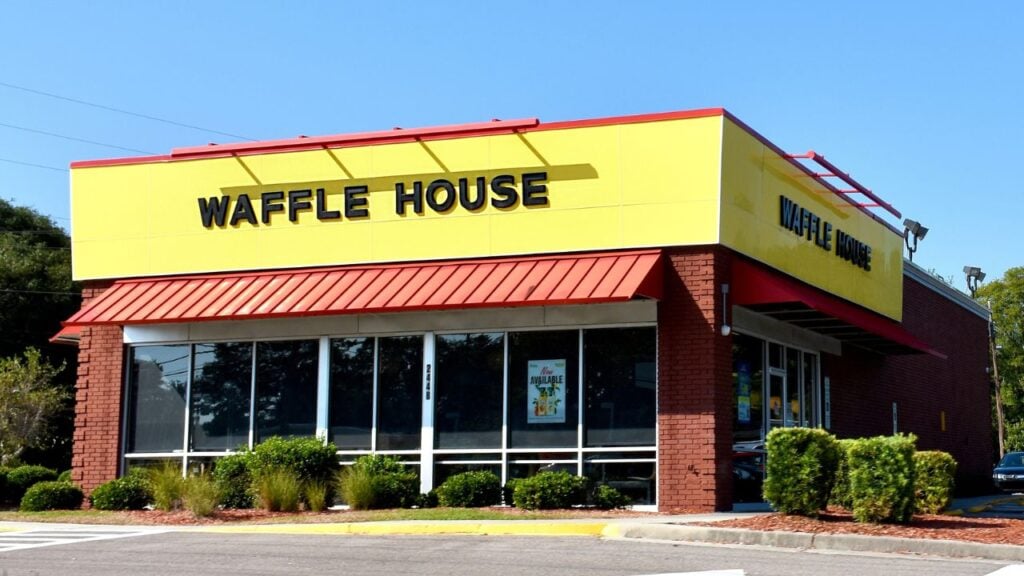
Waffle House’s yellow sign glows over I-85 outside Kannapolis at 2 a.m., and a first-time visitor studies the menu like it’s written in another language.
These are the Waffle House mistakes North Carolina regulars never make.
