

9 North Carolina Squatter Laws That Leave Homeowners With No Quick Fix

A “For Rent” sign disappears from a yard outside Wilmington, and nobody in the family remembers taking it down.
Weeks later, a car sits in the driveway with its engine cold, like it’s always belonged there.
North Carolina now has a fast lane built for exactly this moment. But the fast lane has more exits than many homeowners expect.
These are the North Carolina squatter laws that still leave homeowners without a quick fix.
Note: This is general information, not legal advice. North Carolina property and eviction laws are subject to change, so confirm the current rules with the North Carolina Judicial Branch’s landlord-tenant help resources or a licensed North Carolina attorney.
1. Claiming Tenancy Halts the Fast Track
North Carolina passed a brand new law aimed straight at this problem, Senate Bill 55.
Gov. Josh Stein signed it in August 2025, and it took effect December 1, 2025.
It lets a homeowner skip years of court delay for a true unauthorized occupant.
There’s a hole in it.
The instant someone claims a rental agreement, says they’ve paid rent, or insists they’re otherwise authorized to be there, the law stops applying to their case.
Nobody settles a fake claim on the spot, no matter how obvious it looks.
North Carolina routes that dispute into standard summary ejectment instead, the older Chapter 42 process that can run for weeks.
2. Sheriff Service Sets Your Clock
North Carolina’s new law reads like a stopwatch once a case qualifies.
A sheriff has to serve the occupant within 24 hours of getting the paperwork, a magistrate has to hold a hearing within 48 hours after that, and a losing occupant gets no more than four hours to leave once the order is served.
Four hours.
That’s the theory.
The University of North Carolina School of Government points out a gap the statute never closes: The 24-hour clock doesn’t start until the sheriff’s office has the paperwork in hand, and lawmakers never set a deadline for how soon the homeowner has to get it there in the first place.
A busy sheriff’s office, a holiday weekend, or an occupant who’s hard to locate can all stall the fast lane before it starts.
North Carolina’s Four-Hour Fast Track
North Carolina’s expedited removal law runs on three separate clocks, not one single deadline.
The sheriff has 24 hours to serve the occupant once the paperwork reaches their office.
The magistrate then has to hold a hearing within 48 hours of that service.
If the homeowner wins, the occupant gets no more than four hours to leave once that order is served.
3. Winning Isn’t the Finish Line
North Carolina lets a losing occupant fight back even after a magistrate rules against them.
They can appeal to district court, and the price of that appeal is a bond starting at $10,000.
A magistrate can set it even higher, based on the home’s fair rental value and any damage racked up while the appeal drags on.
Few homeowners keep that kind of cash sitting around, ready to spend on a fight they thought was already won.
It’s serious money for anyone trying to buy time, which is the point.
Legal scholars who’ve studied the new law point out it never spells out whether posting that bond lets the occupant stay put during the appeal or simply keeps their case alive in court.
A homeowner who thought the fight was over can end up back in a waiting game.
4. Airbnb History Kills the Fast Lane
North Carolina’s expedited law comes with a condition almost nobody reads until they need it.
The property can’t have been offered or intended as an accommodation for the general public at the moment the occupant moved in.
That’s aimed at hotels and short-term rentals.
Not always, though.
A homeowner whose house had a recent run as an Airbnb or a Vrbo listing can find themselves outside the fast lane entirely, even on their own property.
A guest who overstayed a booking, then simply never left, may not count as the kind of unauthorized person this law was built for.
That homeowner lands back in standard eviction court, the same slower process everyone else has used for years.
5. Only Owners Can File the Fast Track
North Carolina’s new fast-track law limits who can even file to a narrow group of people.
The complaint has to come from the property owner or an authorized representative, defined narrowly as a real estate broker or someone else with written legal authority to act for the owner.
Verbal authority doesn’t count.
A family member handling a parent’s empty house, or an heir who hasn’t finished probate yet, may not have that paperwork in hand.
Until the ownership or the authority is settled on paper, that person can’t use the fast track North Carolina just built, no matter how clear-cut the squatting looks.
They’re stuck starting with the older process, or sorting out the estate first.
Psst! How much do you know about North Carolina’s squatter laws? Tap through these myth-or-fact cards and see how many you can call correctly.
6. Notice Periods Delay Standard Filings
A squatter in North Carolina who falsely claims a rental agreement doesn’t just fall out of the fast track.
The case drops straight into Chapter 42’s notice-and-wait routine, the same one North Carolina landlords have used for decades.
A squatter who claims to be a month-to-month tenant buys the case seven days of written notice before a homeowner can even file, and one who claims a year-to-year lease buys it a full month.
Claiming to have paid rent triggers a different clock instead: A formal demand for the money, then a 10-day grace period before the complaint can reach the courthouse.
Ten days minimum, sometimes 30.
None of it moves faster just because the claim was invented on the spot.
7. Changing Locks Still Breaks the Law
North Carolina bans self-help eviction for a residential tenant under G.S. 42-25.6, and that word “tenant” is where homeowners talk themselves into trouble.
A homeowner can’t always tell from the porch whether the person inside counts as a tenant or not.
That uncertainty is exactly why North Carolina built an entire new court process instead of simply telling owners to handle it themselves.
Change the locks first and ask questions later, and an owner risks a lawsuit over belongings left behind, or worse, a criminal charge of their own for breaking in.
Not worth it.
Every path North Carolina offers, the new fast lane included, runs through a sheriff and a magistrate, never through a homeowner’s own two hands.
8. Trespass Charges Need Proof First
North Carolina police can’t always walk up and arrest someone just because a homeowner says they don’t belong.
Criminal trespass charges hinge on proof the occupant had notice, and North Carolina’s second-degree trespass law spells out exactly what counts: A direct verbal or written warning, a posted sign, or entering the space right around a home between midnight and 6 a.m.
No notice, no easy charge.
A vacant house with an unlocked door and no posted signage gives an officer almost nothing to work with on a first visit.
First-degree trespass is a step up. It only applies once a property is fenced, gated, or otherwise secured, or once someone enters an actual building.
An open field or an unlocked porch door doesn’t clear that bar either.
9. Twenty Years of Silence Costs You
North Carolina’s oldest squatter law has nothing to do with courts or sheriffs at all.
It’s called adverse possession. Open, continuous trespassing can turn into legal ownership under the right conditions.
Hold a piece of someone else’s land out in the open, under known and visible boundaries, adversely to everyone else, for 20 years, and North Carolina law can hand over the deed.
Twenty years.
That’s the slow road, and it drops to just seven years under G.S. 1-38 if the occupant holds a deed-like document, even a flawed one, known as color of title.
Neither North Carolina’s 20-year timeline nor its 7-year color-of-title timeline requires the homeowner’s permission or awareness to keep running.
Neglect a vacant lot or a rental property long enough, and the calendar keeps running whether the homeowner notices or not.
6 Things That Change at the North Carolina DMV in Your 60s
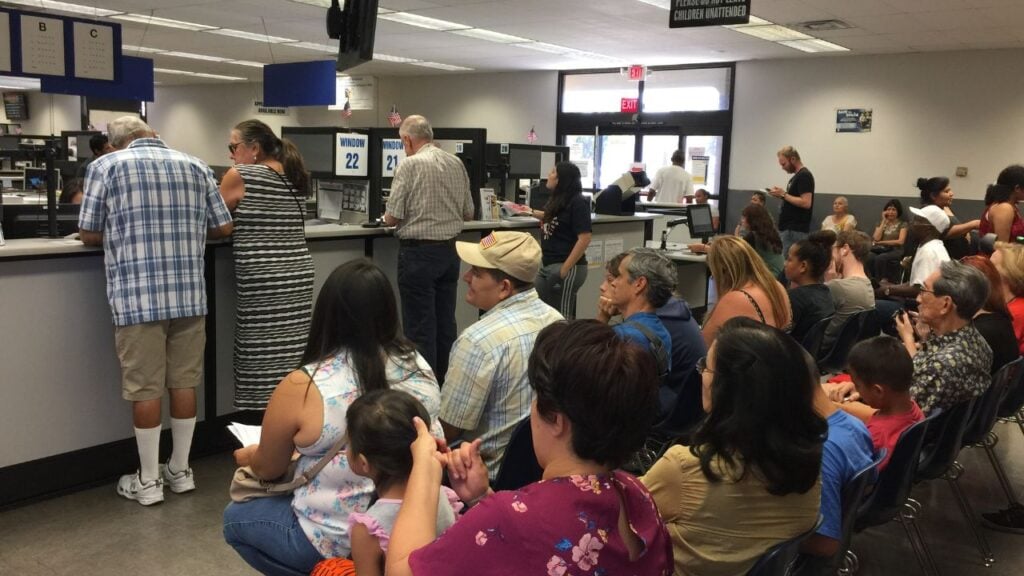
A driver in Winston-Salem walks up to the DMV counter three days after her 66th birthday, expecting the same routine she’s followed for years.
North Carolina treats that birthday like a built-in reset button, and the changes reach further than a new photo.
6 Things That Change at the North Carolina DMV in Your 60s
What $3,000 a Month Buys Retirees in North Carolina in 2026

Three thousand dollars a month can cover a paid-off home in North Carolina with room to spare, or barely survive a Charlotte rent check.
Where a retiree settles in North Carolina decides almost everything about how far that money goes.
