
9 North Carolina Wildlife Encounters Newcomers Handle Horribly

Ask a newcomer to North Carolina which animal worries them most, and sharks often top the list.
The coast logged exactly one confirmed bite last year.
The animals that catch newcomers off guard are smaller, far more ordinary, and nowhere near the ocean.
These are the North Carolina wildlife encounters newcomers handle horribly.
Note: This is general information, not medical or legal advice. Wildlife safety guidance is subject to change.
1. Running From a Black Bear
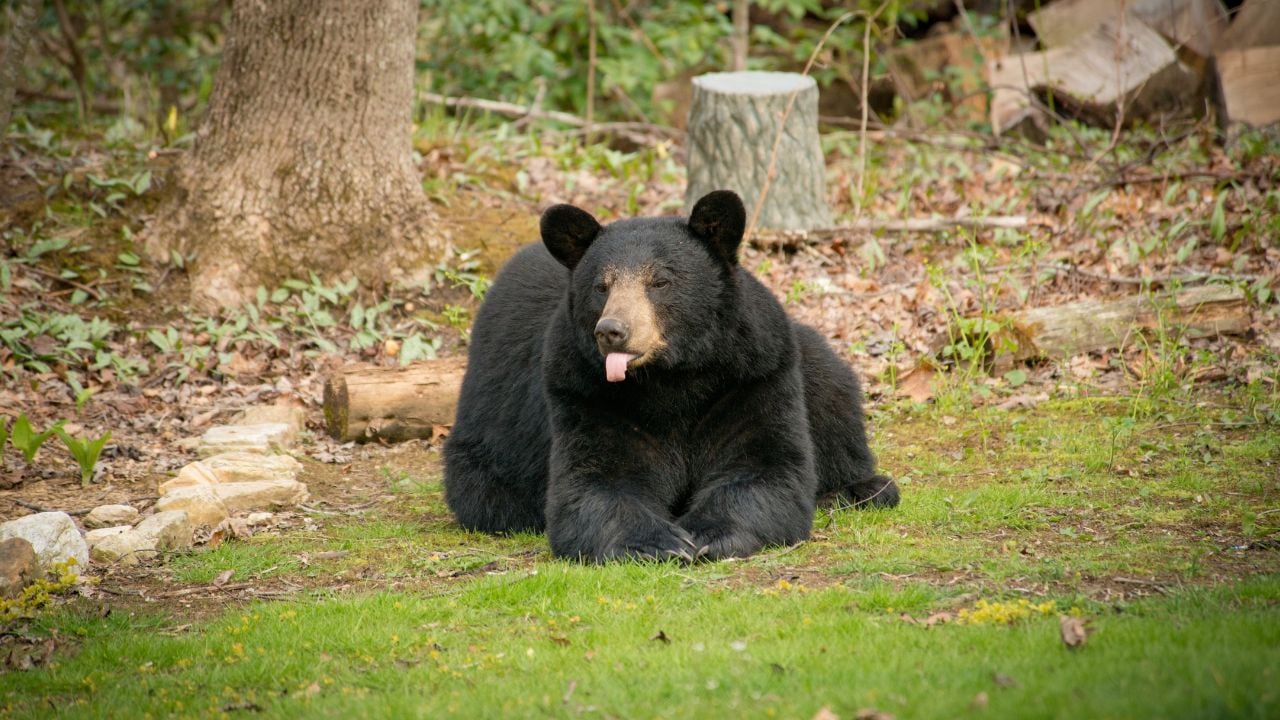
Black bears keep turning up somewhere new in North Carolina, from Buncombe County backyards to a Charlotte parking lot caught on camera.
A newcomer’s gut reaction when one wanders into view is to run.
That instinct gets people hurt.
Running can trigger a bear’s chase response, and the multistate BearWise program that North Carolina’s wildlife agency partners with says most bear injuries trace back to one moment: Surprising a bear at close range.
The move that works is standing your ground, backing away slowly, and talking in a calm, low voice.
Never run.
2. Grabbing a Copperhead
Copperheads are the most common venomous snake in North Carolina, and in most of the state’s bigger cities, they’re the only one people are likely to meet.
A newcomer who spots one curled on a porch step often reaches for a shovel, a broom, or bare hands.
Reaching for it is how those confrontations start.
North Carolina’s wildlife agency puts copperheads behind probably over 90% of the state’s venomous snakebites, and many of those bites happen when someone tries to capture, kill, or handle the snake instead of stepping back.
Leave it alone, and it moves on in its own time.
Spraying it with a garden hose from a safe distance works too, if it’s parked somewhere inconvenient.
3. Feeding an Alligator by Accident
American alligators reach the northern limit of their range in North Carolina, and most sightings come from New Hanover and Brunswick counties along the southern coast.
A newcomer cleaning fish at a coastal dock tosses the scraps into the water, the way many people do without thinking twice.
A gator that’s caught onto the routine glides up close on this trip, and the newcomer leans over the rail for a better look instead of stepping back.
A gator that stops fearing people doesn’t stay harmless.
Wildlife officials call dumping fish scraps one of the most common ways people unintentionally feed alligators, and feeding one on purpose or by accident teaches it to associate people with a meal.
Keep at least 60 feet between yourself and any alligator you spot, and never let a pet wander to the water’s edge alone.
4. Swimming by the Bait Bucket
Sharks patrol North Carolina’s coast every summer, and the state logged one confirmed bite in 2025, according to the University of Florida’s shark researchers.
A newcomer to the Outer Banks wades into the surf right next to a pier where anglers are cutting bait, comfortable with the scraps and chum drifting past in the current.
A shark working that same cloudy water a few yards off doesn’t send the newcomer back to the beach.
Nobody needs to find out the hard way.
North Carolina Sea Grant’s Shark Sense guidance tells swimmers to stay out of the water near anyone fishing or using bait, and to skip murky water where a shark can mistake a splash for a fish.
Skip the splashing near the pier pilings, and swim somewhere the water runs clear instead.
5. Rescuing a Lone Fawn
North Carolina wildlife officials say a fawn left alone for up to 24 hours is completely normal, not abandonment, and picking one up is illegal in the state without a wildlife rehabilitation permit.
A doe deliberately stays away from a healthy fawn for hours at a stretch.
A well-meaning newcomer sees one curled up with no mother in sight and scoops it into the car.
That’s not a rescue.
Only call a licensed rehabilitator if the fawn looks thin, is visibly hurt, or a dead doe turns up nearby.
Why the Doe Never Looks Worried
A North Carolina doe isn’t ignoring her fawn when she wanders off for hours at a stretch.
She’s avoiding the one thing that could lead a predator straight to it: Her own scent building up around a fixed spot.
Wildlife biologists say she returns only a couple of times a day, just long enough to nurse, then moves off again on purpose.
6. Letting Pets Roam at Dusk
Coyotes have settled into North Carolina backyards from the mountains to the coast, including many subdivisions and city greenways.
A newcomer’s small dog is out in the yard at dusk when a coyote trots along the fence line, and at first glance it looks enough like a stray dog to shrug off.
The newcomer watches from the back door instead of calling the dog inside.
Curiosity keeps that dog exactly where a coyote wants it.
Wildlife officials say unsupervised small pets are one of the clearest ways people invite a coyote conflict, since a cat or a small dog can look like an easy meal.
Keep pets leashed or inside a fenced yard after dark, and never leave food or trash out where a coyote can find it.
If a coyote stops backing off, stand tall, wave your arms, and make noise instead of turning to run.
7. Grabbing a Turtle’s Tail
Snapping turtles cross North Carolina backroads all summer, usually females hunting for a place to nest.
A newcomer trying to help often grabs one by the tail and swings it toward the shoulder.
That grip causes damage.
North Carolina’s own wildlife agency warns that carrying a snapping turtle by the tail can cause severe dislocation and injury to its spinal column.
The safer hold is at the back of the shell, away from its surprisingly long reach.
A car mat slid underneath works even better, since the turtle can ride along without anyone touching it at all.
Send it in the direction it was already heading, never back toward the road it just escaped.
Psst! How much do you know about North Carolina’s wildlife? Take our quiz and see how many you can get right.
Quiz
North Carolina Wildlife IQ
Answer these questions on North Carolina’s wildest residents. We bet you can’t get them all right. Prove us wrong?
The heaviest black bear ever recorded in North Carolina came out of which county?
8. Shooing a Bat Outside
North Carolina is home to more species of bats than many newcomers would guess, and nearly all of them roost undisturbed in attics, barns, and tree hollows without anyone noticing.
One that gets inside the house changes the math completely.
A newcomer who finds a bat looping around a bedroom usually just cracks a window and shoos it back outside.
Shooing it back out solves nothing.
Public health officials say bat bites can be so tiny that a person never feels or notices one, especially while asleep.
Current guidance from the Centers for Disease Control and Prevention says any bat found inside a home should be captured for rabies testing instead of released, so a doctor can rule out the need for treatment.
Never release a bat you can't rule out having bitten someone.
9. Freezing on a Fire Ant Mound
Fire ants have spread across central and eastern North Carolina, building mounds in yards, parks, and pastures.
A newcomer who steps near a disturbed mound often just stands there, swatting at whatever lands on a leg or shoe.
That hesitation is the problem.
Fire ants grip the skin with their jaws first and then sting, according to federal workplace-safety guidance.
Brush them off briskly and fast, rather than standing still or slapping at them one at a time.
Running a lawnmower over a mound doesn't solve anything either, since a disturbed colony just rebuilds a few yards away.
10 Things North Carolina Grandparents Do That Baffle Their Kids

A North Carolina grandmother still keeps a coffee can of bacon grease by the stove, and nobody under 40 in the house understands why.
Her habits look like relics until it turns out half of them still work better than whatever replaced them.
10 Things North Carolina Grandparents Do That Baffle Their Kids
8 Arguments North Carolina and South Carolina Will Never Settle

Ask a Charlotte native and a Columbia native who invented sweet tea, and the conversation stops being friendly fast.
North Carolina and South Carolina share a border, a coastline, and a rivalry that never quite ends.
8 Arguments North Carolina and South Carolina Will Never Settle
