
9 Ohio Lake Erie Rules Boaters and Swimmers Break Every Summer

A jet ski cuts one more loop past the breakwall as the sun drops below the water.
In Ohio, that loop is already illegal.
These are the Lake Erie rules boaters and swimmers break every summer, whether they know it or not.
Note: This is general information, not legal advice. Ohio’s boating, fishing and beach rules are subject to change.
1. Skipping the Boater Education Card
Ohio requires anyone born on or after January 1, 1982, to carry a boater education certificate before running a boat with more than 10 horsepower on Lake Erie.
A rental doesn’t change that.
Neither does a borrowed boat, or one that belongs to a friend’s dad.
The certificate comes from a state-approved course or a proficiency exam.
It never expires once earned.
Marinas rarely check for it before handing over the keys, so many first-time renters never bother getting one.
A citation without a collision runs as a fourth-degree misdemeanor.
It becomes a third-degree misdemeanor if the boat hits anything or anyone.
2. Letting Kids Skip the Life Jacket
Every child under 10 aboard a boat under 18 feet on Lake Erie has to wear a Coast Guard-approved life jacket under Ohio law, not just have one within reach.
Underway, tied to the dock, drifting for walleye, it doesn’t matter.
The jacket stays on.
Many parents buckle a kid in at the ramp, then let it come off once the boat clears the no-wake zone.
The U.S. Coast Guard’s own numbers back up why the rule exists: Drowning causes nearly 75% of recreational boating deaths, and most of those victims weren’t wearing one.
Ohio’s stretch of Lake Erie warms up fast on the surface but stays cold underneath well into July, which is exactly when a tired kid without a jacket runs into trouble fastest.
What Counts as a Life Jacket on Lake Erie
Ohio’s rule means worn, not stowed under a seat cushion within reach.
The jacket also has to be sized to the child wearing it, since an adult-sized life jacket can slip right over a small kid’s head in the water.
Inflatable life jackets don’t satisfy the rule for a personal watercraft rider or a water-skier, either.
Those activities require an inherently buoyant Type I, II, III, or V device that works the moment it hits the water, with no cord to pull.
3. Drinking While Paddling
Ohio’s boating-under-the-influence law sets the same 0.08% blood alcohol limit on Lake Erie that applies behind the wheel, with a stricter 0.02% for anyone under 21.
Here’s the part that surprises people: The law covers paddlecraft exactly like powerboats, so a kayak, a canoe or a paddleboard counts too.
Somebody who’d never drink and drive will crack a hard seltzer three miles out on a paddleboard without a second thought.
Same offense.
A first conviction carries up to 180 days in jail and a fine as high as $1,000, and unlike a drunk-driving charge behind the wheel, a boating conviction won’t touch a driver’s license.
That last part is exactly why some paddlers treat the whole thing as an empty threat.
4. Gunning It Near the Marina
Lake Erie boaters have to drop to idle speed within 300 feet of any marina, boat dock, launch ramp or harbor entrance, per Ohio’s boating code.
Idle speed means just enough throttle to steer.
Nothing more.
Anywhere along the Marblehead Peninsula or the Cuyahoga River’s marina rows, boats leave that zone throttled all the way up before the wake even settles behind them.
The rule exists because a harbor entrance crams kayakers, paddleboarders and someone backing a trailer down a ramp into the same narrow lane of water.
A boat throwing full wake through that lane can swamp a canoe or knock a swimmer’s kid clean off a dock ladder.
5. Riding the Personal Watercraft After Dark
Personal watercraft can’t legally run on Lake Erie between sunset and sunrise under Ohio law, full stop, and no special permit lets a rider around that rule.
Regular boats can carry navigation lights and legally stay out after dark.
Personal watercraft can’t.
An August sunset over Lake Erie is the exact moment riders want one more pass, and the water fills up with them right as the light goes.
A rider low to the water, with no running lights and barely any freeboard, is close to invisible to a bigger boat crossing the same stretch after dusk.
6. Towing a Tuber With No Observer
Ohio requires a dedicated observer at least 10 years old aboard any boat towing a skier or a tuber on Lake Erie, watching that person the entire time.
A rearview mirror doesn’t count.
The driver also has to stay at least 200 feet behind whoever’s on the rope.
Skiing itself is banned between sunset and sunrise, except by special permit.
Many captains running a small crew skip the observer and glance back over a shoulder between checking the water ahead.
A tuber who wipes out disappears from view in seconds.
A driver watching the horizon instead of the wake has no idea.
7. Crowding a Dive Flag
Ohio bans operating a vessel within 300 feet of a diver-down flag on Lake Erie unless that boat is tending the dive.
Lake Erie holds an estimated 2,000 shipwrecks, more than any other Great Lake, and wrecks near Kelleys Island and the Marblehead Peninsula draw scuba divers all summer long.
Many boaters have never been told what the flag means.
Nobody explains it.
A red flag with a white diagonal stripe marks a diver working below, and running a boat over that spot puts a propeller above someone who can’t see or hear it coming.
Anglers trolling past a wreck site are frequent offenders, since the flag looks like just another buoy from a distance.
8. Fishing Without a License
Anyone 16 or older needs a valid fishing license to fish Lake Erie under Ohio’s wildlife code, whether that line goes in from a boat, a pier or the beach.
Since the 2022-23 season, a standard Ohio fishing license covers Lake Erie itself, so the old separate Lake Erie permit non-resident anglers used to need is gone.
That change confuses people in both directions.
Some anglers still hunt for a Lake Erie stamp that no longer exists, and others assume a day trip on a friend’s boat covers the whole crew.
It doesn’t.
Every angler over 16 needs their own, and Ohio wildlife officers patrol the charter docks around Port Clinton and Vermilion checking for exactly that every summer.
9. Trusting the Small-Boat Exemption on Lake Erie
Lake Erie cancels a distress-signal exemption that covers boaters almost everywhere else in Ohio.
A canoe, a kayak, a small sailboat under 26 feet, or any other manually propelled boat can normally skip carrying a visual distress signal on an inland lake or river.
Ohio’s boating code works differently on Lake Erie between sunset and sunrise.
Every one of those otherwise-exempt boats still needs a Coast Guard-approved night distress signal out there.
The exemption ends there.
Kayakers and small-boat owners who never carry one inland assume the same exemption follows them onto the big lake.
Lake Erie’s rule doesn’t work that way.
Skipping the signal counts as a citable violation under Ohio’s boating code, the same as running without a life jacket or the right fire extinguisher aboard.
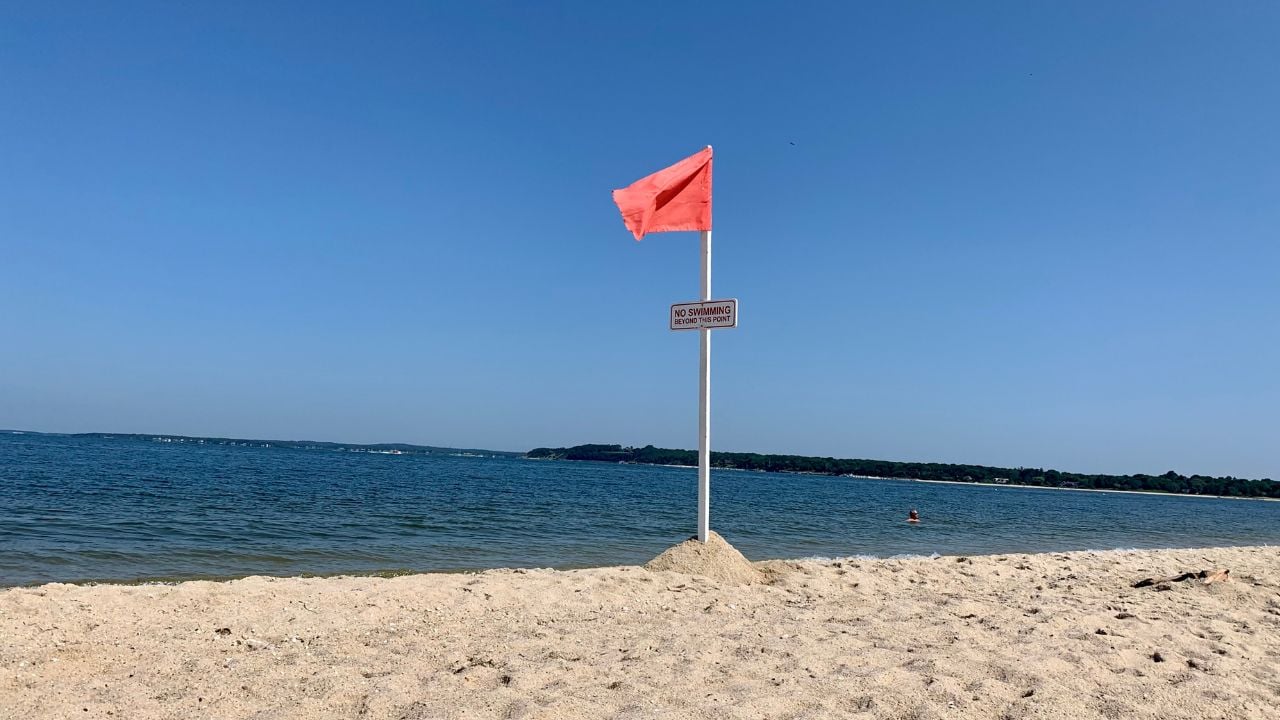
What a Yellow or Red Flag at a Lake Erie Beach Means
Lake Erie beaches fly a color-coded flag that has nothing to do with rip currents.
Ohio’s BeachGuard system posts a swimming advisory at a Lake Erie beach whenever E. coli tops 235 colony-forming units in a single water sample.
A yellow flag means kids, older adults and anyone with a weaker immune system should stay out of the water.
A red flag means nobody should.
Neither color is optional.
The water off Edgewater, Headlands or Maumee Bay can look completely clear the same afternoon a beach gets flagged, so swimmers wade in without a second thought.
High bacteria counts leave no visible trace in the water.
Heavy rain washes runoff straight into the lake within a day or two, which is precisely when a beach that looked fine that morning can flip to an advisory by afternoon.
The western end of Lake Erie, near Toledo and the mouth of the Maumee River, is where those advisories show up most, since the shallow, warm water there feeds the algae behind them.
The blooms usually build through mid-August into September, which puts them right in the middle of the busiest swimming weeks of the year.
Psst! How Lake-Erie-rule-savvy are you? Check off what’s true for you and find out.
9 Things Ohio Landlords Can’t Legally Do to Renters in 2026

A padlock clicks shut on a rental door in Dayton before the tenant behind it even knows her key stopped working.
Ohio law says a landlord can’t do that, no matter how late the rent runs.
9 Things Ohio Landlords Can’t Legally Do to Renters in 2026
11 Foods Ohioans Grew Up Eating That the Rest of America Has Never Heard Of

Readers of an Ohio newspaper once voted a deep-fried ball of sauerkraut their city’s official food.
Names like that never made it past the state line, so a menu at an Ohio diner can stop a visitor cold.
11 Foods Ohioans Grew Up Eating That the Rest of America Has Never Heard Of
