
9 Property Line Mistakes South Carolina Neighbors Take Each Other to Court Over

A Greenville homeowner orders a survey before listing their house, and the report comes back with a detail nobody expected.
The shed built a decade earlier sits two feet over their neighbor’s line.
Boundary fights like that play out the same way from Aiken to Horry County, whether it starts with an old plat, an overgrown branch, or a driveway that’s crossed the same yard for twenty years.
These are the property line mistakes that South Carolina neighbors take each other to court over.
Note: This is general information, not legal advice. South Carolina’s property, fence, and trespass laws vary by county and by dispute type, and they’re subject to change.
1. Trusting an Old Fence Line
South Carolina neighbors who’ve shared the same fence line for years often assume it’s the boundary, deed or no deed.
Sometimes a court agrees.
In Miller v. Leaird, the South Carolina Supreme Court upheld a property line based on decades of both owners treating a fence as the boundary, a doctrine known as boundary by acquiescence.
Intent matters.
A fence built for a dog run or a garden, and never discussed as the actual line, doesn’t automatically settle a dispute in an Upstate or Lowcountry courtroom.
2. Letting a Decade Slide By
Letting a neighbor mow past the fence, plant a garden bed on your side, or park a boat on your grass for years isn’t just being friendly under South Carolina law.
Ten years is the number that matters.
South Carolina lets someone claim 10 years of open, enclosed, or cultivated use of a strip of land as grounds for legal ownership, no permission ever asked.
What South Carolina’s 10-Year Clock Requires
Ten years alone doesn’t hand a neighbor your land.
South Carolina also requires the disputed strip to be enclosed by a fence or similar barrier, or regularly cultivated or improved, for the whole ten years.
Casual use that never turns into a fence or regular upkeep, like cutting across a corner on foot, usually isn’t enough on its own.
Silence has a cost.
A homeowner in Sumter or Rock Hill who never objects to a shed, a fence, or a garden creeping over the line can watch that strip become someone else’s property.
3. Building off an Old Plat
Building a shed, deck, or fence from an outdated plat instead of a fresh survey is a common way South Carolina neighbors end up in a courtroom.
The structure doesn’t have to be new to count.
An encroachment that’s sat on the wrong side of the line for years is still what South Carolina courts treat as a continuing trespass, something a neighbor can challenge through a Title 15 property action even if it went up a decade ago.
No expiration date.
Unlike money owed on an old debt, a structure standing on someone else’s land doesn’t become forgivable just because nobody complained the first year.
4. Fixing Your Fence From Their Yard
Reaching a fence, a foundation, or a gutter sometimes means stepping onto the neighbor’s side, and South Carolina has an actual rule for that.
Under South Carolina Code Section 15-67-270, an owner who’s denied permission to enter next door for repairs can petition a judge for a license to enter, not just climb the fence and get to work.
That petition has to spell out the dates, the work planned, and proof that the neighbor already refused a reasonable request.
Permission first.
Letting a contractor set up a ladder on a neighbor’s patio without asking is exactly the kind of shortcut South Carolina judges have been asked to sort out.
5. Topping Their Tree Without Asking
Branches from a neighbor’s oak that hang across the property line feel like fair game to trim on your own side, and in Upstate and Lowcountry yards alike, it’s one of the most common flashpoints along a shared line.
The trunk sitting on the far side of the line is what makes it their tree, not yours, and South Carolina Code Section 16-11-520 makes it unlawful to willfully injure a tree belonging to someone else, even the part hanging over your fence.
Damage worth more than $2,000 turns the charge into a felony, and above $10,000 the maximum reaches ten years in prison.
A 2025 bill would carve out a clear exception for trimming limbs that cross the property line, but as of this writing, it’s still sitting in a House committee, not law.
Not settled yet.
Until lawmakers act, cutting into a neighbor’s tree without asking first carries more legal risk in South Carolina than many homeowners realize.
Psst! How much do you know about South Carolina’s boundary laws? Take this myth-or-fact round and see how many you get right.
6. Cutting Down a Shared Tree
South Carolina doesn’t let one neighbor claim sole ownership of a tree whose trunk grows squarely on the property line.
It belongs to both.
Removing a boundary tree without the co-owner’s consent can trigger the same Section 16-11-520 trespass charge as topping a branch, and if the timber is worth something, the owner can also seek treble damages, three times the tree’s worth, under South Carolina Code Section 16-11-615.
Three times the value.
A landowner in Anderson or Florence County who drops a shared oak without a word first can end up owing far more than the cost of removal.
7. Assuming They’ll Fence You Out
Dogs, goats, and stray chickens that keep crossing onto your side of the property line don’t mean the job of fencing the boundary falls on you.
The law puts that job on the animal’s owner instead.
South Carolina Code Section 47-7-110 makes it unlawful for an owner to let a domestic animal run at large beyond their own land, past the property line, with a $25 fine for each offense, and Section 47-7-130 holds that owner liable for whatever damage the animal causes once it crosses over.
No fence required.
A homeowner on a rural stretch of the Midlands doesn’t have to put up a barrier just because a neighbor’s livestock keeps crossing over.
8. Pulling up the Survey Pin
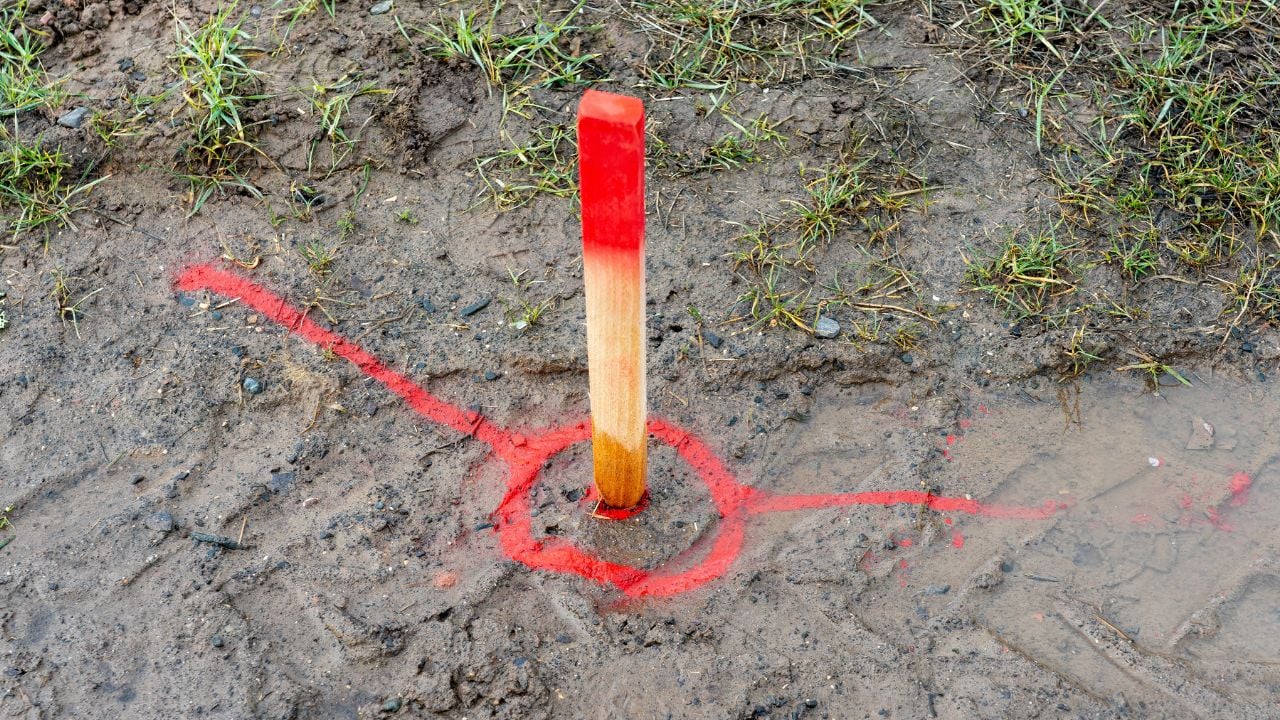
Surveyors mark a boundary corner with an iron pin or a set stone, and that small marker is usually what a boundary fight turns on.
Under South Carolina Code Section 16-11-680, moving, altering, or destroying a property corner monument on purpose is a crime, punishable by up to a $100 fine or 30 days in jail.
Restitution can follow too.
A neighbor who pulls up a pin mid-argument to make a fence line look correct isn’t settling anything.
They’re creating a second problem for whichever court eventually hears the case.
9. Skipping the Paperwork on a Driveway
Letting a driveway, footpath, or dock access cross a neighbor’s land for years without ever writing it down is exactly how South Carolina prescriptive easements take shape.
Twenty years is the trigger.
In Simmons v. Berkeley Electric Cooperative, the South Carolina Supreme Court confirmed that open, continuous, and adverse use of another’s land for two decades can create a permanent legal right to keep using it, no deed required.
Nothing on paper.
A family that’s let a neighbor’s driveway clip the corner of their lot for over two decades without ever writing it down may have already lost the right to say no.
Psst! How much do you know about South Carolina’s land and survey history? Take our quiz and see how many you can get right.
Quiz
South Carolina Land History IQ
Answer these questions on South Carolina’s colonial land grants, old survey terms, and county history. We bet you can’t get them all right. Prove us wrong?
Who first issued South Carolina’s earliest land grants, starting in the 1660s?
A written easement agreement, recorded at the county register of deeds, ends the guesswork for both sides and heads off a Simmons-style fight before it starts.
It's a one-time trip to the courthouse that costs far less than the legal bill waiting on the other side of twenty years of silence.
8 Things South Carolina Kids Did Every August That Would Never Fly Now
A kid in Sumter used to grab a bike the minute supper ended and not come home until the streetlights clicked on, no phone, no check-in call.
New laws, closures, and safety rules have closed the door on a few of those old August routines.
8 Things South Carolina Kids Did Every August That Would Never Fly Now
8 South Carolina Small Towns Locals Love (and 3 Tourists Overrun)
A man in Bishopville once hauled a dying azalea home from the dump and turned it into a chainsaw-carved topiary garden that pulls tour buses today.
Some South Carolina towns keep that kind of charm mostly to themselves, while a few others draw a crowd fast.
8 South Carolina Small Towns Locals Love (and 3 Tourists Overrun)
