
9 Restaurant Chains Kentuckians Say Aren’t What They Used to Be

Kentucky Fried Chicken (KFC) has closed 207 restaurants in the United States since January 2025.
Americans everywhere have watched their favorite chains go through similar bankruptcies, closures, and sudden shutdowns.
These are the restaurant chains many Kentuckians feel aren’t what they used to be.
Long John Silver’s
Long John Silver’s opened its first restaurant on Lexington’s Southland Drive in 1969, built around a fish-and-chips concept from founder Jim Patterson.
The chain grew fast, and it once ran more than 1,400 restaurants nationwide at its peak.
That growth didn’t hold.
Roughly 110 to 120 locations have closed in the past three years alone.
Long John Silver’s now operates fewer than 500 restaurants total, less than half what it ran a decade ago.
On October 4, 2025, it swapped its fish logo for a chicken and added a “Chicken + Seafood” tagline.
A seafood specialist that spent decades building its name on fried fish now leads with chicken on its sign.
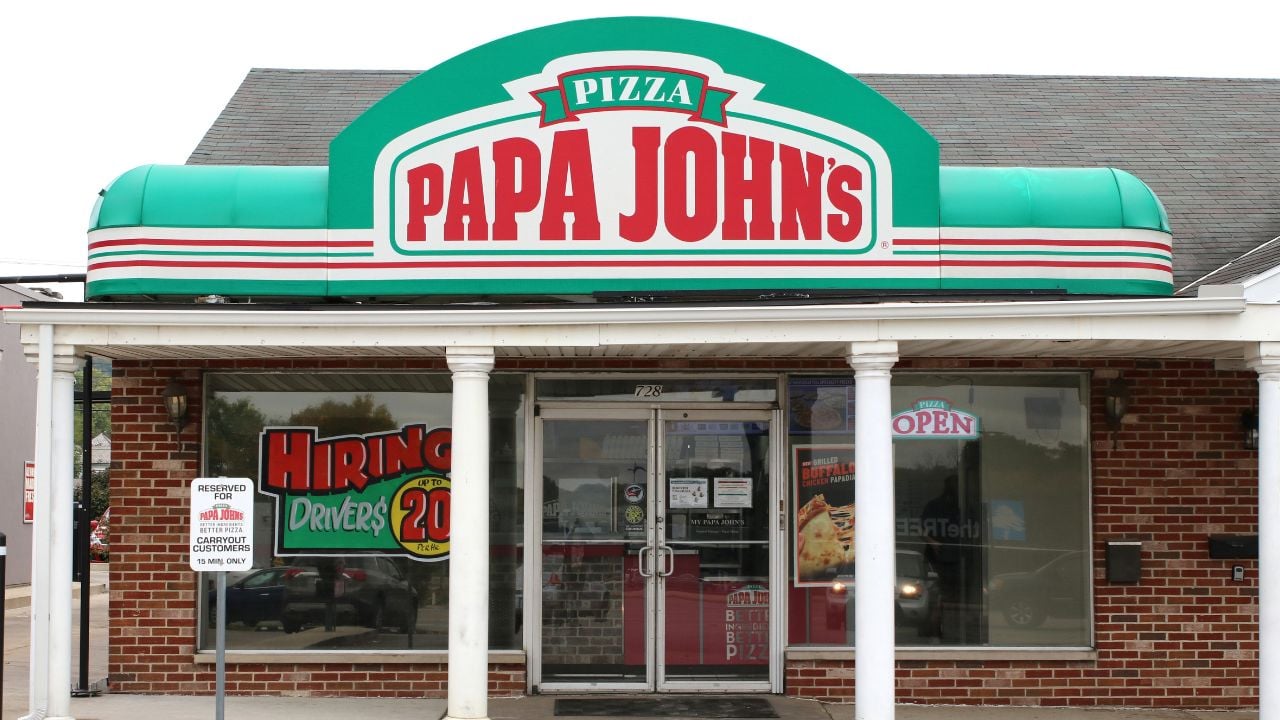
Papa John’s
Papa John’s kept its headquarters in Louisville for decades, the pizza chain many residents claim as theirs.
That started changing in 2020, when the company announced a new global headquarters near Atlanta.
Even a 2023 state announcement confirming a Louisville corporate hub couldn’t undo the shift.
Schnatter caused the bigger problem.
In 2017, founder John Schnatter blamed the National Football League (NFL) for slowing pizza sales on a November analyst call.
Papa John’s stock had fallen more than 33% by the next summer.
A leaked May 2018 call, revealed by Forbes that July, made things worse.
Schnatter used a racial slur on that call.
The company forced him out of the Louisville headquarters that carried his name.
By early 2026, Papa John’s was closing 300 restaurants across North America, after same-store sales fell in seven of the previous eight quarters.
Frisch’s Big Boy
Frisch’s Big Boy has served Kentucky since 1949, when Dave Frisch’s drive-ins first crossed the Ohio River from Cincinnati.
The chain grew into a fixture of interstate exits, running 121 restaurants across Ohio, Kentucky, and Indiana by 2015.
An investment firm bought Frisch’s that year for $175 million.
Landlords ran out of patience.
By late 2024, Frisch’s owed more than $4.5 million in back rent.
Courts ordered a dozen Kentucky locations to close, including both restaurants in Lexington.
Winchester and several Northern Kentucky towns lost their Frisch’s too.
The company cited unforeseen circumstances at the time.
The slide kept going anyway.
Frisch’s had shrunk to 52 restaurants by December 2024, and its website more recently listed just 31 restaurants, a drop of roughly three-quarters from the 2015 peak.
Fazoli’s
Fazoli’s opened its first Lexington restaurant in 1988, building its reputation on unlimited breadsticks and quick Italian plates.
The Kentucky chain has answered to an outside owner since 2021, when California-based restaurant conglomerate FAT Brands, which owns dozens of chains nationwide, bought it.
FAT Brands kept acquiring restaurant brands, and on Jan. 26, 2026, it filed for Chapter 11 bankruptcy protection in Texas carrying between $1.5 billion and $1.58 billion in debt.
Fazoli’s sat on FAT Brands’ list of 18 brands right alongside Round Table Pizza, Fatburger, and Johnny Rockets.
The bankruptcy didn’t spare Kentucky.
Fazoli’s closed 50 restaurants nationwide between November 2025 and August 2026, exiting Alabama.
Two of those closures hit Central Kentucky in May 2026: the Harrodsburg Road location in Lexington’s Palomar shopping center, and a Nicholasville restaurant on North Main Street.
Fazoli’s still runs 26 restaurants across Kentucky.
The bankruptcy resolved in June 2026.
A group of FAT Brands’ former bondholders, organized as FBG Bid Co., bought Fazoli’s and 12 other former FAT Brands chains for $595 million.
The deal covered more than 1,700 restaurants worldwide.
A Lexington-born breadstick chain that once answered to a debt-loaded conglomerate now answers to a bondholder-led ownership group instead.
KFC
The KFC chain’s whole story starts in Corbin, where Harland Sanders sold fried chicken from a gas station dining room during the Great Depression.
Sanders eventually franchised that recipe nationwide, and the chain that grew from it became the fast-food chain named directly after Kentucky.
The state lost the headquarters.
Yum Brands announced in February 2025 that KFC’s U.S. corporate offices would leave Louisville for Plano, Texas, moving about 100 jobs.
Kentucky’s governor called out the irony: A company named after Kentucky and built on the state’s heritage was leaving anyway.
The move came as Yum Brands also closed 207 KFC restaurants in the United States between January 2025 and March 2026, all of them franchise locations.
The net change came to 187 fewer U.S. restaurants once new openings are counted.
What KFC Left Behind in Kentucky
KFC’s move out of Kentucky didn’t take everything with it.
Yum Brands kept its global corporate offices in Louisville.
The KFC Foundation and about 560 Yum employees stayed there too.
The company also pledged $1 million toward University of Louisville business scholarships and a flagship KFC restaurant in the city.
Cracker Barrel
Cracker Barrel is a familiar sight along interstate exits, with its rocking chairs and country store out front.
In August 2025, the company tore into that formula as part of a $700 million brand overhaul.
It dropped the barrel-and-man logo it had used for decades and stripped the country-store clutter and dark wood out of its dining rooms.
The backlash was swift.
Cracker Barrel’s stock fell more than 12% the day the new logo went public.
The fiscal year that had just ended told a calmer story.
Restaurant sales at existing Cracker Barrel stores had grown 5.4% for that year.
Total revenue for the same period read down 2.9%, but that came from an extra week counted in the prior year’s results, not from the backlash.
The damage showed up after that report.
Customer traffic had dropped 8% in the month since the new logo debuted, and the company projected more decline for the rest of the fiscal year.
Cracker Barrel’s stock fell another 9% once the company cut its full-year revenue forecast and projected further traffic losses.
Facing the backlash, the company reversed course and brought the old logo back, an expensive way to relearn what regulars wanted from their exit-ramp stop.
Red Lobster
Red Lobster ran a $20 Ultimate Endless Shrimp promotion in 2023 that customers loved so much it became a financial problem for the chain.
The promotion pulled in heavier traffic than expected, but the seafood chain posted an operating loss of more than $11 million in a single quarter.
The promotion backfired.
Red Lobster’s parent then cut its full-year guidance from an expected $14 million loss to $20 million.
Full bankruptcy followed within a year.
Red Lobster filed for Chapter 11 bankruptcy in May 2024, rejecting 228 restaurant leases and closing 99 locations right away.
Another 129 restaurants stayed at risk, Kentucky included, and Louisville’s Outer Loop restaurant was one of the locations marked to close.
Red Lobster’s bankruptcy-era chief executive, Jonathan Tibus, blamed a bloated footprint and pointed to a 30% drop in customers since 2019.
Bob Evans
Bob Evans closed 27 restaurants in a single announcement in April 2016, and two of them, in Richmond and Owensboro, were Kentucky’s.
The company said at the time that each location had stopped meeting expectations despite loyal regulars and dedicated staff.
The sell-off came next.
In 2017, Bob Evans sold its entire sit-down restaurant business to private equity firm Golden Gate Capital for $565 million.
The Bob Evans name that built its reputation on farmhouse breakfast kept going under new ownership.
The founding family’s company walked away to focus on packaged sausage and side dishes instead.
Psst! How much do you know about Kentucky’s restaurant history? Take our quiz and see how many you can get right.
Quiz
Kentucky Restaurant History Quiz
Think you know Kentucky’s restaurant chains? Take the quiz and find out.
Which Kentucky-adjacent chain opened its first restaurant in Clarksville, Indiana, not Kentucky?
O'Charley's
O'Charley's opened its first restaurant in Nashville in 1971.
It grew into a familiar name across the state, known for chicken tenders, yeast rolls, and free pie on Wednesdays.
The state lost pieces of the chain slowly, then all at once.
Lexington's Nicholasville Road and Richmond Road locations, along with one in Frankfort, all closed in 2020.
The city's last O'Charley's, on Harrodsburg Road, shut down by June 2023, ending the chain's run there.
Locations in Georgetown, Richmond, Danville, Florence, and Louisville kept the name alive in the state a while longer.
The rest didn't last.
On September 10, 2026, O'Charley's closed every remaining corporate-owned restaurant nationwide, all at once, at 8 p.m.
Guest counts had fallen almost 24% in the second quarter of 2026 compared with a year earlier.
Comparable-store sales dropped more than 13% over the same stretch, according to filings from parent company Cannae Holdings.
The chain had shrunk to 52 restaurants earlier in the year, and it went dark without a public announcement, its website and social media accounts disabled.
8 Mammoth Cave Mistakes That Cost Kentucky Visitors Their Tour
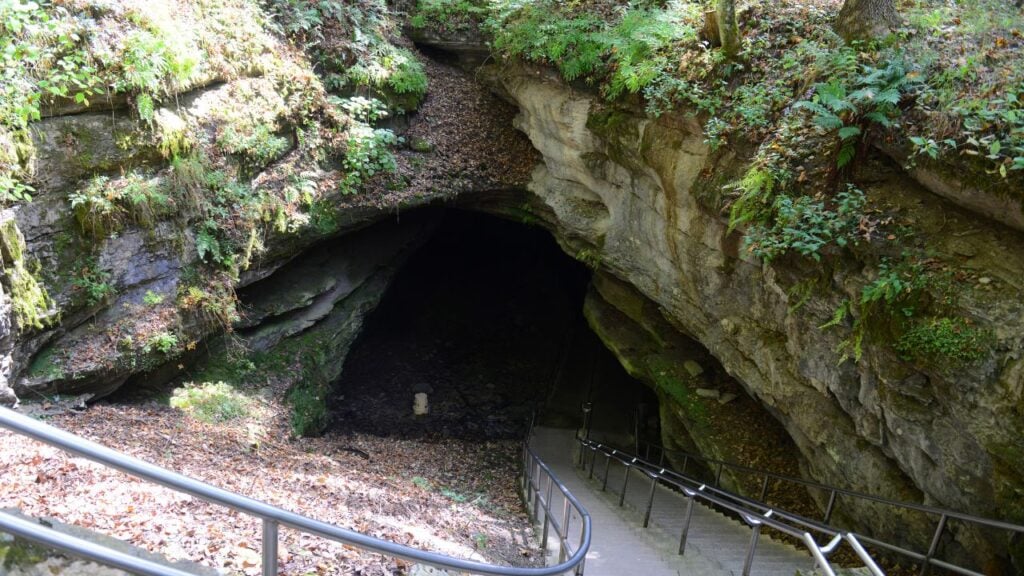
Forty-two inches decides whether a visitor gets past the ticket counter for two of Mammoth Cave's most physical tours.
The park's booking page spells out the rule, right next to a warning that there's no refund for anyone who doesn't measure up.
8 Mammoth Cave Mistakes That Cost Kentucky Visitors Their Tour
