

9 Rules for Renting Out a Room That Virginia Homeowners Get Wrong

A Virginia homeowner now has to wait 14 days, not five, before taking a roommate who stopped paying rent to court.
Many homeowners renting out a spare room have no idea that notice period just doubled.
These are the rules for renting out a room that Virginia homeowners don’t realize.
Note: This is general information, not legal advice. Rental rules and notice periods are subject to change, so confirm the current requirements with the Virginia Department of Housing and Community Development.
1. Treating a Roomer Like a Guest
A homeowner renting out a single room in Virginia doesn’t get a special legal category for the arrangement.
State law defines a roomer as someone sharing a bathroom or kitchen with the rest of the household, and it counts that roomer as a full tenant.
Not a guest.
That distinction means a homeowner can’t change the locks, box up a roommate’s belongings, or call the police to remove them without a court order.
A homeowner has to use the same unlawful detainer process a landlord uses to evict an apartment tenant, filed in Virginia’s general district court.
No shortcuts.
2. Serving the Old Five-Day Notice
The notice a Virginia homeowner owes a roomer who stops paying rent just got longer.
For decades, a landlord could give five days’ written notice of nonpayment before heading to court.
As of July 1, 2026, that notice period doubled to 14 days under a change to the Virginia Residential Landlord and Tenant Act.
Fourteen, not five.
A homeowner who still uses an old five-day notice form risks a judge tossing the case over a technical defect, forcing a restart of the whole clock.
That’s expensive when the roommate stops paying but the mortgage doesn’t.
3. Guessing at the Deposit Cap
A homeowner in Virginia can’t collect more than a set amount as a security deposit from a roomer, no matter what the charge is called.
The limit is two months‘ rent, so a $900-a-month room tops out at $1,800 total.
Charging more makes it illegal.
Virginia also sets the clock on giving it back: An itemized list of any deductions has to reach the roomer within 45 days of move-out.
Miss that window, and a homeowner can lose the right to keep any of it, even for actual damage.
What Counts Toward Virginia’s Deposit Cap
Virginia’s two-month limit isn’t just the line item labeled security deposit.
A cleaning fee, a key deposit, or any other charge a homeowner collects to protect against damage counts toward that same $1,800 ceiling on a $900 room, regardless of what the receipt calls it.
A pet deposit isn’t a separate exception, either: The same statute counts it toward that same $1,800 ceiling, not on top of it.
4. Skipping the Lead-Paint Disclosure
Any Virginia home built before 1978 carries a federal disclosure duty the moment a homeowner takes in a paying roomer.
That’s true even for a single furnished bedroom in a house passed down through a family, not just a formal rental unit.
The homeowner has to hand over a lead-paint pamphlet approved by the Environmental Protection Agency (EPA), disclose any known hazards in writing, and get the roomer to sign the form before rent starts.
Both signatures matter.
Virginia landlords are expected to keep that signed disclosure on file for three years, and skipping it entirely can draw a federal penalty of more than $22,000 per violation.
Renting to a friend doesn’t erase a home’s age.
5. Leaving Mold off the Move-In Report
A roomer’s move-in inspection report in Virginia has to state whether there’s any visible mold in the home.
If the report finds mold and the roomer still wants the room, the homeowner has only five business days to fix it, reinspect, and issue a new report.
Five days, not five months.
A homeowner who skips the inspection or checks the wrong box loses a legal shield later, since Virginia treats that written report as accurate unless the roomer objects within five days of getting it.
Handshake move-ins skip this step more than any other, and Virginia’s law doesn’t make an exception for them.
6. Ignoring the Homeowners Association’s Rules
A homeowners association (HOA) can block a room rental in Virginia even when the county zoning code allows it outright.
Local zoning and an HOA’s recorded declaration run on separate tracks under Virginia law, and the stricter one wins on that property.
Both authorities apply at once.
Some Virginia localities add a second layer on top of that: Fairfax County’s zoning ordinance caps a household at two roomers or boarders before a homeowner needs Board of Zoning Appeals approval to bring in a third.
A homeowner who checks only the county rulebook and skips the HOA’s declaration and the locality’s own occupancy limits can end up compliant with one authority and in violation of two others.
7. Assuming the Homeowners Policy Covers It
A standard Virginia homeowners policy doesn’t automatically treat a paying roomer the way it treats the rest of the household.
Virginia’s insurance rules do carve out an exception: Coverage that would otherwise exclude a rented structure on the property stays in place when a roomer, boarder, or tenant of the home is the one renting it.
The property mostly carries over.
Liability is the part that trips homeowners up, since a standard policy doesn’t guarantee protection if a roomer gets hurt on the property or sues over an injury.
Confirming that gap with an insurance agent before the first roomer moves in beats finding out about it after a fall on the stairs.
Psst! How much do you know about Virginia’s history with renters and roommates? Take our quiz and see how many you can get right.
Quiz
Virginia Rental History IQ
Answer these questions on Virginia’s history with boarders, roommates, and rental law. We bet you can’t get them all right. Prove us wrong?
Congress invented a fictional landlady to help explain a Fair Housing Act exemption for small owner-occupied rentals. What was she called?
8. Misreading the Fair Housing Exemption
A homeowner living in a home of four units or fewer gets to pick a roommate more freely than a typical landlord in Virginia could.
That owner-occupied exemption under Virginia's Fair Housing Law lets a homeowner favor or reject a potential roomer based on categories that would otherwise be off-limits, like familial status or religion.
But not every category.
Race is the one line that exemption never crosses because a separate federal law from 1866 bans race discrimination in housing with zero carve-outs for anyone, owner-occupied or not.
A homeowner who assumes the owner-occupied exemption is a blanket pass is reading only half of it.
9. Renting a Bedroom With No Legal Exit
Virginia's fire code treats a bedroom rented to a roomer exactly like any other bedroom in the house.
That means a working smoke alarm inside the room itself, one in the hallway outside it, and one on every level of the home, including a finished basement.
No detector, no rental.
A bedroom below grade or tucked past a hallway also needs a code-compliant way out, and Virginia's Residential Code sets the bar at a window opening of at least 5.7 square feet, with the sill no higher than 44 inches off the floor.
A finished basement room that can't meet that opening, or doesn't have a second door leading outside, doesn't legally qualify as a bedroom, no matter how a homeowner markets the listing.
What the IRS Expects From Room Rental Income
Virginia homeowners who rent out a room still answer to the Internal Revenue Service (IRS) on that income, on top of every state landlord-tenant rule already covered here.
The one exception is the 14-day rule: Rent the room for 14 days or fewer in a calendar year, and none of that income has to be reported, though a homeowner can't deduct any expenses either.
Fourteen days, tax-free.
Go past that, and the rental income becomes taxable, but a homeowner can deduct a share of the mortgage interest, utilities, and repairs based on how much of the house the roomer uses.
A guest room that takes up a fifth of a home's square footage earns roughly a fifth of those expenses as a deduction.
Virginia's own income tax return starts from federal adjusted gross income, so that rental income, and those deductions, carry straight through to the state return without a separate room-rental tax.
When a Spare Room Becomes a Separate Unit
A spare room in a Virginia home stops being a simple room-rental situation the moment it gets its own kitchen.
Virginia treats a space with its own kitchen and bathroom as a full accessory dwelling, and that swaps the roomer rules covered above for a different rulebook entirely: Building permits, occupancy limits, and a locality's zoning code.
The kitchen is the line.
Virginia just made that path easier, too: Gov. Abigail Spanberger signed a 2026 law requiring every locality to allow accessory dwellings by right in single-family zones starting July 1, 2027, with permit fees capped at $500 statewide.
Homeowners in Fairfax, Arlington, and Loudoun Counties can already convert a basement or an attached garage into a legal rental unit, and some of those conversions rent for $1,400 to $2,400 a month.
A homeowner who adds a hot plate and a mini-fridge to a spare bedroom hasn't crossed that line, but a full range and a sink usually do.
8 Things Virginia Home Sellers Do That Kill the Sale
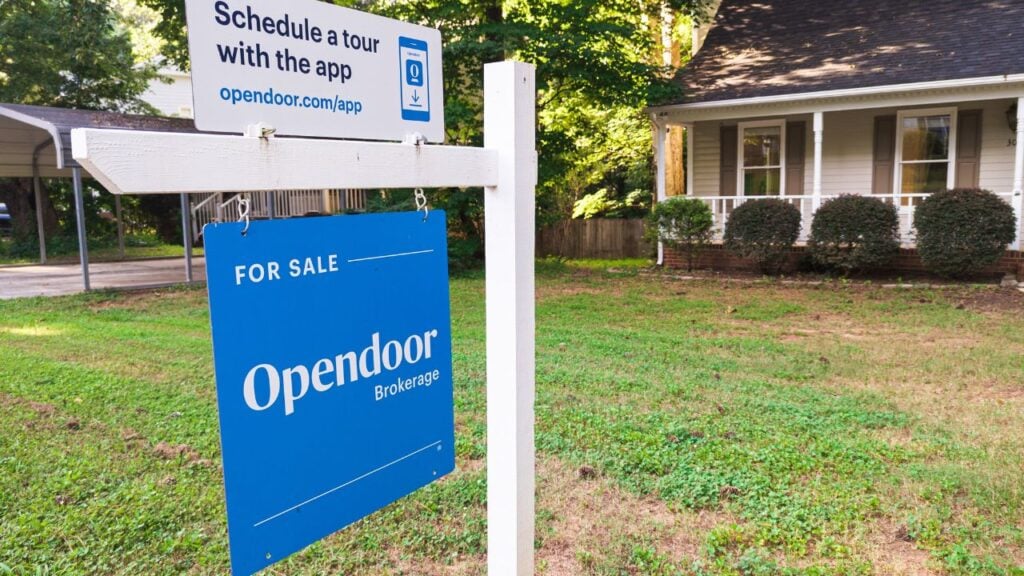
A signed contract in Virginia isn't a sold house, and many sellers find that out the hard way.
More than one in seven contracts fell apart nationwide last August, and a home inspection was the reason more than seven times out of ten.
8 Things Virginia Home Sellers Do That Kill the Sale
8 Money Mistakes Virginia Homeowners Make Before They Retire

A couple in Roanoke pays off the mortgage, circles a retirement date, and figures the hard part is over.
Three years later, the numbers they ran at the kitchen table stop matching what shows up on paper.
8 Money Mistakes Virginia Homeowners Make Before They Retire
