
9 Small-Town Pennsylvania Traditions That Out-of-Staters Rarely Understand

A Lehigh Valley club in Pennsylvania has followed the same unusual dinner table rule since 1934.
Locals in small Pennsylvania towns grow up knowing rules like it, and newcomers rarely hear the reason until they ask.
These are the small-town Pennsylvania traditions that out-of-staters rarely understand.
1. Belsnickel Comes Calling
Belsnickel is a Pennsylvania Dutch Christmas tradition that starts as a knock at the window weeks before Christmas, from a raggedy figure nobody invited in.
Pennsylvania Dutch families in Lancaster, Berks, and Lehigh counties have kept this Rhineland Palatinate character around since German settlers carried him across the ocean.
He carries a switch in one hand and a small gift in the other, and kids recite a poem or a Bible verse before they find out which one they’re getting.
Not a home invasion.
A visitor catching sight of Belsnickel at a farmhouse window for the first time could be forgiven for assuming something’s wrong.
2. Grundsow Lodges’ Language Rule
Grundsow Lodges have met in small Lehigh Valley and Berks County towns since 1934, and the whole point is keeping Pennsylvania Dutch alive.
Speak English at the banquet table, and it costs you.
No exceptions.
Coins and bills go into a fine box, one word at a time.
The lodges are male-only gatherings that mix a groundhog-themed toast with a full Pennsylvania Dutch dinner, and members who can’t speak the dialect fluently just pay up and grin.
An outsider who wanders into one expects a Groundhog Day costume party, not a language-preservation club with dues and a fine box.
3. Groundhog Day’s Inner Circle
Punxsutawney’s Groundhog Day runs on a fifteen-member Inner Circle drawn from a town of under 6,000 people.
They wear top hats and tuxedos before dawn every February 2, then walk Phil out of his stump at Gobbler’s Knob in front of a crowd that’s been shivering there since before sunrise.
The club president claims to translate Phil’s forecast from an invented language called Groundhogese, and only the sitting president can supposedly understand it.
Nobody else even tries.
The Groundhog Club has held this small-town civic office for more than a century now, tuxedos, top hats, and an invented language included.
4. Fastnacht Day’s Doughnut Rush
Fastnacht Day empties Pennsylvania Dutch bakery shelves across Lancaster, York, and Berks counties every Shrove Tuesday, hours before many people outside those counties have heard the word.
A fastnacht is a heavy, potato-based doughnut fried with no hole in the center, made to use up a Pennsylvania Dutch kitchen’s lard and sugar before Lent.
One day only.
Slice it, butter it, and top it with syrup.
Someone visiting from outside Pennsylvania Dutch country hears “fastnacht” and pictures a fancy pastry, not a plate of fried dough that sells out before many people have poured their coffee.
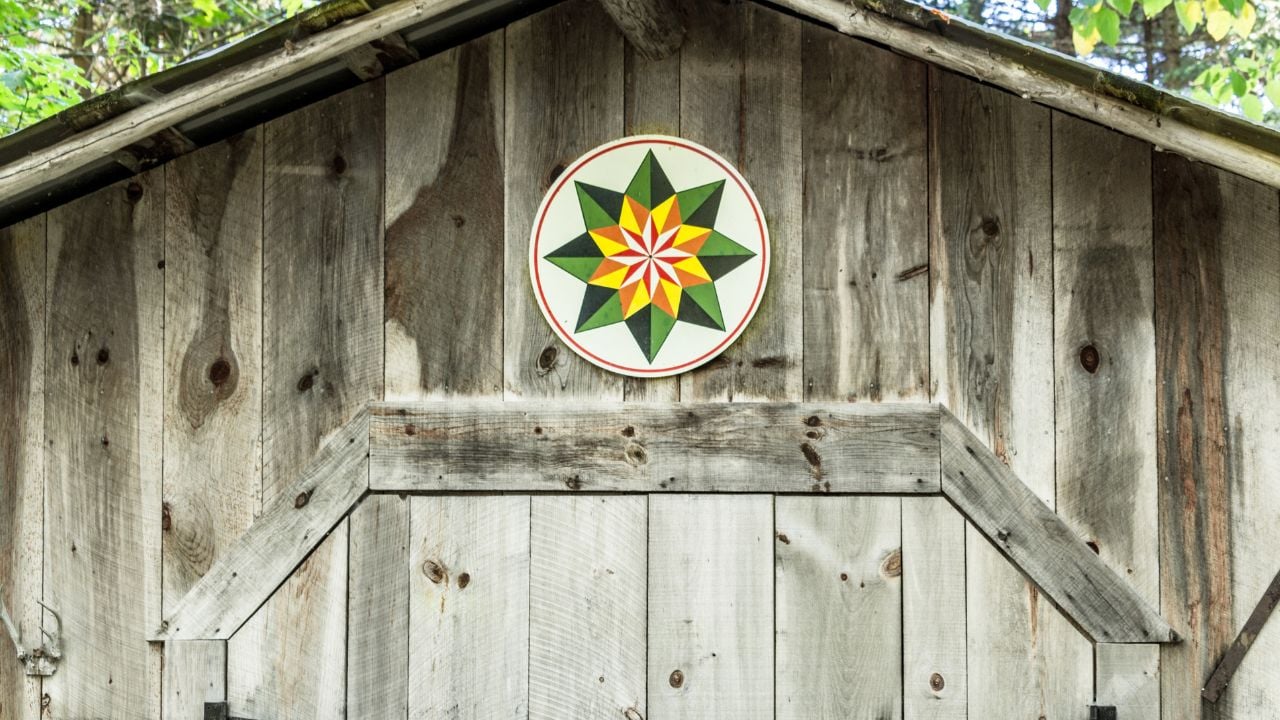
5. Hex Signs on the Barn
Hex signs cover barns across Pennsylvania Dutch farm country, painted stars, tulips, and birds inside bright, deliberate circles.
Tourists often assume the signs ward off witches, a story that traces back to Berks County folk artist Johnny Ott, who started selling the discs as objects of folk magic in 1952.
Folk artist Milton Hill summed up the Fancy Dutch view in three words.
“Chust for nice.”
Historians have argued over which explanation is true for decades, and Fancy Dutch families keep repainting their barns either way. Amish and Mennonite households reject hex signs as superstition and hang none at all.
Psst! How much do you know about small-town Pennsylvania history? Take our quiz and see how many you can get right.
Quiz
Small-Town Pennsylvania IQ
Answer these questions on small-town Pennsylvania history. We bet you can’t get them all right. Prove us wrong?
Which small Carbon County town changed its name in 1954 to honor an Olympic athlete who never lived there?
6. Second Christmas Day
Second Christmas falls on December 26 for many Pennsylvania Dutch, Amish, and Mennonite families in the state's rural counties, and it's treated as its own separate holiday.
Christmas Day covers the immediate family.
Then comes round two.
Second Christmas covers everyone else, aunts, cousins, and neighbors who couldn't fit into the first round of visiting.
A second house down the road is already setting the table for round two while the rest of the country treats December 26 as just another day off.
7. Buck Season's Empty Classrooms
Buck season has thinned out rural Pennsylvania classrooms on opening day for more than 50 years, a tradition once tied to the Monday after Thanksgiving.
The Pennsylvania Game Commission moved opening day to the Saturday after Thanksgiving in 2019, chasing younger hunters with a weekend start.
Some districts adjusted their calendars.
Many rural schools still schedule a day off around opening weekend anyway, out of habit as much as anything else. Hunters in some counties still call it "the Monday," even in years the season opens on a Saturday.
Why Pennsylvania's Deer Season Split Still Confuses People
Pennsylvania's deer season opener isn't the same everywhere anymore, and that split is exactly what confuses visitors.
The Game Commission's 2019 switch to a Saturday start pulled in more hunters overall.
But many rural school boards never updated their calendars to match.
Closures still cluster around the old Monday date in some counties and not others.
State Sens. Gene Yaw and Lisa Boscola announced plans in February 2026 to introduce legislation restoring the Monday opener, arguing the Saturday date broke a tradition that outlasted its own reasoning.
8. Fire Company Carnivals
Volunteer fire companies across small-town Pennsylvania run their own carnivals every summer, and the take from games, food stands, and raffles is often what keeps the department's budget afloat for the whole year.
One Pocono Mountain company calls its summer raffle the single biggest source of the money it spends each year on equipment, training, and operations.
Grand prize this year: $25,000.
Second place pays $2,000 and third pays $1,500, prize money that comes back to the department through cake wheels, chicken barbecue, and a week of carnival tickets, not a tax bill.
9. Honor-System Farm Stands
Honor-system farm stands dot the roadsides of Pennsylvania's Lancaster and Somerset county farm country.
A table of tomatoes, corn, and eggs sits next to a price list and a cash box.
No clerk in sight.
Many of these stands belong to Amish and Mennonite growers who leave the produce unattended between farm chores, trusting neighbors and strangers alike to pay what's marked.
A first-time visitor eyes the unattended cash box and waits for someone to come running out, not realizing the system has worked that way for generations.
Fire Hall Suppers Split Along Ethnic Lines
Pennsylvania's fire hall and church suppers change character entirely depending on which immigrants settled the county first.
Coal region parishes in Schuylkill, Luzerne, and Carbon counties serve pierogi, haluski, and kielbasa, food carried over by the Polish, Slovak, and other Eastern European immigrants who settled the mining towns in the late 1800s and early 1900s.
Same recipes, new decade.
Rows of women hand-fold the dumplings at long kitchen tables the week before.
Ninety miles west in Lancaster County, the fire hall supper looks nothing like it.
Bird-in-Hand's Hand-in-Hand Fire Company held its 31st annual chicken pot pie fundraiser in February 2026, and close to 100 volunteers served nearly 1,000 gallons of the Pennsylvania Dutch specialty in a single day.
A visitor who wanders into a coal region fire hall expecting a hot dog stand finds a plate of fried cabbage and potato dumplings instead.
Bethlehem's Saints Peter and Paul Byzantine Catholic Church sells its cheese pierogi the same way its parish has for years: By the dozen, $10 a batch, made by volunteers who show up once a month, ten months a year.
7 Pennsylvania Fair Foods That Sound Wrong but Taste Right
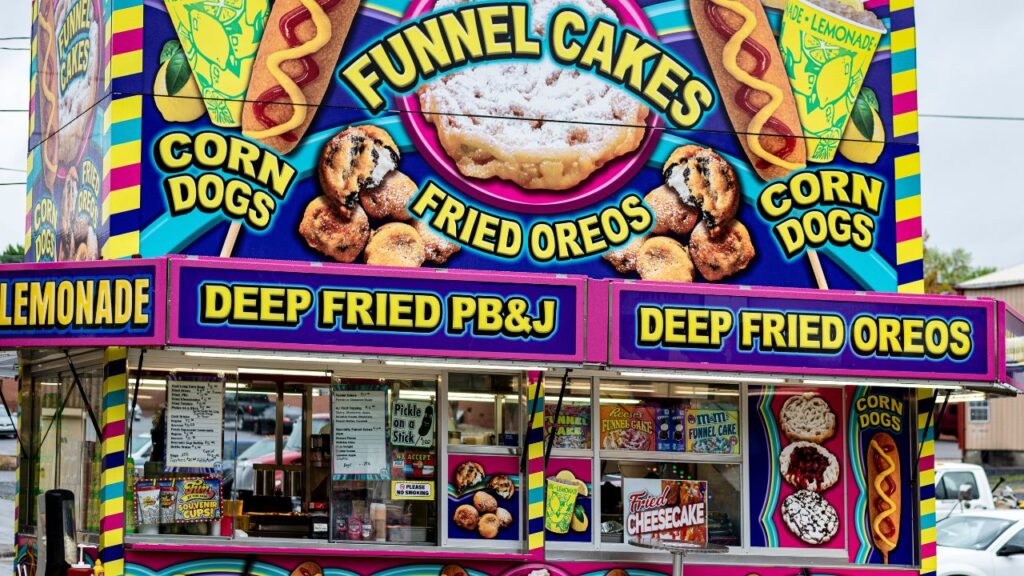
Six Pennsylvania county fairs run every week of late summer, from the Poconos to the New York state line, and every one of them serves food whose name gets your order wrong before you've had a single bite.
The fair food stands are their own small-town tradition, and outsiders never guess what's on the plate.
7 Pennsylvania Fair Foods That Sound Wrong but Taste Right
How Well Do You Know Pennsylvania Amish Country? Find Out With This Quiz
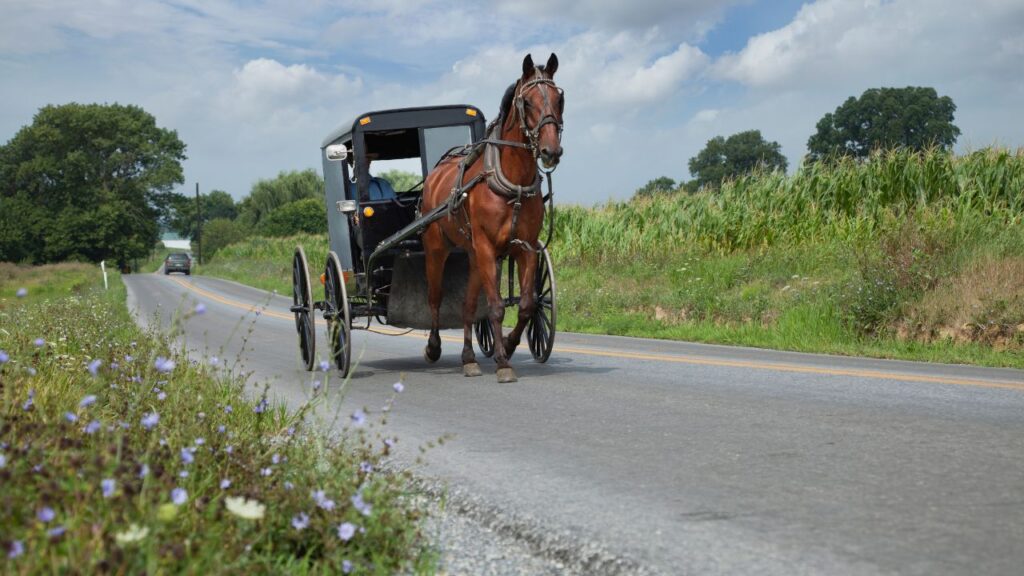
Pennsylvania Amish country is known for its farms, covered bridges, and horse-drawn buggies, but there's much more to understand beyond those familiar sights.
This quiz digs into the history and everyday life behind Lancaster County's Amish and Pennsylvania Dutch communities.
How Well Do You Know Pennsylvania Amish Country? Find Out With This Quiz
