
9 South Carolina Backyard Pests That Ambush Newcomers Every Summer

A newcomer in Mount Pleasant fires up the mower one July evening and rolls straight over a nest hidden in the grass.
Forty yellow jackets come up at once, and she’s stung before she even cuts the engine.
Her next-door neighbor, born and raised in the Lowcountry, just laughs and points at the ground everyone learns to check first.
These are the South Carolina backyard pests that ambush newcomers every summer.
1. Fire Ants
A South Carolina lawn can look perfectly normal until a bare foot lands on the wrong loose patch of dirt near the mailbox.
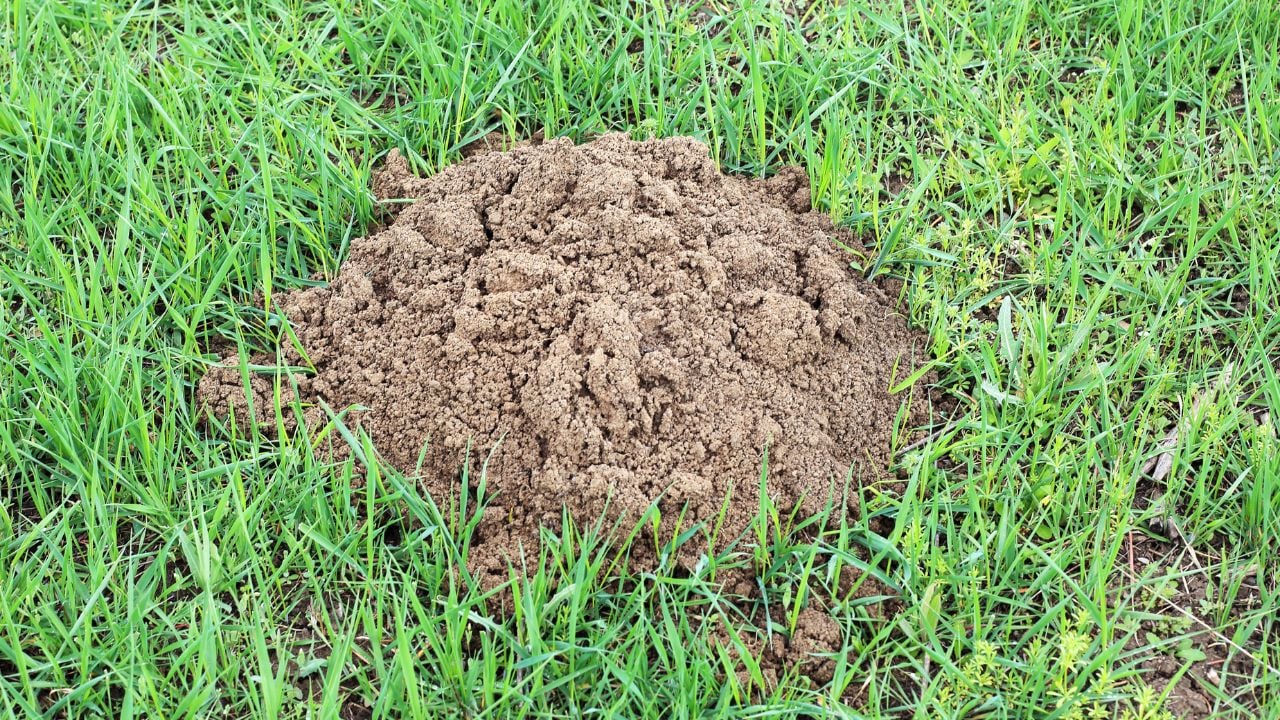
Fire ant mounds can look like a small, harmless pile of dirt.
But a mound just 2 feet across can hold about 100,000 ants, according to North Carolina State University’s Extension entomologists.
Step on it, and the whole colony comes up together, climbing anything nearby and stinging in unison instead of one at a time.
That’s the ambush.
The mounds hide their entrances in underground tunnels instead of one obvious hole on top, so a patch of ground can look empty right up until it isn’t.
Fire ants forage hardest once the soil warms into the 70s and 90s, which covers a South Carolina July from sunrise past dinner.
Newcomers learn fast to scan the yard before they kick a ball or set down a cooler.
2. Palmetto Bugs
Newcomers hear “palmetto bug” and picture something friendlier than what’s skittering across the porch.
It’s the regional nickname for the American cockroach, a shiny reddish-brown insect that can run close to 2 inches long.
Palmetto bugs prefer the outdoors, living in mulch, woodpiles, and storm drains, then move indoors toward the air conditioning once a South Carolina summer hits its deepest heat.
Their cousin, the smoky brown cockroach, has full wings and flies straight at a porch light on a humid night.
It doesn’t just scuttle.
Both species thrive in the humidity that settles over the Lowcountry and the Midlands alike through August.
A palmetto bug indoors is usually a heat signal, not a cleanliness problem.
3. Yellow Jackets
Yellow jackets build their nests in the ground, not up in the eaves, so a bare patch of yard can hide hundreds of them.
Colonies peak in size by late summer, right as food gets scarce for the group.
That shortage makes them quicker to sting, not slower.
Disturb a nest, mowing over it or stepping too close, and hundreds of workers can surge out within seconds.
Every one of them can sting more than once.
A late July cookout near an unnoticed ground nest can end with more guests stung than fed.
4. No-See-Ums
Head to a South Carolina marsh or a Lowcountry dock at dusk, and something invisible starts biting within minutes.
No-see-ums are biting midges barely a couple of millimeters long, small enough to slip through most window screens.
Only the females bite, drawing a blood meal before they lay their eggs near standing water.
They favor the warm, humid edges of marshes, lagoons, and tidal creeks, exactly the scenery that pulls people outside on a summer evening.
Mornings, early evenings, and overcast days are their favorite hours to feed.
A body covered in itchy little dots the next morning is the real souvenir of an evening on the dock.
5. Banana Spiders
Walk face-first into a spiderweb strung across a Lowcountry trail in late July, and the culprit is probably a banana spider.
Banana spiders, also called golden silk orb-weavers, spin webs over 3 feet across and sit head-down right in the middle.
Females grow far larger than males, with body length alone reaching 2 inches before you even count the legs.
Mid-to-late summer is peak season for them, especially in the high humidity of the Lowcountry.
They aren’t dangerous, but a bite can sting enough to make a hiker yelp.
Nobody notices the web until they’re already wearing it.
Psst! How much do you know about South Carolina’s wildlife? Take our quiz and see if you can ace it.
Quiz
South Carolina Wildlife IQ
Answer these questions on South Carolina’s wild side, official state symbols included. We bet you can’t get them all right. Prove us wrong?
Which plant grows wild in nature nowhere on Earth except a roughly 100-square-mile stretch straddling the Carolinas?
6. Lone Star Ticks
Lone star ticks are one of the most common ticks picked up in South Carolina, and they get more active as spring turns into summer.
A lone star tick bite carries a risk most newcomers have never heard of: Alpha-gal syndrome, a new allergy to red meat and dairy that some people develop after being bitten.
Public health researchers in South Carolina now collect tick samples statewide to track how far that risk has spread.
A tick this small never announces the bite.
Skip the tick check after a hike, and dinner is when you find out.
7. Chiggers (Redbugs)
Most South Carolinians call them redbugs, and a redbug's itch lasts far longer than its bite.
Redbugs are mite larvae, more closely related to ticks and spiders than to actual insects, and they wait on grass and weeds close to the ground.
They don't burrow under the skin the way the old folklore claims.
Clemson's Home and Garden Information Center says redbugs pierce the skin around a hair follicle and feed on the cells their saliva dissolves, usually right where a waistband or a sock cuff presses tight.
That's why the itchiest spots always line up with wherever your clothes fit snug.
Tucking pant legs into socks blocks more redbugs than a whole bottle of repellent.
8. Carpenter Bees
A carpenter bee dive-bombing your porch in June and July looks like the most aggressive insect in the yard, and it's the bee you can mostly ignore.
Male carpenter bees hover at eye level and charge anyone who lingers near their nest, whether that's a porch in Charleston or a carport in Columbia.
They don't have stingers.
Females do carry a stinger, but rarely sting unless someone grabs them.
The dive-bombing is a show.
Female carpenter bees do the real damage, boring round tunnels into pine and cedar, two woods common on South Carolina porches and decks, to lay their eggs inside.
New adults emerge from those tunnels by late summer, so a July porch beam can host bees that hatched from last year's holes.
9. Brown Recluse Panic
Every summer, worried homeowners mail Clemson University photos of spiders they're sure are brown recluses.
Almost none of them are.
The brown recluse's confirmed range barely creeps into South Carolina's Upstate corner, and the state has logged only a handful of verified sightings in its entire history.
What newcomers usually find instead is a Carolina wolf spider: Gray-brown, hairy-legged, with eight eyes instead of the recluse's six.
South Carolina named the Carolina wolf spider its official state spider back in 2000, and it's one of only two states in the country that officially recognize a spider at all.
So that giant hairy spider on the garage floor probably isn't a threat.
It's a local celebrity.
8 Unwritten Rules of South Carolina Fishing Piers Newcomers Break

South Carolina's fishing piers stretch far enough that a king mackerel and a whiting can come off the same rail in one afternoon.
The regulars follow rules nobody prints on a sign, and newcomers break every one of them on the first trip out.
8 Unwritten Rules of South Carolina Fishing Piers Newcomers Break
7 Things Sitting in South Carolina Garages That Should've Been Tossed Years Ago
That red gas can in the corner of a South Carolina garage isn't just taking up space.
Gasoline goes stale in months, and a handful of other things cross the line from junk to hazard without any warning.
7 Things Sitting in South Carolina Garages That Should've Been Tossed Years Ago
