
9 South Carolina Beach Parking Mistakes Visitors Keep Making

Isle of Palms hands out a flat fine for parking against traffic, even on a public street with no meter in sight.
That’s just one of several rules that catch visitors who assume a free street means no rules.
These are the parking mistakes visitors in South Carolina keep making, and the price changes with the zip code.
Note: This is general information, not legal advice. Parking rules, fees, and permits are set by each town and are subject to change.
1. Underfeeding Myrtle Beach’s Parking Meter
Myrtle Beach enforces its street-end parking meters from 9 a.m. to midnight, every day of the week.
A visitor who feeds the meter through the afternoon and heads back to a rental for dinner is still parked illegally at 9 p.m. because the city’s beach-access rate runs $3 an hour or $15 for the whole day, whichever a driver paid for.
That’s nowhere close to midnight.
A first citation starts at $30, and it rises to $60 if it sits unpaid for 30 days.
Myrtle Beach does offer an all-day rate at many of its meters: A flat $15, no clock-watching required.
2. Trusting Myrtle Beach’s Pass Everywhere
Myrtle Beach sells a seven-day visitor parking pass for $50 and a non-resident placard for $100 a year, and both sound like an all-access pass to the beach.
They aren’t.
Both are only good at designated metered parking and metered street-ends, and neither one works inside the city’s “Decal Only” parking areas in The Avenues, from 31st to 82nd Avenue North.
A visitor who buys the placard, tucks it on the dash, and parks in one of those decal-only blocks still drives away with a ticket.
The same pass is worthless in the Pavilion Parking Garage and in any privately owned lot, so it pays to check the sign before assuming a paid pass covers the spot.
3. Skipping Hilton Head’s Free Beach
Hilton Head Island lets a car park free at Coligny Beach Park, and it’s the only beach park on the island where that’s true.
Every other public beach park, Islanders, Driessen, Folly Field, Alder Lane, Burkes, Chaplin, and Fish Haul, charges $3 an hour on weekdays and $5 an hour on weekends.
A visitor who doesn’t know that drives straight past Coligny’s 397 free spaces and feeds a meter somewhere else all afternoon.
That’s needless spending.
Hilton Head Island’s beach parks all keep the same 6 a.m. to 10 p.m. gate hours, so the free option isn’t harder to reach.
It’s just easier to miss.
4. Parking in Hilton Head’s Resident Rows
Hilton Head Island reserves part of two of its busiest beach parking lots for residents only.
Islanders Beach Park sets aside 127 of its 164 spaces for resident permit holders, and Driessen Beach Park reserves 27 of its 206.
The rest of each lot is open, paid parking, so a visitor who parks in the wrong row still finds a ticket under the wiper, even though the space two rows over would have been perfectly legal.
It’s an easy mix-up.
Those rows carry their own painted markings and signage, easy to miss on a first visit while hauling a cooler and a beach umbrella toward the boardwalk.
Look for the paint before circling for the closest open spot.
What “Resident” Means for a South Carolina Beach Permit
South Carolina’s beach towns don’t agree on who counts as a resident for a free parking permit.
Hilton Head Island accepts a current tax bill, a closing document, or a lease longer than 183 days as proof.
It then issues up to two digital permits per address.
Folly Beach splits the program into two tiers instead.
A permanent resident permit covers a full-time address.
A part-time resident permit covers a second home.
The part-time version requires the owner to promise, in writing, that the home is never rented out.
Neither permit transfers to a rental home a visitor is only staying in for a week, so “my host lives here” isn’t a stand-in for the actual paperwork.
5. Borrowing a Folly Beach Driveway
Folly Beach driveways look tempting when the sand is two blocks away and every legal spot is full.
Pull into one that isn’t yours, or block a resident’s car already parked there, and the owner can have your car towed.
Under South Carolina’s private-property parking law, a homeowner never has to post a sign before having an unauthorized vehicle removed because that signage requirement only applies to commercial property.
That surprises many visitors.
A visitor unloading beach chairs who pulls into what looks like open space in front of a rental next door can come back from the sand to an empty spot and a tow bill.
6. Parking Against Traffic on Isle of Palms
Isle of Palms lets visitors park for free along several stretches of its road right-of-way, no meter and no permit required.
That freedom comes with rules many drivers don’t expect from a free spot.
Park against the flow of traffic, leave a tire on the roadway, or park at the wrong angle on Palm Boulevard, and each one draws a flat $100 fine.
On the ocean side of Palm Boulevard between 21st and 40th Avenue, cars have to sit at least four feet off the pavement.
On the land side of that same stretch, cars have to angle into marked spaces instead of parking parallel.
Free doesn’t mean casual.
Psst! How much do you know about parking at South Carolina’s beaches? Tap through and see how many you call right.
7. Leaving Tires on the Pavement on Sullivan’s Island
Sullivan’s Island charges nothing to park along its right-of-way, no meter and no payment kiosk anywhere on the island.
That free parking is exactly why so many drivers get careless about where the tires land.
Town rules require every car parked along the right-of-way to have all four tires off the pavement.
Sullivan’s Island tickets cars that don’t.
No exceptions.
A driver who parks the way they would in a mainland lot, two wheels resting on the asphalt to save a few feet, ends up paying for a spot they thought was free.
8. Expecting Free Parking on Kiawah
Kiawah Island is a private community, and Beachwalker County Park is the only spot on the island where a visitor can legally park for the beach at all.
Charleston County runs that park.
Its parking fee rises through the spring and peaks at $25 a carload on weekends and holidays from May through Labor Day.
A visitor who drives the causeway expecting a free public beach, the way Folly Beach or Isle of Palms works, hits a gated entrance instead.
Nowhere else on Kiawah offers public beach parking.
The rest of Kiawah’s beachfront sits behind gated private roads, closed to anyone who isn’t a resident or a guest.
It’s the only door in.
9. Sleeping Past Closing at Pawleys Island
Pawleys Island posts strict hours on its public beach-access parking, even though its lots have no gate to lock.
Parking is prohibited in the town’s beach-access areas between 11 p.m. and 6 a.m. every night, from the county’s lot at the south end of Springs Avenue, one of Georgetown County’s larger free public beach lots, to the eight smaller access points that together add about 141 more parking spaces.
A visitor who treats a beach parking lot like an overnight rest stop, or dozes off after a late fishing trip, wakes up to a citation instead of a sunrise.
No locked gate warns you.
Read the posted sign before settling in for the night.
State Law Behind Every South Carolina Tow
South Carolina backs up every beach town’s towing threat with the same statewide law, whether the car sits in a driveway on Folly Beach or a private lot two blocks off Myrtle Beach’s boardwalk.
State law makes it a misdemeanor to park on private property without the owner’s permission, punishable by a fine between $25 and $100, on top of whatever the tow itself costs.
A commercial lot has to post a no-parking notice at every entrance before it can enforce that law.
A homeowner doesn’t.
The towing company still has its own clock to beat.
It has to notify local police within one hour of towing a car without the owner around, or it forfeits the right to collect a single dollar in fees.
It’s zero, not reduced.
A driver who suspects a tow happened without that call ever going out can ask police for the timestamp on the report, solid leverage in a fee dispute.
11 Beach Etiquette Rules South Carolinians Wish Tourists Followed
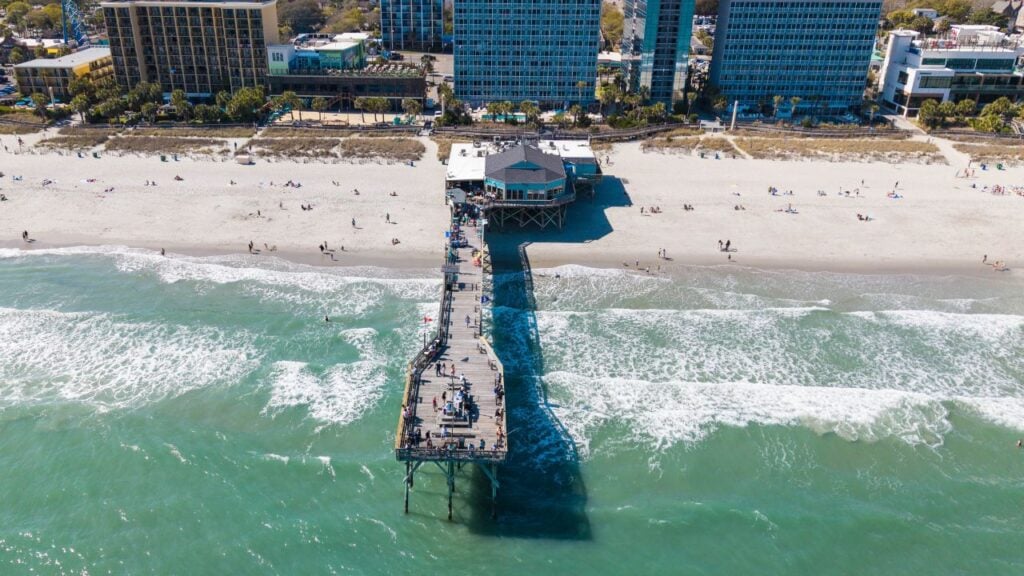
Ask a South Carolina native what ruins a good beach day, and the weather rarely makes the list.
It’s the stuff other people leave behind, dig up, or crank too loud two towels over.
11 Beach Etiquette Rules South Carolinians Wish Tourists Followed
9 South Carolina Coastal Towns Getting Too Crowded to Love
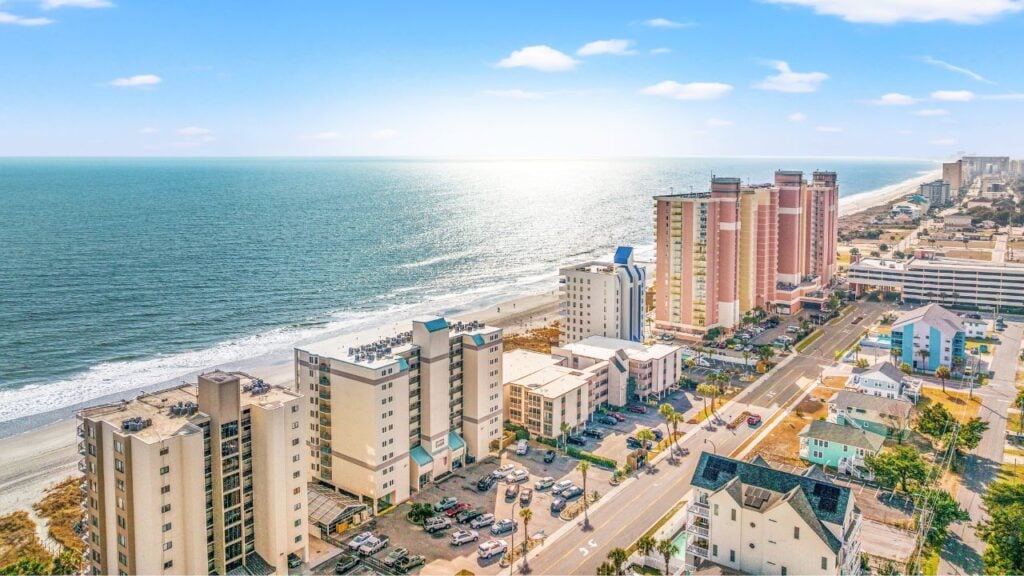
Summer Saturdays now start with a line for the beach path before the coffee shop even unlocks its door.
Everyone came to South Carolina’s coast for the charm, and then everyone decided to stay.
