
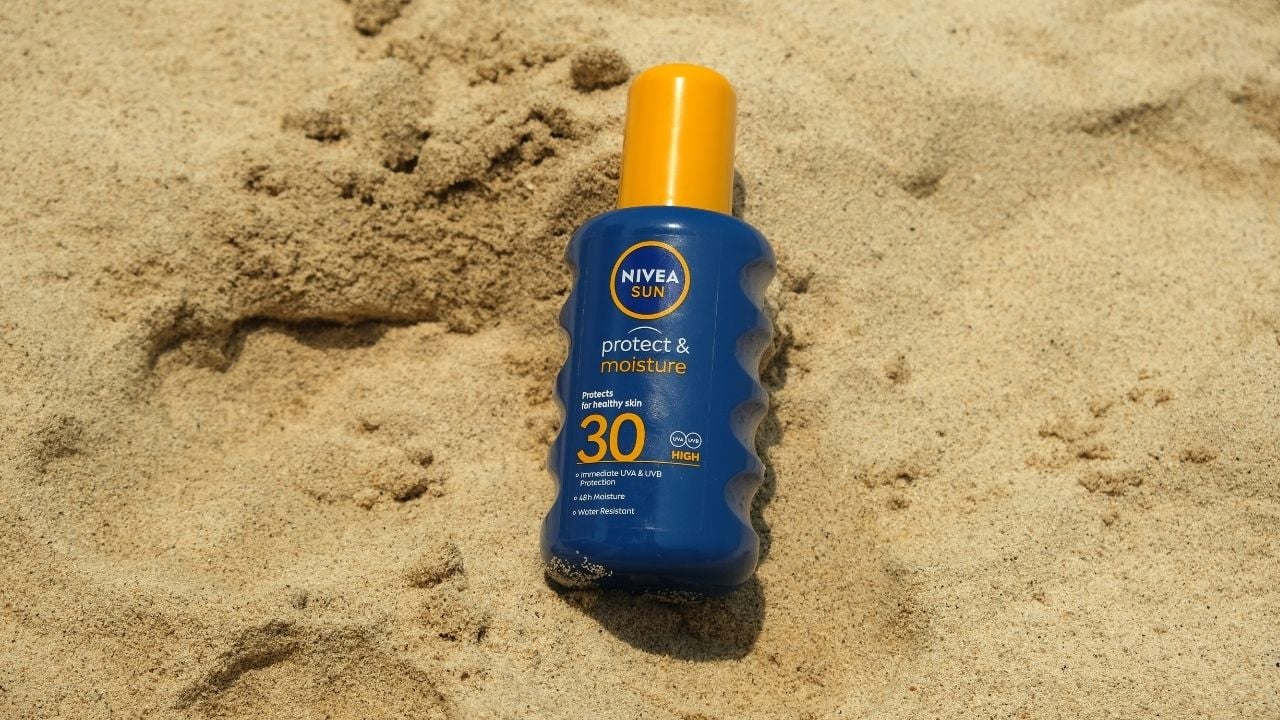
9 Sunscreen Label Claims Nevadans Shouldn’t Trust

Southern Nevada sees more than 80% of its possible sunshine in a typical year, according to climate data from the Desert Research Institute.
That much sun means shoppers buy a lot of sunscreen, and brands print many promises on the bottles.
Not all of them hold up.
These are the sunscreen label claims Nevadans shouldn’t trust.
Note: This is general information, not medical advice. Sunscreen rules and product formulas can change, so check with a dermatologist about what’s right for your skin.
1. Waterproof
“Waterproof” used to sit right on the front of sunscreen bottles, in the same bold print as the Sun Protection Factor (SPF) number.
The state gives swimmers no shortage of chances to use it.
Southern Nevada’s odds of a sunny day run better than four in five, according to Desert Research Institute climate records.
The state’s northern half trails at closer to seven in ten.
Lake Mead and Lake Tahoe stay full of swimmers for much of that stretch.
No sunscreen earns “waterproof,” though.
The Food and Drug Administration (FDA) banned the term outright because it overstates what any formula can survive.
Every product eventually washes off.
2. Sunblock
“Sunblock” sounds like a stronger promise than “sunscreen,” which is exactly the problem.
The FDA requires sunscreen makers to print “sunscreen,” not “sunblock,” on the label now.
“Sunblock” implies total protection no formula delivers.
No formula comes close.
Even the highest SPF numbers let some ultraviolet (UV) radiation through.
Shoppers who reach for the word “sunblock” out of habit are reaching for a promise the bottle can’t keep, whatever brand sits on the shelf.
3. Sweatproof
“Sweatproof” sunscreen sounds like good news for anyone working outside through a Nevada summer, when afternoon highs in Las Vegas regularly top 100 degrees.
The claim can’t back that up.
The FDA banned “sweatproof” for the same reason it banned “waterproof.”
No sunscreen formula survives sweat, or water, without eventually breaking down.
A bottle marked “sweat resistant” instead has been tested for a set stretch of time.
“Sweatproof” proved nothing.
4. SPF Number Alone
A high SPF number sits front and center on many sunscreen bottles, and shoppers often treat it as the whole story.
It isn’t.
The FDA’s rules state that SPF values only measure how well a sunscreen blocks ultraviolet B (UVB) rays, the wavelength that causes sunburn.
Ultraviolet A (UVA) rays, tied to skin aging and skin cancer risk, don’t factor into that number at all.
A sunscreen only earns credit for blocking UVA rays if it passes a separate broad spectrum test and prints “Broad Spectrum” next to the SPF number.
Skip that test, and the label can’t legally claim to lower skin cancer or aging risk, no matter how high the SPF number rises.
The number on the front tells only half the story.
5. SPF 100
“SPF 100” looks like the safest number on a sunscreen shelf, twice the SPF of a basic SPF 50 bottle.
The math doesn’t double, though.
SPF 50 blocks about 98% of UVB rays, and SPF 100 blocks about 99%, according to Northwestern Medicine.
That’s one extra percentage point for double the number on the label.
The FDA has taken notice, too.
The agency’s data showed a meaningful clinical benefit at broad spectrum SPF 60.
That’s why it has proposed capping the number printed on sunscreen labels at “60+,” though that rule isn’t final yet.
The Number Assumes a Full Dose
Sunscreen’s printed SPF number only holds up at a set amount, not a quick swipe.
The American Academy of Dermatology puts a full-body dose at about one ounce, roughly a shot glass full, for skin not already covered by clothing.
Use less than that, and the number on the bottle stops matching what’s on the skin.
6. 80-Minute Water Resistance
Brands print “water resistant (80 minutes)” on many Nevada-bound sunscreen bottles headed for Lake Mead or a Strip pool day.
The FDA tests that number, unlike “waterproof.”
But it only covers what the FDA tested: Swimming or sweating for that exact stretch, immediately followed by a fresh SPF check.
Towel off between dips, and the clock doesn’t pause.
No pause button exists.
The label still means reapply after swimming, sweating heavily, or toweling off, no matter what the printed minutes say.
7. Hypoallergenic
“Hypoallergenic” shows up on many “sensitive skin” sunscreen formulas.
The word means less than shoppers think.
No standard exists.
The FDA has stated flatly that no federal standard defines “hypoallergenic,” and no testing is required before a company prints it.
A company can call a sunscreen hypoallergenic without submitting a shred of proof to anyone.
Reading the ingredient list still beats trusting the word on the front.
8. Reef-Safe
“Reef-safe” and “reef-friendly” both sound like firm promises on a sunscreen label.
Nothing backs either claim.
Consumer Reports found no regulated meaning for either term, and any company can define “reef-safe” however it likes.
That reporting describes the claim as little more than a marketing label, since nothing outside the company itself verifies it.
A shopper chasing an eco-friendly sunscreen still has to read the ingredient list, not the front of the bottle.
Psst! How much do you know about the science and history behind sunscreen? Take our quiz and see how many you can get right.
Quiz
Sunscreen Science IQ
Sun science and sunscreen history are full of surprises. See how many of these you can get right.
A Swiss chemist’s bad sunburn on a 1938 mountain-climbing trip changed sun care forever. What did he go on to create?
9. Instant Protection
"Instant protection" markets many mineral sunscreen formulas as ready to work the second they're rubbed in.
Dermatologists don't back that timeline.
The American Academy of Dermatology also recommends applying sunscreen 15 minutes before heading outside, no matter what the formula promises on the label.
That gap gives sunscreen time to settle evenly across skin instead of rubbing off on a towel, a shirt collar, or a car seat five minutes later.
Fifteen minutes is a short wait before stepping into full sun.
