
9 Things Kentucky Veterinarians Can Tell About a Pet’s Home Life

Until 2020, Kentucky was the only state where a vet who spotted animal cruelty had no legal way to report it, per the Animal Welfare Institute.
State law finally caught up.
Luckily, most vet visits never get anywhere close to that point.
These are the things a Kentucky veterinarian can tell about a pet’s home life during a routine visit.
1. Weight and Body Condition
A dog or cat’s ribs and waistline tell a vet its body condition score within the first few seconds of a hands-on exam.
Ribs that vanish under a layer of fat push that score toward the top of a standard nine-point scale.
It isn’t guesswork.
A 2022 survey found 59% of U.S. dogs and 61% of cats were overweight or living with obesity.
Many vets trace that straight back to portion sizes, a bowl that never empties, or a running tally of treats nobody counts.
The Math Behind a Veterinarian’s Body Condition Score
A veterinarian’s nine-point body condition scale ties each score to a weight percentage, not just a general sense of “heavy.”
A 6 works out to about 10% over a healthy weight, a 7 to 20%, an 8 to 30%, and a 9 tops out around 40% over.
Two pets a vet calls “a little heavy” can be carrying very different amounts of extra weight, depending on where they land on that scale.
2. Tartar and Gum Disease
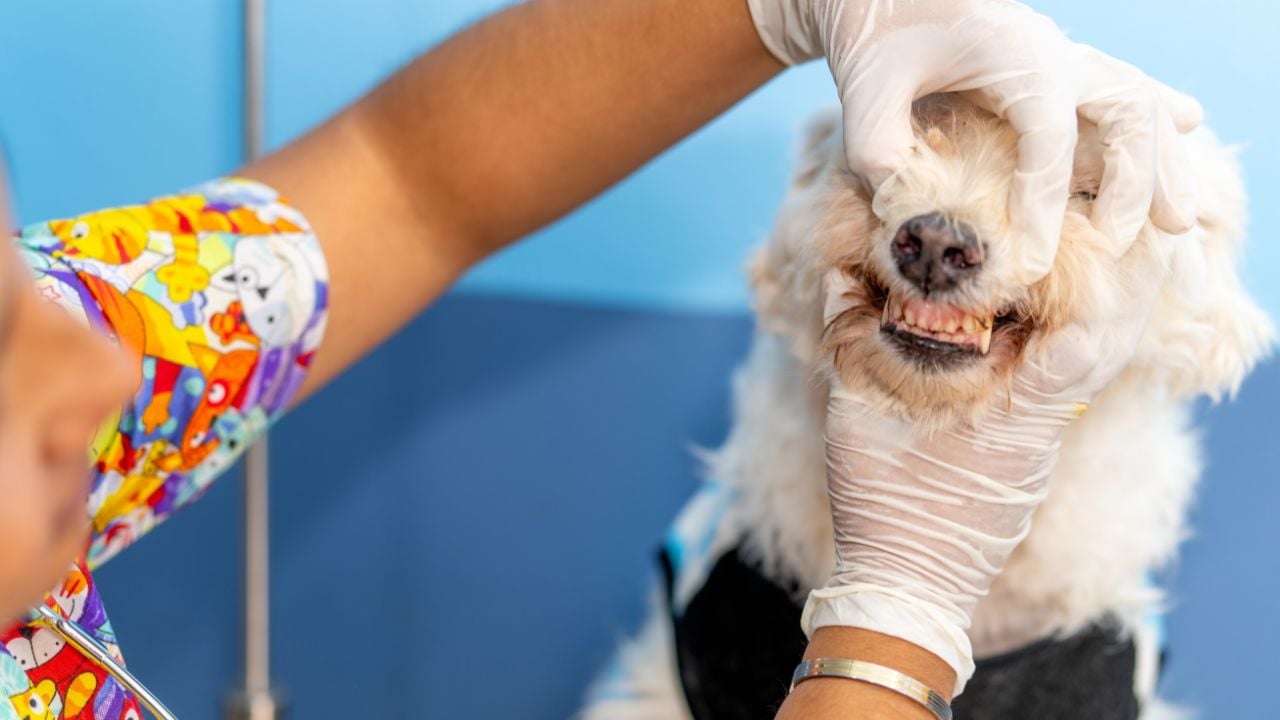
Tartar along the gumline is often the first thing a vet’s exam turns up inside a pet’s mouth.
Veterinary groups say most dogs and cats already show some form of periodontal disease by age three.
Brushing makes the difference.
A clean mouth usually means regular brushing or dental chews at home.
Heavy tartar usually means the opposite, a pet whose teeth nobody touches between visits.
Left alone, that buildup pushes under the gumline and causes pain many pets never show.
3. Overgrown Nails
Overgrown nails click across the exam room floor before a vet even starts the hands-on part of a visit.
Nails usually wear down on their own when a dog regularly walks on pavement or concrete.
A dog that mostly stays on carpet or grass needs a trim every few weeks instead.
That changes their gait.
Overgrown nails can lead to joint pain by pushing a paw into an unnatural angle.
That strain traces straight back to how much hard-surface walking a dog gets at home.
4. Matted or Neglected Coats
Dense mats hiding close to the skin are often the first thing a vet’s hands find during a coat check.
Dense mats pull on the skin, trap debris underneath, and can hide a wound from view.
That takes weeks to happen.
Regular brushing and bathing at home usually prevent all of that.
That’s why vets read heavy matting as a home-care gap first, not a medical mystery.
5. Flea Dirt and Tapeworms
Flea dirt and tapeworm segments show up during a vet’s exam even when a pet hasn’t scratched once at home.
Tiny black flecks in the fur, known as flea dirt, or small rice-like segments near the tail are proof enough on their own.
Both signal the same gap.
Finding tapeworm segments usually, though not always, traces back to a flea infestation, since fleas carry the most common tapeworm species.
Dogs with more access to rodents, rabbits, or wild game can pick up other tapeworm species the same way.
Veterinary parasite experts say owner compliance with year-round flea and tick prevention isn’t where it should be.
A pet showing flea dirt at the exam usually skipped a dose, or three.
Fleas don’t show up overnight, so a vet finding them is looking at weeks of missed prevention, not one unlucky afternoon outside.
6. Chronic Ear Problems
A bad ear tells on itself before a vet’s otoscope ever gets close.
Healthy ears stay dry, odor-free, and free of redness.
Neglected ears show a pattern.
Chronic infections often return because nobody treats every underlying cause.
Regular ear checks at home are part of what keeps that cycle from starting in the first place.
A vet who sees the same ear infection flare up every few months is usually looking at a routine that skips that step.
7. Reactions to Handling
How a dog or cat reacts to being touched tells a vet a lot about its home life before anyone says a word.
Trembling, tucking a tail, or freezing solid on the table often points to a pet that nobody handles or holds much at home.
Fear doesn’t always fade.
A 2015 veterinary behavior guideline found only about 10% of puppies fearful at 8 weeks old were still fearful at 18 months.
That lingering 10% usually traces back to how little handling or socialization a puppy got early on.
A vet who catches that pattern early is watching a socialization gap that started long before the appointment.
8. Gaps in the Vaccine Record
A patchy vaccine history tells a vet a lot before anyone asks a single question.
A 2025 survey found 52% of U.S. pet owners had skipped or declined some recommended veterinary care.
Cost drove 71% of those choices, per that same survey.
Money explains the gaps.
A spotty record doesn’t always mean neglect, but it does tell a vet how consistently a household can keep up with ongoing care.
Psst! How much do you know about veterinary history and pet biology? Take our quiz and see how many you can get right.
Quiz
Pet Health IQ
Answer these questions on vet history, pet biology, and how Kentucky fits into both. We bet you can’t get them all right. Prove us wrong?
Kentucky has never built a veterinary school. Since 1951, an in-state tuition partnership has sent Kentucky residents to earn a veterinary degree at which out-of-state university?
9. Right to Report
Severe emaciation, untreated wounds, and matting tight enough to cut off circulation sometimes turn up together in the same visit to a veterinarian.
That's neglect, plain and simple.
Kentucky's veterinarian confidentiality law used to bar a report like that outright.
Animal-welfare advocates spent nearly a decade trying to change that rule.
A 2020 law finally let a vet report it without risking a lawsuit, and Kentucky had been the country's only holdout, according to the Animal Welfare Institute.
9 Kentucky Dishes That Make Out-of-Staters Put Their Fork Down

A Kentucky festival has celebrated one food every year since 1977, and it isn't bourbon or barbecue.
Salt-cured country ham built that festival's reputation, and out-of-staters expecting a mild breakfast meat get a mouthful of salt instead.
9 Kentucky Dishes That Make Out-of-Staters Put Their Fork Down
