
9 Things Minnesota Mail Carriers Notice About a House

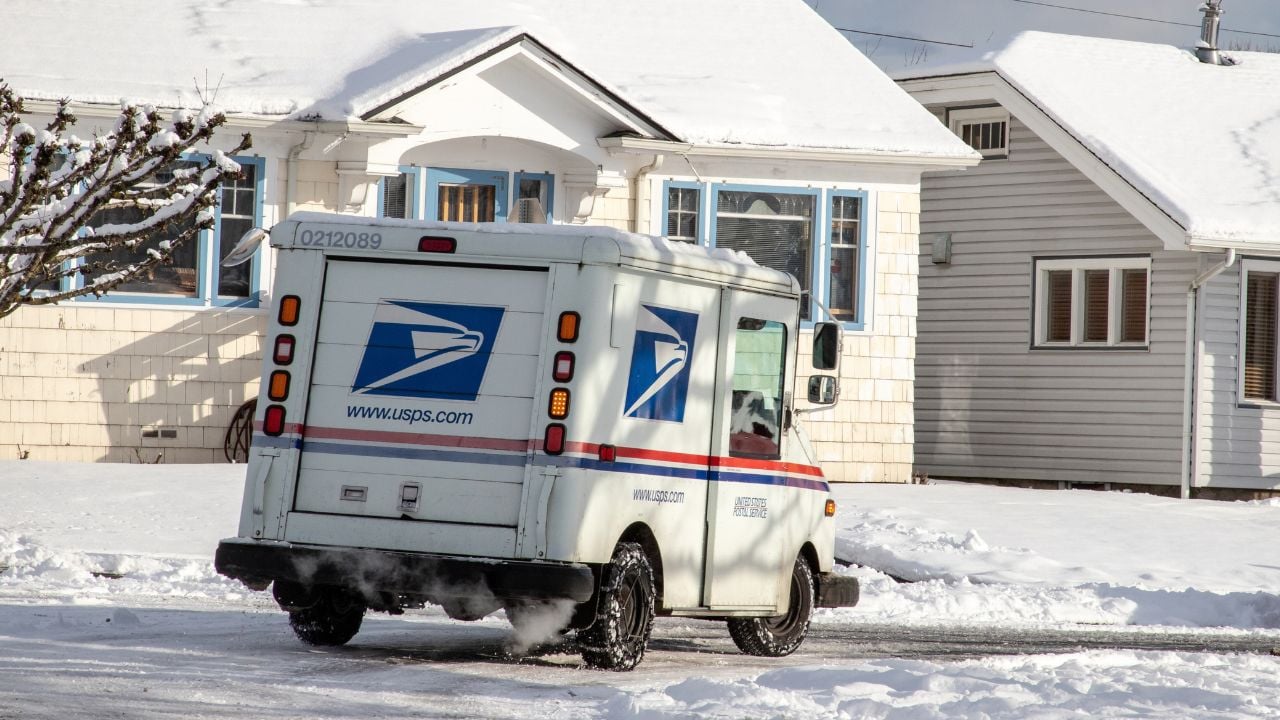
The average winter’s snowfall across the Twin Cities is 54 inches, and a mail carrier on foot walks through a good share of it.
You can bet they’re taking note of a lot of things.
These are the things Minnesota mail carriers notice about a house long before anyone answers the door.
1. Dog in the Yard
Mail carriers check every yard for one thing before anything else, whether a dog is loose or fenced in.
Minneapolis logged 29 attacks on carriers in 2025, enough to tie the city for 11th worst among U.S. cities on the United States Postal Service’s (USPS) dog bite rankings.
Minnesota didn’t crack the top 10 states.
California, Texas, and Ohio led that ranking instead, all of them far larger by population.
A single loose dog still changes the whole route.
One report is enough to pause delivery to that address until a mail carrier feels safe going back.
It happens every time.
When a Dog Stops a Mail Carrier
A Minnesota mail carrier who reports an unsafe dog can end up pausing mail for the whole street, not just the house with the dog.
USPS says it can suspend delivery to an entire street until the carrier feels safe going back.
Everyone there still has to pick up mail at the local post office until service starts again.
If nobody fixes the problem, USPS can require the household to rent a P.O. Box instead of ever getting carrier delivery back.
2. Whether the Walk Is Clear
Icy steps and unshoveled sidewalks cause more injuries among local mail carriers than almost anything else on the route.
The Minnesota-North Dakota postal district has told residents outright that slips, trips, and falls are its carriers’ most common injury, and the count rises as winter drags on.
State climate records kept by the Minnesota Department of Natural Resources show an average winter dropping 54 inches of snow across the Twin Cities.
That’s a lot of ice.
Sidewalks, porches, and the steps up to the door all count under that same warning.
A carrier who reaches a slick step or a buried walkway can decide it isn’t worth the risk that day.
Clear the path, and the carrier keeps moving.
3. Snowbank at the Mailbox
A mail carrier can’t deliver to a curbside mailbox the truck can’t reach.
USPS’s Minnesota office has asked residents to keep the approach to and exit from the mailbox clear of snow.
That way, the truck can pull in, drop the mail, and pull out again without backing up.
The same rule covers rural mailboxes set back on a long gravel driveway, not just curbside boxes.
The carrier can’t back up or leave the truck to reach a blocked box.
It waits instead.
A plow’s snowbank at the curb blocks that approach just as fast as snow nobody shoveled.
Clear a path to the box, and that stop goes back to being routine.
4. Icicles Along the Roofline
The roofline over a porch tells a mail carrier something the people inside don’t know yet.
A heavy ridge of ice and hanging icicles usually means warm air is escaping into the attic.
That warm air melts snow on the upper roof, and the meltwater refreezes the moment it reaches the cold eaves.
The result is an ice dam, according to University of Minnesota Extension.
Water can back up behind it and soak into walls, ceilings, and insulation before anyone notices.
Extension’s guidance points to more attic insulation and better airflow as the two biggest fixes.
Nobody else notices yet.
A mail carrier only sees the icicles from the sidewalk, not what’s happening in the attic.
5. Cord to the Curb
An extension cord strung from an exterior outlet to the grille catches a mail carrier’s eye before the car parked behind it does.
It means the engine’s block heater is plugged in for the night.
Cold engine oil barely flows at the state’s coldest temperatures, and a block heater keeps it warm enough to start the next morning.
It’s a small habit.
But it also tells a mail carrier somebody drives that car every day, cold snap or not.
A car with no cord at all, even on the coldest morning, can mean nobody’s driving anywhere that day.
Psst! How much do you know about how mail gets to your door? Take our quiz and see how many you can get right.
Quiz
Mail Carrier History IQ
Answer these questions on postal history and how the mail moves from sender to your door. We bet you can’t get them all right. Prove us wrong?
The phrase “Neither snow nor rain nor heat nor gloom of night…” is often mistaken for USPS’s official motto. Where does the line come from?
6. No Tracks in the Snow
Mail carriers are trained to notice more than the mail at a house that should be occupied.
USPS runs a long-standing partner program with the letter carriers' union called Carrier Alert.
It asks carriers to flag warning signs at a registered customer's home: mail piling up, daytime lights left on, drawn curtains, or no footprints in fresh snow.
A carrier who spots one of those signs reports it to a supervisor, who contacts a local agency to check on the resident.
No tracks means nobody's come or gone in a while.
That's the sign.
Minnesota's snow cover lasts a median of 88 days each winter in the Twin Cities, according to the state's climate office.
It stretches past 150 days some years in the state's northeast corner.
That's long enough for missing footprints in the snow to mean something.
7. Mail Stacking Up
A mail carrier notices a full mailbox before anything else when someone's away longer than planned.
USPS's Hold Mail service only covers 30 days at a stretch, and anyone gone longer has to switch to mail forwarding instead.
Retirees are known both for moving south for good and for wintering elsewhere for the season.
A trip that runs past that 30-day window is exactly when the mailbox starts to overflow.
It adds up fast.
Some snowbirds ask a neighbor to grab the mail by hand instead, which sidesteps the whole hold-mail limit.
The carrier notices before the neighbors do.
8. Package Left After Dark
A Minnesota mail carrier's afternoon deliveries land on the step earlier in December than warmer states ever have to plan around.
Minneapolis sunsets hit as early as 4:33 p.m. in early December, leaving that package sitting in plain view of the street for hours before anyone's home.
An estimated 37 million packages disappear from doorsteps nationwide every year, according to a 2025 industry survey.
That's an average of about $222 in stolen merchandise per package, according to the same survey.
Nobody's watching by then.
A dark porch gives a thief more time to work.
A carrier who sees the same package sitting untouched on a second stop knows exactly what that means.
9. Curbside Box or Cluster Box
Where a mailbox sits, curbside or in a shared cluster down the block, tells a carrier how old the neighborhood is.
USPS prefers centralized delivery in new residential developments.
The state's numbers back that up.
Cluster box delivery points in the state grew 36 percent between 2011 and 2021, according to a U.S. Postal Service Office of Inspector General audit.
Curbside delivery in the state grew just 6 percent over the same stretch.
A subdivision built in the last couple of decades is more likely to route everyone to one shared cluster box down the block instead of a mailbox at every curb.
That preference is also why so many newer town-home developments never got individual boxes to begin with.
A carrier reads it instantly.
An older block usually still gets a mailbox at each house.
Either way, a mail carrier reads the setup before ever reaching the door.
Delivered by Horse and Sleigh
Mail carriers weren't always driving trucks through the snow.
The state's first rural mail route began at Farmington in 1897, one of the earliest in the country.
Within a few years, dozens of new routes had opened across counties like Houston, with stops in Caledonia, Spring Grove, and Hokah.
Early rural carriers near Brownsville made some of those winter rounds by horse and sleigh instead of a wagon.
Storekeepers opposed rural delivery at first, worried it would keep farmers from making the trip into town.
The snow hasn't changed much.
The vehicle has.
The Day Delivery Stopped
Local mail carriers have only gone home early a handful of times in modern history, and one January stands out.
On January 29, 2019, USPS suspended mail delivery across Minnesota, western Wisconsin, Iowa, and western Illinois.
A polar vortex had pushed wind chills as low as minus 56 degrees in parts of the state that day.
Frostbite could set in on exposed skin in five minutes.
That's how bad it got.
USPS still suspends delivery somewhere in the country on the worst weather days, though rarely for more than that one day.
Duluth mail carrier Dave Mayou, who typically walks about seven miles a day, got the day off instead, according to CBS News Minnesota.
9 Signs You Grew Up in Minnesota, No Matter Where You Live Now

More than 810,000 Minnesotans claim Norwegian ancestry, more than any other state in the country, and it shows up in more than a family tree.
Kids across Minnesota grow up saying "uff da" before they even know what it means, and that's just the start of what gives a Minnesota upbringing away.
9 Signs You Grew Up in Minnesota, No Matter Where You Live Now
