
9 Things Mississippians Miss Most After They Move Away

A Mississippi transplant stands in the condiment aisle of an Ohio grocery store, checking every bottle of ranch and Thousand Island twice.
No comeback sauce anywhere on the shelf.
These are the things Mississippians miss most once they’ve packed up and moved away.
1. Delta Hot Tamales
Delta hot tamales are the food many Mississippi transplants say they’d bring back if they could ship a taste instead of a suitcase.
Mexican laborers working the Mississippi Delta’s cotton fields in the early 1900s brought the tradition, and Black cooks in the Delta adopted it as their own not long after.
It stuck.
Stands and lunch counters along the Hot Tamale Trail in Greenville, Rosedale, and Clarksdale still wrap cornmeal and seasoned meat in husks the same way.
Greenville alone claims more tamale joints than anywhere else in the country.
Other states sell tamales, but none of them taste like the Delta’s version.
A transplant’s only fix is the drive back.
2. Slugburgers
Slugburgers are the food a Corinth, Mississippi native usually brings up when the conversation turns to home.
Butcher John Weeks brought his own hamburger recipe from Chicago to Corinth in 1917, and local butchers stretched the meat, first with potato flakes, then with soy grits, to make it go further.
A nickel bought a slugburger at the corner stand back then.
That coin was called a slug, and the name never let go of the sandwich.
Corinth throws an entire festival for it every July, and the fried, deep-brown patty still isn’t something a transplant just finds on a menu in Nashville or Charlotte.
You have to go back.
3. Comeback Sauce
Comeback sauce is the condiment a Mississippi transplant starts describing to confused coworkers within the first month of a move.
Greek-owned restaurants in Jackson, the Mayflower Cafe and Alex Dennery’s Rotisserie both among them, built the ketchup-and-mayonnaise dressing sometime in the late 1930s or early 1940s.
It was their own answer to Thousand Island, and Jackson still argues over which restaurant served it first.
It ended up on everything.
Fried shrimp, wedge salads, a plate of fries, comeback sauce covers all of it in Mississippi kitchens, and almost no grocery store outside the state stocks a bottle.
A homesick Mississippian usually just asks a relative to mail one.
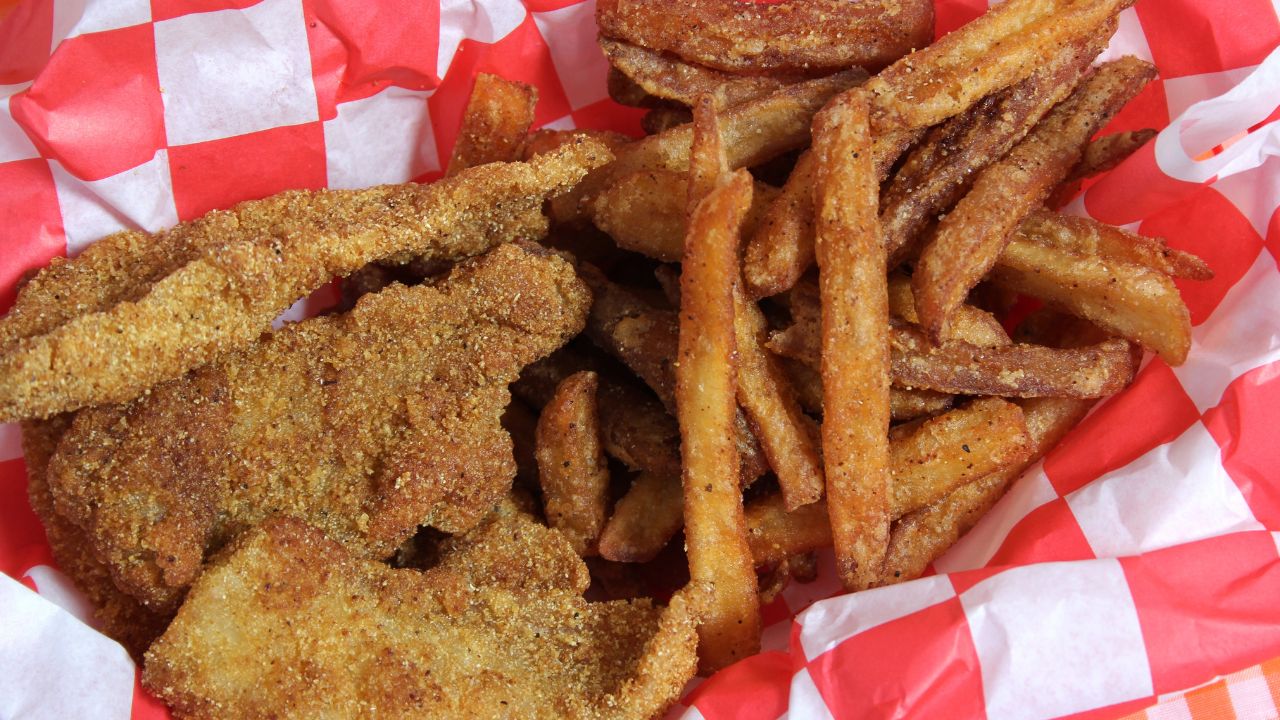
4. Farm-Raised Catfish
Farm-raised catfish leaves a gap on the plate for anyone who grew up eating it fresh out of a Mississippi pond.
About 60% of the nation’s farm-raised catfish still comes from ponds within 65 miles of Belzoni, the Humphreys County seat that Mississippi’s governor named the Farm-Raised Catfish Capital of the World in 1976.
That’s not a small claim.
A fried catfish plate at a small Delta cafe, hush puppies and all, comes from water many parts of the country will never see, and imported catfish sold under other names in other states doesn’t compare.
Mississippians notice the difference fast.
5. Blessing of the Fleet
Blessing of the Fleet marks the start of shrimp season on the Mississippi Gulf Coast, and it’s the ritual homesick Biloxi natives bring up first.
Priests have blessed Biloxi’s shrimp boats in the waters off Deer Island every year since 1929.
Croatian, Cajun, and Vietnamese fishing families all carried the tradition into the industry over the decades.
A wreath goes into the water for the shrimpers who never came back.
Fresh Gulf shrimp pulled the same morning it’s boiled tastes nothing like what shows up frozen in a landlocked grocery case.
Neither does the wreath ceremony that still draws a crowd to the water every year.
You don’t get that inland.
Psst! How much do you know about Mississippi’s history and famous names? Take our quiz and see how many you can get right.
Quiz
Mississippi Firsts Quiz
Answer these questions on Mississippi history and hometown firsts. We bet you can’t get them all right. Prove us wrong?
The teddy bear is named for a president who refused to shoot a bear tied up for him on a 1902 hunting trip. Which state hosted that hunt?
6. Neshoba County Fair
The Neshoba County Fair is the trip a Mississippi transplant circles on the calendar months in advance, the one week a year an entire extended family shows back up in the same place.
Mississippi's Giant House Party has run near Philadelphia, Mississippi since 1889 and grown into the nation's largest campground fair.
Families do more than attend.
More than 600 cabins line neighborhoods with names like Founders Square and Happy Hollow, and many of them have stayed inside the same Mississippi families for generations.
Miss fair week, and a Mississippi transplant misses the one reunion nobody bothers to reschedule.
Why You Can't Just Rent a Cabin at Neshoba
Mississippians who move away and want to bring their own kids back to the Neshoba County Fair someday can't just book a cabin the way a normal campground rents out a site.
Many of the fairground's 600-plus cabins have passed down through the same Mississippi families since cabins started replacing tents and wagons back in the 1890s.
A newcomer can walk Founders Square and Happy Hollow all day without finding a single cabin for rent because the fair's whole identity runs on family ownership, not tourism.
7. Cowbells at Mississippi State Games
Cowbells ring out at every Mississippi State home game in a way that doesn't happen anywhere else in the Southeastern Conference.
The Southeastern Conference banned artificial noisemakers across every school in 1974, and it took until 2010 for Mississippi State to win an exception that let cowbells back into the stadium.
Nowhere else got that exception.
Mississippi State remains the only one of 134 Division I programs allowed to bring an artificial noisemaker into a home game, and the noise it makes has turned Starkville into one of the loudest stadiums in the country.
A transplant who grew up ringing one in the stands notices the silence first at a game somewhere else.
8. The Grove at Ole Miss
The Grove is the single Saturday ritual a Mississippi transplant who went to Ole Miss tries hardest to fly home for every fall.
Ten acres of oaks, elms, and magnolias at the center of campus fill with Ole Miss tailgaters every home game, the same way they have since fraternities and sororities first gathered there in the early 1900s.
Cars have been banned from the grass since a 1991 rainstorm turned the whole green into a swamp.
Tents replaced trucks after that.
Sports Illustrated has ranked the Grove the No. 1 tailgating spot in the country, with ESPN placing it No. 2, and neither ranking explains to an outsider why a transplant plans a whole trip home around three hours under those oaks.
Nothing about a folding chair under a stranger's parking-lot canopy matches that.
9. Delta Blues Juke Joints
Delta blues juke joints still fill up on an ordinary Tuesday night in Clarksdale, Mississippi, the way they did when the music started.
Bill Luckett and actor Morgan Freeman opened Ground Zero Blues Club in 2001 inside a former cotton warehouse, built to recreate the small rooms where Delta blues players first turned the volume up.
Visitors have covered the walls in marker signatures for more than two decades.
Clarksdale alone holds 10 stops on the Mississippi Blues Trail, and no amount of streaming a Delta blues playlist somewhere else replaces walking into a room where the music started.
A Mississippian can find blues clubs anywhere else in the country.
They aren't these blues clubs.
