
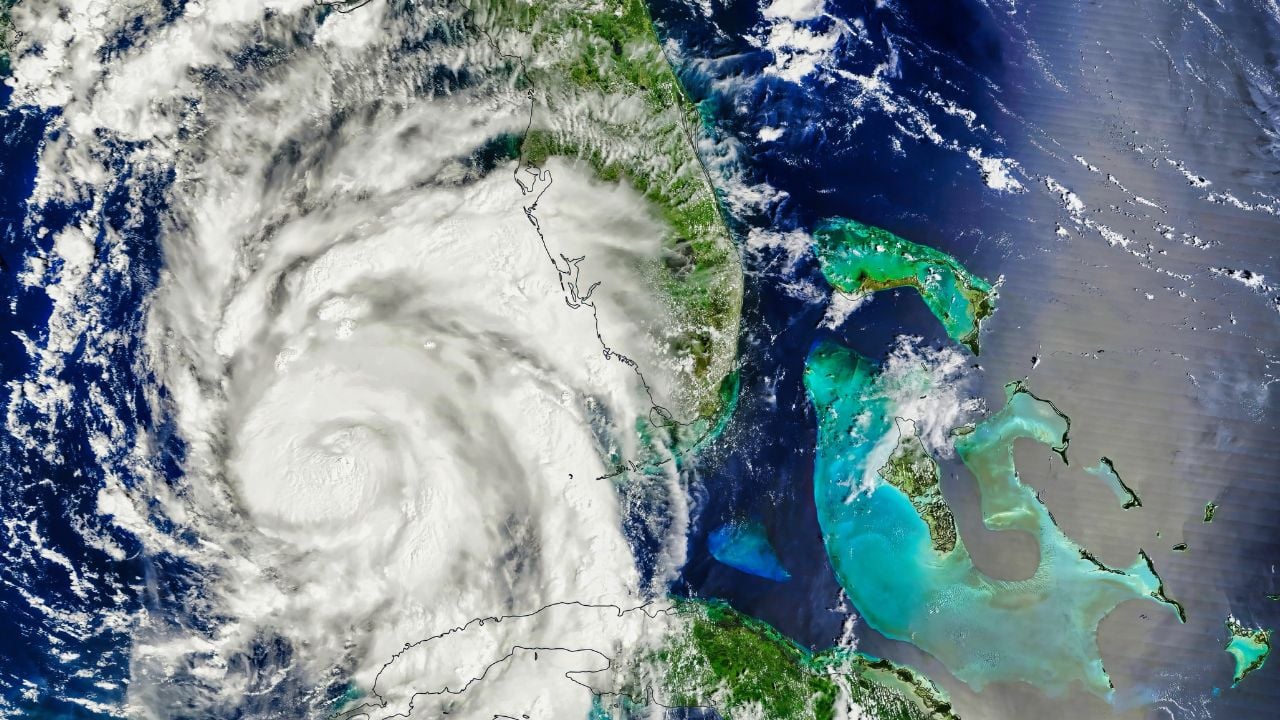
9 Things Nobody Warns New Florida Residents About Hurricane Season

A hurricane doesn’t have to touch Florida to empty a Home Depot two counties away.
The moment a five-day cone brushes the state map, plywood vanishes off the shelves, and licensed generator installers start turning away new jobs.
New residents never see it coming.
These are the realities about Florida’s hurricane season nobody mentions at the closing table.
Note: This is general information, not insurance advice. Coverage, deductibles and dollar figures are subject to change, so check the specifics with your insurer or agent.
1. Fuel Never Runs Out
New Florida homeowners learn their first strange hurricane-season lesson at the gas station, and it isn’t the lesson they expect.
Ahead of Hurricane Milton in 2024, the share of Florida gas stations without fuel jumped from 3% to 24% in two days, and Tampa Bay stations ran dry at a rate above 60%.
The fuel never ran out.
Tanker trucks kept rolling out of the Port of Tampa the entire time.
What outran the supply was the demand, since evacuees topping off before the highway and neighbors filling gas cans for a generator all hit the same handful of pumps inside the same 48 hours.
A gas station off I-75 can drain its underground tanks faster than a truck can refill them, even with fuel sitting a few miles up the road.
Fill your gas tank on a random Tuesday in July, not the day a cone shows up.
2. Your Deductible Is a Percentage
New Florida homeowners get a hurricane-season surprise from the insurance paperwork.
Florida was one of the first states to set its hurricane deductible as a percentage of your home’s insured value, instead of a flat number like a $500 deductible on a car.
Insurers have to offer options at $500, 2%, 5% and 10% of your dwelling coverage, and most homeowners land somewhere in that percentage range.
Run the math on a $400,000 policy with a 2% hurricane deductible, and $8,000 comes out of your pocket before your insurer pays a cent.
That’s not $500.
It’s enough to make a transplant miss the flat $500 deductible on their old car insurance.
There’s a small mercy buried in the rule, too: Florida charges that deductible once per season, so a second hurricane the same year falls under your regular deductible instead of a fresh one.
Get hit twice in one August, and the second bill hurts a lot less than the first.
3. Run Starts in May
Longtime Floridians treat hurricane season as something they prepare for in the spring, long before June 1 shows up on a calendar.
Jen Grice, who directs emergency management for Alachua County, tells new residents not to wait for a named storm at all.
Her advice is to buy one extra item every grocery trip, months ahead of the season, rather than trying to build a kit in a single panicked afternoon.
New residents wait anyway.
Once a storm earns a name and a cone, plywood disappears from hardware stores across that cone within a day or two, and licensed generator installers stop taking new appointments until the threat passes.
By the time the Weather Channel says the word “landfall,” the good decisions already happened weeks ago.
4. Category Doesn’t Mean Calm
New residents lean on a storm’s category the way they’d lean on a grade on a report card, and that habit can turn dangerous fast.
The Saffir-Simpson scale only measures wind speed.
Officials at the National Hurricane Center stopped folding storm surge into the category definitions back in 2009, since surge depends on a storm’s size and speed more than its wind.
Surge doesn’t count.
Water, not wind, causes nearly 90% of U.S. hurricane deaths through storm surge, rain and inland flooding.
Superstorm Sandy proved the point in 2012, making landfall as only a Category 1 hurricane that still ranks among the deadliest storms in American history.
So the word “tropical storm” on a forecast isn’t a pass to skip the plywood.
5. Zone Letters Aren’t Flood Maps
Evacuation orders confuse new residents faster than almost anything else about hurricane season.
Florida assigns every address a letter, A through F, based on how vulnerable that spot is to storm surge, and Zone A goes first when an evacuation order comes down.
A flood zone, mapped by the Federal Emergency Management Agency (FEMA), measures something else entirely, the odds of everyday flooding used to set insurance rates and building codes.
The maps don’t line up.
A stilt house on the Intracoastal in Fort Myers can sit outside every flood zone on the books and still land in Zone A, first in line when a storm takes aim at the coast.
Homeowners who never check that letter find out only when a sheriff’s evacuation order already names their street.
Psst! Every new Florida homeowner thinks they’re prepared until a cone points at their own county. Run through this checklist and see how your household holds up.
6. Debris Has to Stay Loose
Cleanup after a storm comes with its own rulebook, and bagging your yard waste is the fastest way to make a Waste Pro crew skip your pile.
Florida counties require storm debris to sit at the curb loose, never bagged, and sorted into separate piles for vegetative debris, construction material, household appliances and mixed goods.
Crews leave bagged piles behind.
Counties have to document every load by category to collect federal reimbursement, and a mixed, bagged pile throws off that paperwork.
Sandbags count as their own separate pile too, never mixed in with tree limbs or shingles.
Crews pick up a raked pile on schedule.
A bagged pile waits for the regular trash day instead, sometimes for weeks.
7. Your Lanai May Not Count
Almost every new-construction home in Florida comes with a screened pool cage, and almost nobody reads the fine print on what covers it.
Floridians treat that cage like a trophy, right up until they read the policy.
Citizens Property Insurance, the state’s own insurer of last resort, excludes aluminum-framed screen enclosures from its standard homeowners policy entirely.
That’s not partial coverage.
None at all, unless a homeowner adds a separate endorsement for it.
Many private insurers follow the same pattern, treating the cage as a detached structure rather than part of the house, and wind damage to the screens themselves often falls outside coverage even when the aluminum frame is included.
Ask your agent about that lanai by name, the same week you close on the house.
8. HOAs Can’t Stop Your Shutters
Homeowners association (HOA) rules trip up new residents constantly, and hurricane protection turns out to be one fight the HOA can’t win.
A Florida law that took effect in 2024 bars associations from denying an owner’s request to install hurricane shutters, impact windows, reinforced garage doors or a permanent generator, as long as the product meets the building code and the community’s own published style specifications.
The board picks the color.
Bahama shutters have to go up in taupe, not turquoise, if that’s what the community’s guidelines say.
It can’t say no to the shutters themselves.
Communities still get to set the boundaries on the other side of a storm, though, and most require accordion or panel shutters to come down again within a set number of days once the threat clears.
9. Eye Isn’t Over
The sound is the part few people can describe to a new resident well enough in advance.
An eyewall arrives as a rising shriek.
Branches snap, roofing tears loose, and the house frame creaks under the wind.
Then it stops.
A hurricane’s eye typically runs 20 to 40 miles across, and inside it the wind can drop to almost nothing while the rain thins to a drizzle.
Blue sky sometimes shows through.
New residents mistake that hush for the storm’s finish, when the storm is only halfway through its pass over their block.
Meteorologists have watched people step outside during that lull to check on the yard, only to have the back half of the eyewall arrive from the opposite direction within minutes.
Local officials time the actual all clear off radar, not off how calm the sky looks from a driveway, and that’s the one signal worth waiting on.
11 Things Floridians Stay Calm About in Hurricane Season That Terrify Everyone Else
A hurricane in the forecast sends most tourists straight to the luggage closet, while longtime Floridians barely look up from their coffee.
Years of cones and close calls build habits new residents haven’t picked up yet, and some of them look nothing like panic.
11 Things Floridians Stay Calm About in Hurricane Season That Terrify Everyone Else
9 Underrated Florida Day Trips Locals Take All Summer

Florida’s best day trips rarely come with a mouse-ear logo or a velvet rope, and they come with a two-lane road, a spring, or a roadside curiosity nobody bothered to put on a billboard instead.
Floridians figured this out decades ago, once the summer crowds pile up everywhere else.
