

9 Things North Carolina Home Inspectors Notice That Buyers Never Do

A buyer in Cary spends an hour touring a four-bedroom colonial, flipping every light switch and running the garbage disposal.
Her home inspector spends three hours on the same house and never touches either one.
He’s underneath it, behind the siding, and inside a termite report nearly every sale in the state requires.
These are the things North Carolina home inspectors notice that buyers never do.
Note: This is general information, not legal or professional inspection advice. Home inspection standards and building codes are subject to change, so confirm current requirements with the North Carolina Home Inspector Licensure Board.
1. Inspecting the Deck’s Ledger Board
North Carolina home inspectors climb under nearly every attached deck because the ledger board is where decks fail.
Buyers just walk out onto the boards and bounce a little.
Bad sign.
Building code requires that ledger to bolt into the house’s rim joist with half-inch lag screws or through-bolts, never nails, biting at least three inches into solid framing.
Code also requires continuous flashing tucked behind the ledger and under the siding, so water can’t reach the wood it’s bolted to.
Skip that flashing, and water reaches the wood behind the ledger.
Nobody notices until the deck pulls away from the house.
An inspector checks that connection point directly, not just how solid the deck feels when you’re standing on it.
2. Spotting Gray Polybutylene Pipe
North Carolina home inspectors know exactly what a coil of dull gray pipe running to a water heater means.
Polybutylene pipe went into homes across the country from 1978 until 1995.
The material breaks down from the inside when it reacts with chlorine in treated water.
Manufacturers eventually paid out a $950 million settlement over it.
It looks fine from the outside.
Then it bursts.
An inspector traces the pipe at the water heater, the main shutoff, and every spot it surfaces in the crawlspace, checking for the gray or black tubing and the brittle, discolored fittings that signal it’s still in the walls.
3. Checking the Crawlspace Vapor Barrier
North Carolina home inspectors crawl spaces many buyers will never enter.
That’s on purpose.
State building code requires a closed crawlspace to carry a 6-mil plastic vapor barrier sealed over every inch of exposed dirt.
North Carolina’s humidity pulls moisture straight up through open ground and into the floor joists above it.
An inspector looks for tears, gaps, or standing water on top of that barrier, damage that leads to mold, wood rot, or insects living under the floor.
Buyers rarely open the crawlspace hatch at all.
They shouldn’t have to.
4. Testing GFCI Outlets Near Sinks
North Carolina’s Standards of Practice require licensed inspectors to test the ground fault circuit interrupter (GFCI) protection on every outlet within six feet of a sink, tub, or other plumbing fixture.
A GFCI outlet trips the power the instant it senses a shock hazard, right where water and electricity share a wall.
Older homes often have none installed near the kitchen sink or in the bathroom at all.
Push the little test button, and the outlet should cut power immediately.
Buyers hardly ever press it.
5. Probing for Wood Decay
North Carolina home inspectors are required to probe structural and exterior wood wherever they suspect decay, the same spongy, hollowed wood a buyer would just call a creaky floor.
That probing sometimes turns up hollowed wood and the mud tubes termites build up a foundation wall.
The state’s own rules don’t require an inspector to report on insects, rodents, or other pests.
That determination belongs to a separately licensed structural pest control inspector.
That’s why North Carolina requires its own separate report just for insects, the Wood Destroying Insect Report, which the state’s own agriculture department calls required on almost every home sold in the state.
Almost nobody reads it closely.
What North Carolina’s Termite Report Covers
People often call North Carolina’s Wood Destroying Insect Report a termite “clearance letter,” but it isn’t one.
The report only states whether a licensed pest inspector found visible evidence of termites, beetles, or carpenter ants on the day they looked.
It doesn’t cover rot, wildlife damage, or plumbing and electrical problems.
It never promises the home stays insect-free after closing.
If the report notes damage, a buyer still has to bring in a contractor to find out how bad it is.
6. Grading on North Carolina’s Red Clay
North Carolina home inspectors walk the whole yard, not just the house, tracking which way the ground slopes.
Much of the Piedmont sits on Cecil clay, the reddish soil that’s North Carolina’s official state soil and covers more than 1.6 million acres of it.
It drains reasonably well on its own.
A downspout dumping water two feet from the foundation overwhelms that drainage anyway.
The water has nowhere left to go but against the house.
An inspector traces the grade around the whole foundation and notes where water pools instead of running off.
A buyer touring the house rarely looks down.
They’re looking at the kitchen.
Psst! How ready are you for a North Carolina home inspection? Run through this checklist and see where you stand.
7. Checking the Foundation for Radon Entry Points
North Carolina home inspectors check the foundation for radon’s entry points before anyone ever orders an actual test.
Radon gas seeps indoors through cracks in the slab, gaps around pipes, and an uncovered sump pit, according to the Centers for Disease Control and Prevention (CDC).
An inspector walks the foundation looking for exactly those openings.
Seventy-seven of North Carolina’s 100 counties have indoor radon readings above the EPA’s action level, according to the state’s own health department.
It’s the leading cause of lung cancer among people who’ve never smoked, according to the Environmental Protection Agency (EPA).
No smell. No color.
A county reading above that action level goes into the inspection report as a recommendation for further testing, not a citation the inspector can act on alone.
8. Checking for a Chimney Cricket
North Carolina home inspectors look up at the roofline for a small peaked structure many buyers have never heard of, a cricket.
Building code requires that cricket behind any chimney wider than 30 inches, built to split rainwater around the chimney instead of letting it pool against the uphill side.
Without a cricket, water backs up every time it rains hard and works its way under the shingles.
Slow leak.
That leak shows up as a water stain on a ceiling months later, long after closing.
An inspector checks the chimney’s width and the flashing around it from the roof or a ladder, not from the driveway.
Buyers view the chimney from the yard, if they look at it at all.
9. Counting Smoke and CO Alarms
North Carolina home inspectors count more than whether a house has a smoke detector.
State code calls for an alarm in every sleeping room, outside each sleeping area, and on every level of the home.
Any house with a fireplace, gas appliances, or an attached garage also needs a carbon monoxide (CO) alarm placed outside each sleeping area.
A buyer glancing at one detector on a hallway ceiling assumes the house is covered.
It usually isn’t.
An inspector also tests whether each alarm still works, since existing homes can run on battery power instead of the hardwired, interconnected systems new construction requires.
Batteries die.
Nobody replaces the battery until it starts chirping.
What a North Carolina Home Inspection Doesn’t Cover
A North Carolina home inspection covers a long list of systems, but it skips a few buyers assume are included.
Well water quality is one of them.
A general inspector locates the main shutoff and checks water pressure.
Testing what’s in that water is a separate service through a certified lab.
Free test kits often miss the chemicals that matter most.
Radon works the same way.
An inspector can note the county’s risk level, but the radon test itself is a separate order.
That canister has to sit in the home for at least 48 hours before a lab can get an accurate reading.
6 Things That Change at the North Carolina DMV in Your 60s
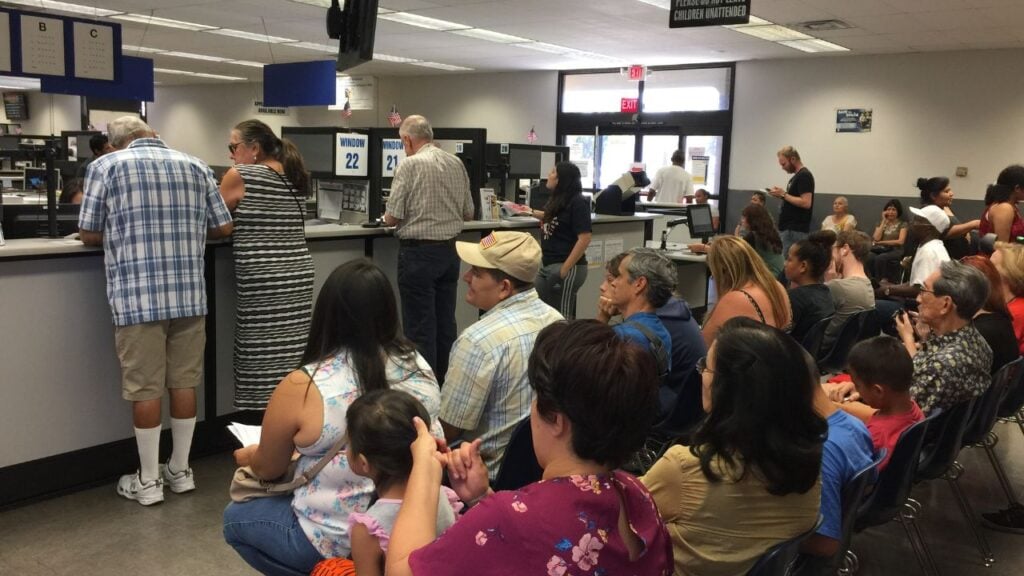
A driver in Winston-Salem walks up to the DMV counter three days after her 66th birthday, expecting the same routine she’s done for decades.
She doesn’t get it.
North Carolina’s Department of Motor Vehicles (DMV) resets a few license requirements once a driver turns 60.
6 Things That Change at the North Carolina DMV in Your 60s
9 Waffle House Mistakes North Carolina Regulars Never Make
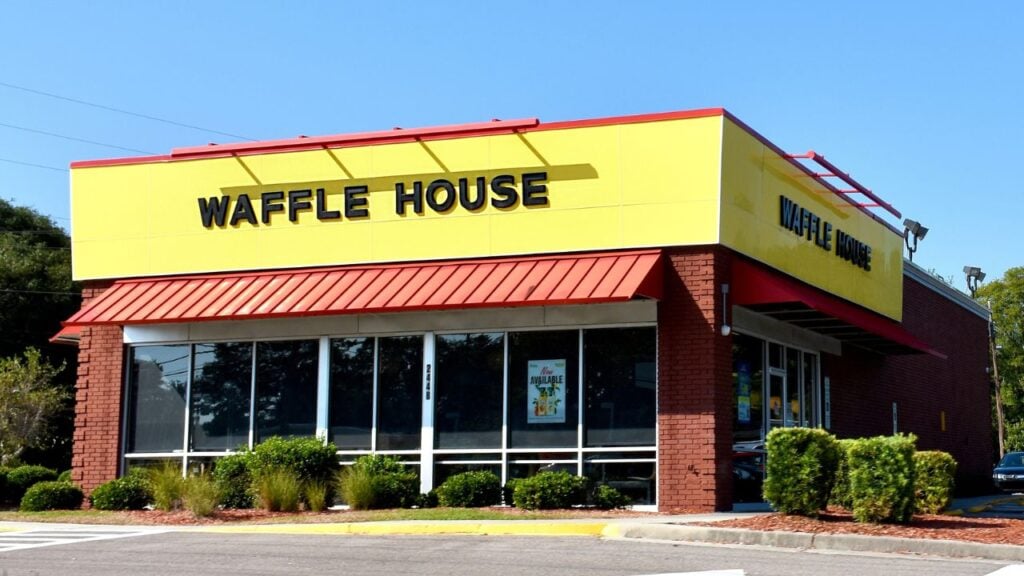
Waffle House’s yellow sign glows over I-85 outside Kannapolis at 2 a.m.
A first-time visitor studies the menu like it’s written in another language.
Three regulars down the counter already have their coffee topped off without asking, before that visitor even places an order.
