
9 Things People Find Out the Hard Way After Moving to Utah

Federal researchers put the odds of a magnitude 6.75 or larger earthquake along Utah’s Wasatch Fault at 43% over the next 50 years.
Nobody mentions that number during a house tour.
These are the things people find out the hard way after moving to Utah.
1. Cracking the Address Code
Utah’s street addresses work like coordinates, not names.
Utah cities count out from a single starting point downtown, usually where two main streets cross.
In Salt Lake City, that point sits at Main Street and South Temple.
Every 100 in a number marks one block, which works out to about 800 house numbers to the mile.
A house at 1300 South 700 East sits thirteen blocks south and seven blocks east of that corner, no street name required.
That’s the whole code.
A map app follows the grid instantly.
It takes a few wrong turns across town to learn the pattern by feel.
2. Locked Doors on Sundays
Sunday errands work differently in Utah than in many other states.
Grocery chains, furniture stores, and many local restaurants close for the day, several of them by long-standing choice rather than any law still on the books.
Utah passed mandatory Sunday closing rules in 1898, and the state Supreme Court struck them down in 1943.
It became habit, not law.
Many stores never went back to seven days a week anyway.
Newer transplants plan a Sunday grocery run the way they always have, then find the lot empty and the doors locked at a store that was packed all day Saturday.
It isn’t every business, and it isn’t every city.
Longtime Utahns barely notice anymore, but it catches enough newcomers.
3. Wine, Separate From the Grocery Aisle
Utah’s state-run liquor stores follow a schedule that’s separate from any grocery store’s hours.
The state liquor stores close on Sundays and a handful of state holidays, and many keep earlier evening hours than a typical grocery store.
Grocery and convenience stores add a limit on top of that.
State law caps grocery and convenience-store beer at 5% alcohol by volume, so wine, spirits, and anything stronger only ever sell at those state-run shops.
Both close at once.
A Sunday dinner party planned around a normal grocery run hits that limit twice.
The wine was never in that aisle to begin with, and the liquor store is closed too.
4. Winter’s Trapped Air
Winter changes the air in Utah’s valleys, not just the temperature.
A layer of warm air settles over the cold air below it and acts much like a lid over the whole valley.
That lid stays in place until a storm finally breaks it up.
The trapped air holds vehicle exhaust and wood smoke close to the ground instead of letting it clear out.
In January 2026, Salt Lake City’s air ranked worst in the entire country for several days straight, beating out cities usually known for smog.
Doctors recommend limiting outdoor exercise on the worst days.
The haze can sit for a week or two without a single day of wind to break it up.
It doesn’t clear fast.
5. Canyon Closures Without Warning
Big and Little Cottonwood Canyons in Utah can shut with almost no warning, gate down before many drivers even check a forecast.
The gate comes down fast.
The Utah Department of Transportation (UDOT) triggers those closures on purpose, setting off avalanches during high-danger stretches to keep a bigger, uncontrolled slide from ever reaching the highway.
Backcountry closures typically start around 10 p.m. the night before, with road closures often following around 12:30 a.m.
Guests already inside a resort during “interlodge” have to stay indoors, parked car included, until crews call it clear.
How Long Interlodge Can Last
Interlodge in Utah’s Cottonwood Canyons comes with strict limits, and leaving a building, even to sit in a parked car, breaks the order until UDOT lifts it.
Many interlodge events clear within a few hours, but Alta logged a 52-hour stretch in February 2020 and a 60-hour closure in February 2021.
More than 100 inches of snow had fallen there in one week.
6. Getting Used to the Elevation
Utah’s elevation changes how the body feels almost immediately after a move.
Salt Lake City’s airport sits at about 4,230 feet, according to the Federal Aviation Administration (FAA), and much of the Wasatch Front runs even higher.
Add the region’s low humidity, and the mix dries out sinuses, chaps skin, and pulls moisture out of the body faster than back home.
Salt Lake City’s air runs about 22% relative humidity on a typical July afternoon, a level some coastal states rarely see even in a heat wave.
Doctors in the area recommend extra water and sunscreen for anyone new to the altitude, since ultraviolet (UV) exposure increases with elevation too.
It adds up fast.
A headache or a nosebleed in the first week is common.
7. Fireworks by the Block
Fireworks in Utah aren’t a simple yes-or-no proposition.
State law allows personal fireworks statewide during two windows, July 2 through 5 and July 22 through 25 around Pioneer Day, generally from 11 a.m. to 11 p.m.
The dates aren’t the whole answer.
Cities and counties can still draw their no-fireworks lines through wildfire-risk neighborhoods.
Maps change yearly.
Setting off a legal firework on the wrong side of one of those lines can bring a fine up to $1,000.
A house on one side of a street can sit inside the legal zone while the house across from it doesn’t.
8. A Second Line for Lawns
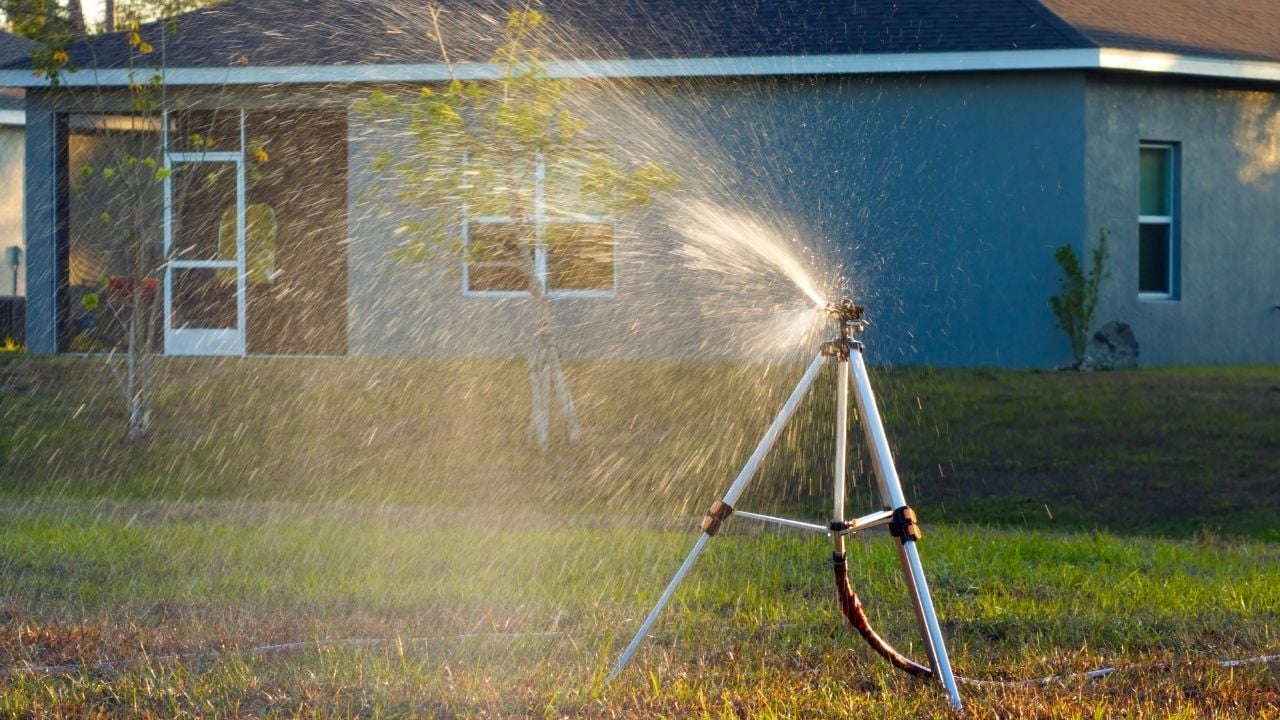
Utah homes often carry two separate water systems, not one.
A secondary line delivers untreated water straight to the sprinklers, kept apart from the drinking water that comes out of the kitchen tap.
Hundreds of thousands of Utah homes have a secondary line, and for years those connections had no meter attached at all.
Homeowners paid a flat fee no matter how much water flowed through.
State law now requires every secondary connection to carry a meter by 2030, backed by $250 million in federal grants to help cities install them.
New homeowners find a second spigot, a second shutoff valve, and sometimes a second water bill for water they can’t drink.
Nobody warned them.
Psst! How much do you know about Utah before you move there? Flip through these cards and see how many you get right.
9. Ground’s Quake Risk
Utah’s flat valleys sit on top of one of the more active fault systems in the country.
The Wasatch Fault runs along the base of the mountains from Idaho into central Utah.
Federal researchers put the odds of a magnitude 6.75 or larger earthquake somewhere along the Wasatch Front at 43% over the next 50 years.
It rarely warns anyone.
About 80% of Utah’s population lives inside that same stretch of the state.
New residents unpack boxes and bolt bookshelves to the wall only after a neighbor mentions the earthquake kit sitting in the garage.
Emergency officials recommend water, food, and a plan that doesn’t depend on cell service, the same advice given to residents of California or Alaska.
Utah’s Division of Emergency Management publishes a checklist for building exactly that kind of kit.
It’s worth opening before moving day, not after the ground moves for the first time.
9 Cracker Barrel Traditions That Have Disappeared
Cracker Barrel’s stock dropped by $94 million in a single trading day last August, right after the company swapped its old logo for a slimmer one.
The company put the old logo back within days, but smaller changes had already come and gone for years without anyone reversing course.
