
9 Things South Carolinians Assume Every American Grew Up Doing

A kid in South Carolina learns early that the giant flying bug in the carport gets the name “palmetto bug,” never “cockroach.”
Say that word in Ohio, and you get a blank stare.
These are the things South Carolinians assume every American grew up doing.
1. Boiled Peanuts
South Carolina made the boiled peanut its official snack in 2006, the only state with a legume simmered in shell water written into its law books.
Roadside stands sell them from coolers and crockpots along nearly every two-lane highway in the state.
A kid grows up salting a soggy paper bag of them on a truck tailgate and thinks nothing of it.
Drive into a state without that peanut belt, and there’s no roadside stand to pull over for.
There’s no crockpot by the register either.
Many gas stations outside the South stock dry roasted peanuts instead, bagged and sealed, nothing simmering in sight.
2. Tea Means Sweet Tea
South Carolina grows tea on the only large-scale commercial tea farm in the country.
Its legislature named sweet tea the state’s hospitality beverage in 1995.
Order “tea” at a South Carolina restaurant, and sweet is what shows up, no questions asked.
Want it unsweetened?
Say so, or brace for a puzzled look.
Take that same order north, and the sugar disappears by default.
A fistful of paper packets is left to fix it yourself.
South Carolinians never see that coming.
3. Barbecue Sauce Is Yellow
South Carolina’s own “mustard belt” runs through the Midlands, centered on the Dutch Fork district between the Broad and Saluda rivers, where the go-to sauce runs the color of mustard, not ketchup.
German families settled that Dutch Fork district in the 1700s and brought their taste for mustard with them.
It found its way onto the hog and stuck.
A South Carolinian ladles it onto pulled pork without a second thought.
Hand a Kansas City native that same bottle, and they’ll ask what happened to the sauce.
Nothing happened.
Tomato-based barbecue sauce is the default in many other parts of the country, and South Carolinians just never picked up the habit.
4. Hash Over Rice
Order a barbecue plate almost anywhere outside South Carolina, and hash never shows up on it.
It’s a stewed, spiced pork mash ladled over a plate of white rice.
Coleslaw might show up instead.
So might baked beans.
South Carolina barbecue joints have served hash since before the Civil War, when the dish began at hog killings and barbecues in the counties along the Savannah River, cooked from every part of the hog.
Cooks in the Midlands still work that way today, simmering the head, organs, and trimmings for hours into a rich, mustard-tinged gravy poured over rice.
Many South Carolinians assume every barbecue joint in the country keeps a hash pot simmering.
It doesn’t.
5. Frogmore Stew
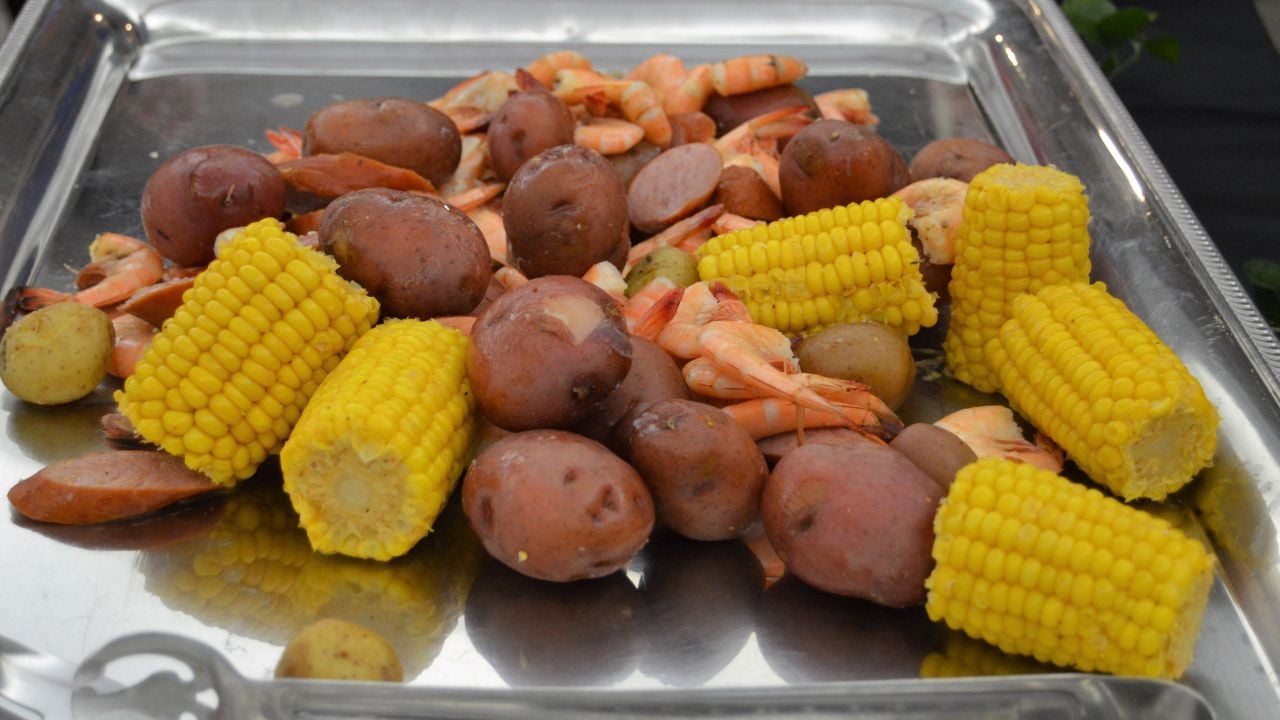
South Carolina’s Lowcountry gave the country Frogmore stew, a one-pot boil of shrimp, sausage, corn, and potatoes named for a small Gullah-Geechee fishing community on St. Helena Island.
A South Carolina family dumps that pot straight onto newspaper spread across a picnic table and digs in with their hands.
Nobody reaches for a plate.
Carry that same tradition to a state without a coastline of shrimp boats, and the whole idea sounds invented.
Many Americans have never dumped a seafood boil across a newspaper-covered table, let alone called it stew.
South Carolinians grow up assuming everyone has.
6. Peas for Luck
South Carolina calls the black-eyed peas and rice reheated the day after New Year’s by their own name: Skippin’ Jenny, eaten sparingly to double down on the frugality the meal already promises for the coming year.
That frugality starts the night before with Hoppin’ John, the peas-and-rice dish South Carolina serves alongside collards for luck and money on New Year’s Day.
Skip the collards, and folklore says the coming year skips you back.
A South Carolina household serves both dishes out of habit, not superstition, even if nobody remembers exactly why anymore.
Many states treat New Year’s Day as a bowl game and a nap.
South Carolinians assume the peas and the greens are just as common as the football.
They’re not.
The Extra-Luck Trick Some South Carolina Tables Still Use
South Carolina families sometimes tuck a penny under the dish of black-eyed peas before it ever reaches the table.
The coin stays hidden until the plates are cleared, and whoever finds it gets an extra helping of luck for the year.
7. Carolina Shag
South Carolina named the shag its official state dance in 1984, a slow, gliding swing step built for a beach, not a ballroom.
Dancers keep their feet low and their shoulders loose, moving to a genre the state separately recognizes as beach music.
A South Carolina wedding without at least one couple shagging across the floor barely counts as a wedding.
Many guests from outside the Carolinas watch, assuming it’s just slow dancing.
It’s not.
The footwork alone proves them wrong.
Psst! How much do you know about South Carolina’s history? Take our quiz and see how many you can get right.
Quiz
Palmetto State Trivia
Answer these nine questions on South Carolina’s history and firsts. We bet you can’t get them all right. Prove us wrong?
South Carolina’s state flag honors a 1776 fort built almost entirely from one material, prized because it could take a direct hit without splintering. What was that material?
8. Duke's or Nothing
South Carolina pantries run on Duke's, the mayonnaise a Greenville woman named Eugenia Duke started selling from sandwiches in 1917.
Duke's recipe uses no added sugar and extra egg yolks, which gives it a tang many other mayonnaise brands don't have.
A South Carolina cook reaches for that jar without reading the label, the way someone else reaches for salt.
Bring a different brand to a South Carolina potluck, and someone will ask what happened.
Many people outside the Southeast grew up on a sweeter, blander jar and never noticed the difference.
South Carolinians notice immediately.
9. Roaches Are Palmetto Bugs
South Carolinians nicknamed the American cockroach "palmetto bug" long before pest control companies caught up.
Legend has it the name traces to the stubs of palm fronds left on palmetto trunks, the kind of nook the inch-and-a-half bug likes to hide in, though nobody can say for certain which explanation is accurate.
A South Carolina kid grows up believing "roach" is the rude word and "palmetto bug" is just what you call the thing skittering across the carport.
Say "palmetto bug" outside the coastal South, and blank stares follow.
Nobody knows what animal is being discussed.
They're the same bug.
South Carolina just gave it a kinder name.
Pest control companies in South Carolina still write both names on the same work order, since the smoky brown roach behind the nickname looks almost identical to the plain American cockroach found in colder states.
The American cockroach can grow to about an inch and a half long and lives roughly a year, and in that time a single female produces around 150 offspring.
9 South Carolina Small Towns Worth the Detour

The most interesting hour in South Carolina rarely happens where the tour buses park.
It happens down a two-lane road, in a town of a few hundred people many visitors drive straight past.
9 South Carolina Small Towns Worth the Detour
9 Food Lion Perks South Carolina Shoppers Over 60 Keep Missing

The average retiree drawing Social Security lives on a monthly check that runs close to $2,071, and every dollar of it has somewhere to go.
Food Lion has more ways to stretch that check than one discount day ever could, tucked inside programs many South Carolina shoppers scan right past.
9 Food Lion Perks South Carolina Shoppers Over 60 Keep Missing
