
9 Things South Dakotans Miss Most After They Move Away

South Dakota sells a resident small game license for $36, which is good for the whole season.
A nonresident pays $142 for the same thing.
Move away, and the state wants 90 consecutive days of domicile before it sells you the cheap one again, which is one of the things people find out too late.
These are the things South Dakotans miss most after they move away.
Note: This is general information, not tax or legal advice. Tax rules and license fees are subject to change.
1. Chislic
Lawmakers wrote chislic into the South Dakota code as the official state nosh in 2018.
It’s cubed meat, salted and then deep-fried or grilled, eaten off a toothpick with crackers and hot sauce beside it.
Lamb is the traditional cut, though beef is also common.
The South Dakota Chislic Festival in Freeman traces the dish to the German-Russian families who settled the southeastern corner of the state.
Around Freeman, it has long gone by a plainer name: Mutton on a stick.
Ask a bartender in Phoenix for chislic, and you’ll spend the next minute explaining what it is.
It gets old fast.
2. A $36 Hunting License
South Dakota Game, Fish and Parks sells residents a small game license for $36, and it runs the whole season.
A nonresident pays $142 for the same roosters.
That license buys two five-day stretches instead of a season.
Pheasants are the reason nonresidents pay it.
Shooting hours don’t open until 10 a.m. Central, statewide, and the daily limit is three rooster pheasants.
Anglers see the same split, with a resident annual license at $31 against $80 for everyone else.
The birds don’t change.
Your standing with the licensing office does.
How South Dakota Residency Ends
South Dakota Game, Fish and Parks writes the residency rules behind every resident hunting and fishing license.
The agency wants 90 consecutive days of domicile in the state before it sells anyone one of those licenses.
Resident status ends the day someone accepts another state’s driver’s license.
Registering to vote in another state ends it too.
So does claiming resident hunting privileges anywhere else.
Living outside South Dakota for 180 days or more in a calendar year ends it as well.
Full-time students and active-duty military who kept a South Dakota domicile are the main exceptions.
3. Keeping the Whole Paycheck
There’s no state income tax in South Dakota, and the Department of Revenue counts it among seven states that skip one.
No state return, no state withholding line, no April form asking what a spouse’s pension paid out.
No state agency withholds a cent from a pension, a 401(k) withdrawal, or a Social Security check.
Then you move to a state that does collect an income tax.
The first pay stub carries a line the old stub never had.
It’s a small number every two weeks.
By April it isn’t small.
The same department notes South Dakota has no inheritance tax either, after voters repealed it effective in 2001, and no estate tax.
4. Black Hills Next Door
Custer State Park sits in the southern Black Hills, and South Dakotans treat it as a Saturday rather than a vacation.
A free-roaming bison herd lives inside the park boundary year-round.
Travel South Dakota puts this year’s Buffalo Roundup on Friday, September 25.
Riders push about 1,300 buffalo into the corrals while spectators watch from folding chairs along Wildlife Loop Road.
Anybody who moved to Minneapolis buys a plane ticket and burns three days of leave for that same Friday.
Admission costs nothing.
You don’t need a park entrance license that Friday, either.
5. Kuchen
Say kuchen at a bakery counter outside South Dakota and the clerk hands you coffee cake.
That isn’t the same thing.
Kuchen is a sweet yeast dough pressed into a pan, filled with custard, then finished with fruit or cinnamon.
The word is simply German for cake, which is where the confusion starts.
The recipe traveled with the same German-Russian families who brought chislic across the ocean.
Every family bakes it a little differently, and the argument over the fruit on top never settles.
South Dakota lawmakers named it the official state dessert in 2000.
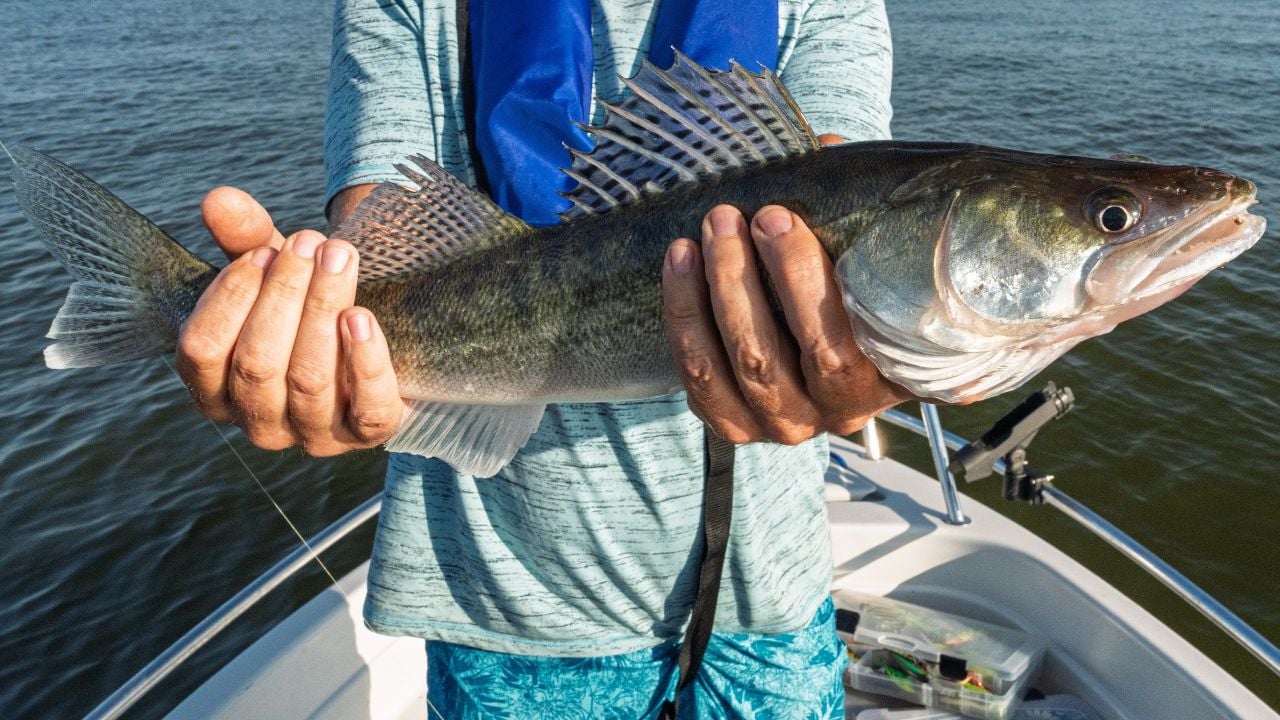
6. Walleye Water
South Dakota Game, Fish and Parks caps a day’s walleye at four.
Only one of those four may measure 20 inches or longer.
The walleye has been South Dakota’s official state fish since 1982.
Filling the limit is the easy part on Lake Oahe.
The reservoir runs 231 miles from Pierre up to Bismarck, and the Army Corps of Engineers ranks it the fourth largest reservoir in the country.
More than 2,250 miles of shoreline wrap around 300,000 acres of water.
There’s room.
A transplant in Kansas City gives all of that up and keeps the tackle box.
Most of the land adjoining the lake stays open to public hunting, so for whoever stayed a walleye morning still turns into a pheasant afternoon.
Game, Fish and Parks points anglers to Mobridge and Pierre.
7. The Rosebud Wacipi
The Rosebud Sioux Tribe is one of nine tribal nations whose lands lie inside South Dakota’s borders.
Tribal nations hold wacipis across the state through the year.
Many of those gatherings welcome visitors.
Rosebud’s wacipi, fair and rodeo runs at the Rosebud Fairgrounds, starting on the fourth Thursday in August and ending Sunday.
South Dakota’s tourism office calls 2026 the gathering’s 150th anniversary.
The date doesn’t move.
Anyone who took a job in Albuquerque books a flight and spends vacation days to make the grand entry.
Dance contests, a parade, a carnival, and both youth and adult rodeo fill out the rest of those four days.
Miss it and the next one is a year off.
8. What a House Costs
A South Dakota home carries a median value of $257,400, according to the Census Bureau.
The same bureau puts the national median at $332,700.
Renters see the same slant, with a median gross rent of $946 in South Dakota against $1,413 nationally.
That’s $467 a month.
Over a year, that gap adds up to roughly $5,600 a South Dakota household never hands over.
Nobody spends much time thinking about that while they live with it.
Then you sign a lease in a bigger city and read the number on page one.
Psst! How much of a South Dakotan are you still? Run through this checklist and see where you land.
9. Your Drive to Work
A South Dakota commute can start at 7:52 in the driveway and end at a desk by 8:10.
The Census Bureau puts the state’s mean travel time to work at 17.8 minutes.
The national figure is 26.4.
That’s 8.6 extra minutes each way, twice a day, five days a week.
Run it across a working year, and the gap lands near 70 hours.
That’s close to two full work weeks spent sitting still.
The same bureau counts 11.7 people per square mile in South Dakota against 93.8 nationally, so the road tends to be empty when you’re on it.
Traffic isn’t the part anyone misses.
A transplant in Dallas relearns that arithmetic during the first week of a new commute.
You move the alarm earlier that same week, and it never moves back.
15 Nostalgic Things South Dakotans Remember

Some South Dakota diners and drive-ins from the old days are still hanging on.
Others live only in the memory of anybody who ever fixed a cassette tape with a pencil.
15 Nostalgic Things That’ll Take Old-Timer South Dakotans Down Memory Lane
21 Phrases South Dakotans Say to Be Nice

From office emails to grocery store small talk, South Dakotans lean on polite words to keep things civil.
There’s a fine line between polite and passive-aggressive, and a handful of these phrases sit right on top of it.
21 Phrases South Dakotans Say to Be Nice But Drive Everyone Crazy
