

9 Things That Confuse Everyone Who Moves to Colorado

Colorado crossed six million residents in 2025. But for the first time in years, more people left for other states than moved in from them, according to state demographers.
People still move in, though.
Whether you land in Denver for a job or a mountain town for the snow, you run into the same surprises everyone else does.
These are the things that confuse everyone who moves to Colorado.
Note: This is general information, not legal or tax advice. Colorado’s tax rates, water regulations, and local laws are subject to change.
1. Sales Tax Patchwork
Shoppers moving to Colorado find the lowest state-level sales tax of any state that charges one, just 2.9%.
That number means almost nothing once you’re at the register.
More than 70 home-rule cities in Colorado set their local sales tax rates and decide what counts as taxable.
Denver, Boulder, and Colorado Springs each add a different local rate on top of the state’s cut, and none of them file paperwork the same way the state does.
The math changes fast.
If you moved from a state with one flat sales tax rate, you have no reason to expect your receipt to shift this much between two towns twenty minutes apart.
2. Water Rights
A confusing legal doctrine called prior appropriation governs every drop of water in Colorado, from the rivers down to the rain that falls on your roof.
Newcomers who assume that owning land next to water means they can use it are almost always wrong.
Water rights belong to whoever proves they used the water first, not to whoever owns the ground it crosses.
Land and water differ.
A new homeowner with a mountain stream cutting through their yard still has to apply through one of Colorado’s water courts before using a drop of it.
First in time, first in right.
The same doctrine is why nearly every Front Range city rations lawn watering, whether a newcomer’s yard touches a stream or not.
Under its current drought rules, Denver Water limits customers to two assigned watering days a week, with fines starting at $250 for a second violation and rising to $1,000.
You don’t need a stream in your yard to feel that: Any newcomer who waters a lawn on the wrong day can end up paying for it.
Who Gets Colorado’s Water First
Colorado ranks every water right by the date it was first put to a real, working use, called a priority date.
In a dry summer, the oldest priority date draws its full share before anyone junior gets a drop, even a neighbor whose well sits closer to the same stream.
3. Ownership Tax
Colorado’s population passed six million in 2025, a milestone that arrived just as growth slowed to its weakest pace in decades.
Every newcomer who decides to stay still has to register a car, and that’s where Colorado’s ownership tax catches many of them off guard.
The Department of Revenue treats it as a kind of property tax on your car, due every year you own it.
Colorado taxes most passenger vehicles on 85% of the original sticker price, called the taxable value, and that number never changes for the life of the car.
The rate drops fast after that first year: 2.1% in year one, 1.5% in year two, 1.2% in year three, and 0.9% in year four.
It settles at 0.45% a year through year nine, then falls to a flat $3 after that.
Buy a car with a $30,000 sticker price, and the ownership tax alone runs about $535 the first year.
That bill drops to roughly $115 by year five, and down to just $3 once the car turns ten.
Newer car, bigger bill.
Transplants from states with a flat registration fee open their first renewal notice expecting a small line-item and find a tax bill instead.
4. Cooking at Elevation
Elevation across the state changes how food cooks, and a sea-level recipe followed exactly after a move can fail at the stove or in the oven.
Water boils at about 203°F in Denver instead of 212°F at sea level, since the thinner air presses down with less force.
A pot of pasta or a pan of simmered chicken needs extra time to catch up to that lower boiling point.
Eggs follow the same pattern: A three-minute egg at sea level has to cook closer to five minutes at Colorado’s elevation to set the same way.
Baking shifts too.
Cakes and quick breads often need less sugar, less leavening, and a splash more liquid, or they rise too fast and collapse before the middle sets.
Longtime residents keep a mental note of these fixes, and you’ll probably learn them the first time your cake sinks in the middle.
5. Sunburn Clock
The state’s elevation raises ultraviolet (UV) exposure well above what many newcomers are used to, even on a mild, cool day.
UV radiation increases by about 2% for every 1,000 feet of elevation gained, according to the U.S. Environmental Protection Agency.
At Denver’s mile-high elevation, that adds up to roughly 10% more UV exposure than an identical sunny day at sea level, and the increase is sharper in the mountains.
The air feels cooler at elevation, so you skip the sunscreen without thinking twice.
Your skin still burns just as fast, even though the air feels mild.
Sunscreen matters more.
Many newcomers find this out the hard way, on their first few hikes.
Psst! How much do you know about Colorado? Take our quiz and see how many you can get right.
Quiz
Colorado Trivia IQ
People trade Colorado trivia like bragging rights at every gathering, from statehood history to the highest peaks. Think you can out-argue everyone at the table?
How many mile-high markers sit on the steps of the Colorado State Capitol in Denver?
6. Same-Week Weather Swings
Weather along Colorado's Front Range can swing harder and faster than almost anywhere you lived before the move.
Denver hit 101°F on September 5, 2020, and three days later a cold front dropped the temperature by 70 degrees and turned the rain to snow.
An inch of snow fell at the airport that week, with more across parts of the metro area.
That kind of swing isn't a once-a-decade fluke along the Front Range.
Forecasters often catch it only a day out.
Layers help.
A closet with shorts, a raincoat, and a winter coat all within reach earns its keep for months at a time.
Pack for one season, and you can be back in the wrong clothes within days.
7. Traction Law
Colorado requires more than all-season tires to legally drive I-70 through the mountains once winter conditions hit.
The state's Traction Law kicks in during storms and requires a mountain-snowflake or M+S-rated tire with at least 3/16-inch tread, or chains, regardless of the vehicle.
Your all-season tires alone don't meet that bar, even with tread to spare.
Get caught without the right tires and you'll pay $133 in fines and fees.
Get stuck and close the road, and that bill jumps to $657.
Out-of-staters who trust all-wheel drive alone tend to learn this at a checkpoint, not before it.
Troopers don't make exceptions.
Tread depth is the rule, not the drivetrain.
8. TABOR Rule
A 1992 amendment called the Taxpayer's Bill of Rights (TABOR) still controls every Colorado tax increase today.
TABOR requires voter approval before any state or local tax can go up, which is why your ballot every November carries a handful of confusing tax questions.
The same law also caps how much revenue the state can keep and spend each year, tied to inflation and population growth.
Collect more than the cap allows, and the extra has to go back to taxpayers as a refund.
Colorado sent TABOR refunds to taxpayers in 2019, 2021, 2022, 2023, and 2024, usually folded right into the state income tax return.
If you've never filed a Colorado tax return before, that refund line can look like a mistake.
It isn't a mistake.
It's TABOR sending back money the state collected above the legal cap.
Nearly every taxpayer gets one.
Renters see it too, since the refund isn't tied to owning a home or land.
It rides along on the same income tax return nearly everyone already files.
9. Local Marijuana Bans
Newcomers moving to Colorado often assume its national reputation for legal marijuana means a dispensary sits on every corner statewide.
Colorado's local-option law lets each city and county decide for itself whether to allow retail marijuana sales at all, the same law that made statewide legalization possible in 2012.
Denver Westword's count found roughly 77 of the state's approximately 270 cities and towns allowed some form of retail marijuana sales.
That count has only grown as more towns opt in over time.
Not every town agrees.
Many suburbs and smaller towns along the Front Range still ban it outright, even if you're only a short drive from a city where it's completely legal.
The sign on the town line doesn't say so, and neither does the map on a newcomer's phone.
A visitor who assumes the whole state operates the same way can drive an hour out of the way looking for a dispensary that was never going to be there.
9 Things People Find Out the Hard Way After Moving to Vermont
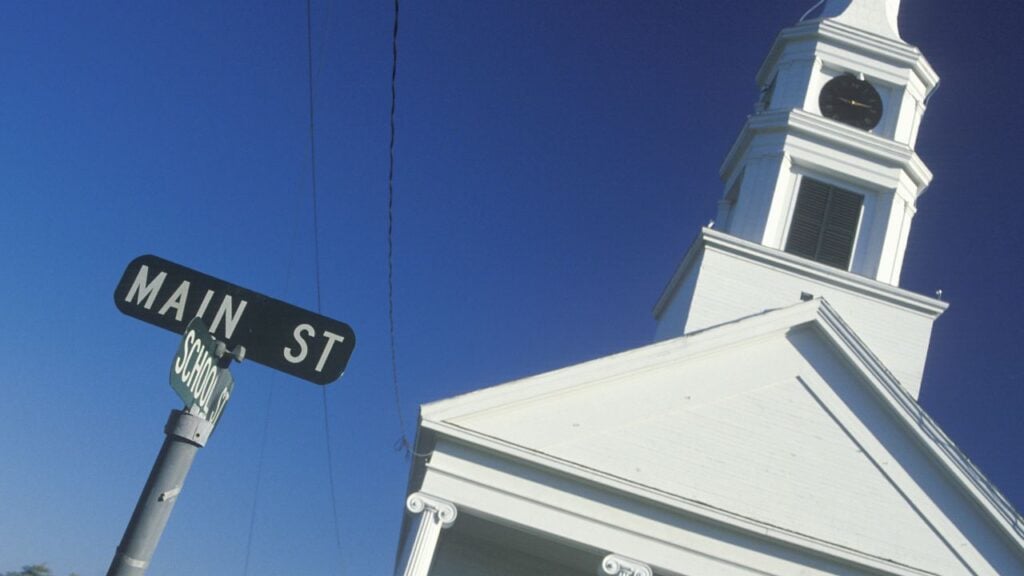
A moving truck sits in a Vermont driveway while the new owner signs paperwork that has nothing to do with the mortgage.
It's one of several Vermont-only forms transplants find out about only after they've already committed to the move.
9 Things People Find Out the Hard Way After Moving to Vermont
9 Signs Someone Was Raised in Montana, Even Decades After They Left

Kids grow up believing every river belongs to everyone, fence lines or not.
The day they learn many other states don't work that way is the day it finally sinks in, sometimes decades after they've left.
9 Signs Someone Was Raised in Montana, Even Decades After They Left
