
9 Things That Confuse Everyone Who Moves to New Jersey

New Jersey packs more people into a square mile than any other state, and somehow also splits them across 564 separate town governments.
Two neighborhoods a mile apart can run on completely different trash days, tax bills, and rulebooks.
These are the things that confuse everyone who moves to New Jersey.
Note: This is general information, not legal or tax advice. New Jersey’s tax rates, licensing rules, and local ordinances vary by municipality and are subject to change.
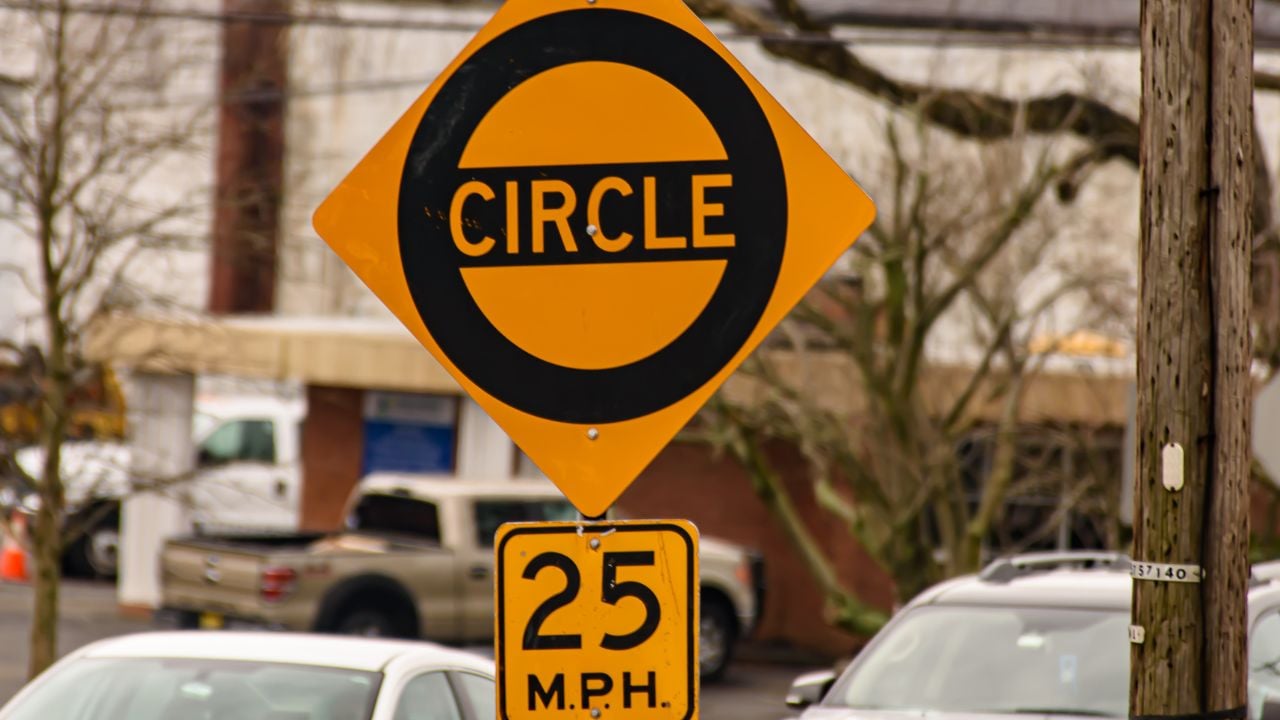
1. Traffic Circles New Jersey Never Modernized
Drivers who learned modern roundabout rules somewhere else are in for a surprise at a New Jersey traffic circle.
Other states point drivers to a roundabout, where the car already inside the circle always keeps the right of way.
New Jersey never wrote that rule down for its traffic circles.
The state’s motor vehicle code has no statute spelling out who yields inside one, so local signage, painted lines, and decades of established habit decide it instead, circle by circle.
A newcomer who treats every circle like a roundabout can misjudge who’s supposed to go, and find out at the worst possible moment.
Old habits don’t carry over.
Read the yield and stop signs at each entrance instead of trusting muscle memory from another state.
2. New Jersey’s Jughandles
New Jersey builds left turns backward on many of its state highways.
A driver can’t turn left across oncoming traffic at many major intersections.
Not directly, anyway.
Instead, New Jersey routes that driver right, onto a looping ramp called a jughandle, which loops back around to cross the highway at a light facing the other direction.
The state has built more than 600 of them, more than any other state in the country, dating back to a design the New Jersey Department of Transportation (NJDOT) adopted in the late 1930s and ’40s to keep left-turning cars from cutting across oncoming lanes.
Newcomers used to a normal left-turn lane sail straight past the small jughandle sign, miss the ramp, and end up circling back through three more lights to try again.
Everyone in New Jersey does it at least once.
3. Home Rule Splits New Jersey Into 564 Rulebooks
Cross a town line two miles down the road in New Jersey, and trash day, tax rates, and the local rulebook can reset completely.
The state is carved into 564 municipalities, each running its own police department, school budget, trash contract, and local ordinances.
New Jersey’s home rule tradition leaves that power sitting right where it is, town by town, instead of centralizing it at the county or state level.
Every time.
A newcomer who just learned their trash goes out on Tuesday can move one town over and find recycling and trash share a single day, or the opposite.
New Jersey doesn’t run on one rulebook.
It runs on 564 of them, stitched together.
4. New Jersey’s Mailing Address Trap
New Jersey doesn’t always tell a new resident which town they live in.
The town printed on an envelope comes from the U.S. Postal Service’s default name for that ZIP code, and it doesn’t determine which New Jersey municipality taxes, schools, and governs that address.
A house with a mailing address that says one town can sit entirely inside a different township next door, sharing the ZIP code but nothing else official.
Newcomers assume their mail decides their town.
It doesn’t.
How to Confirm Your New Jersey Town
New Jersey settles the question with your property tax bill, not your envelope.
Whichever municipality sends and collects that bill is the one that runs your schools, counts your vote, and enforces its own ordinances on your street.
If the tax bill isn’t handy yet, your county clerk’s property record or the town listed on your voter registration confirms it just as well.
5. Property Taxes That Reset the Day You Buy
A New Jersey homeowner who trusts the seller’s last tax bill can watch a fresh number land within months of closing.
New Jersey holds the nation’s highest property tax rate, and reassessments can move that number on a new owner fast.
The average New Jersey homeowner’s property tax bill hit $10,570 in 2025, and homeowners in eight of the state’s 21 counties already average past $10,000, with Essex County running highest at roughly $14,460.
Big difference, block to block.
Several New Jersey towns reassess home values every single year instead of once a decade, which is exactly what blindsides a newcomer: The number on the old listing wasn’t wrong, it was just about to expire.
Ask the local tax assessor’s office what a recent reassessment did to nearby sales before signing anything.
6. New Jersey’s BYOB Culture
New Jersey makes it hard for a restaurant to pour a glass of wine.
A 1947 state law capped full liquor licenses at one per 3,000 residents in a given municipality, a quota tighter than nearly every other state runs.
Even with a 2024 reform now phasing that ratio down toward one per 1,771 residents by 2028, many towns’ available licenses are already spoken for, and the licenses that do trade hands can sell for hundreds of thousands of dollars.
Many well-regarded New Jersey restaurants skip alcohol sales entirely because of it and let customers bring their own bottle (BYOB) to the table instead.
Not a budget move.
It’s often the only legal option on the block.
Call ahead before assuming a nice dinner spot pours a full bar.
7. Recycling Isn’t Optional in New Jersey
Skipping the recycling bin can cost a New Jersey household money.
New Jersey became the first state in the country to require every resident to separate out recyclables, when Gov. Tom Kean signed the law in April 1987, and the mandate still stands across all 21 counties.
No exceptions.
Skip it, and a town’s code enforcement can fine a household or a landlord for tossing recyclables in with regular trash.
A newcomer from a state where recycling stayed optional can face a fine in New Jersey for the very same habit.
Each New Jersey town still layers its own sorting rules on top of the state mandate, so what one township accepts loose in a bin, the next might require bagged and separated.
Read the notice that comes taped to the bin.
Psst! How much do you know about New Jersey’s odd history? Take our quiz and see if you can ace it.
Quiz
New Jersey Firsts IQ
Answer these questions on New Jersey’s odd history and American firsts. We bet you can’t get them all right. Prove us wrong?
Which iconic Ellis Island falls mostly inside New Jersey’s state line, according to a 1998 Supreme Court ruling?
8. New Jersey's Sending-Receiving Schools
A family that assumes their New Jersey address guarantees one self-contained school system can be surprised to learn their kids are zoned for a regional high school two towns over.
New Jersey had 16 non-operating districts in the 2024-2025 school year that ran no schools of their own and sent every student out under contract, and dozens more towns operate only a K-8 system and buy their high school seats from a neighboring district the same way.
Mountainside sends its teenagers to Governor Livingston High School in neighboring Berkeley Heights.
Millstone Township's kids ride to Upper Freehold Regional instead of building their own high school.
Bedminster's teenagers cross into Bernardsville for Somerset Hills Regional.
The sending town's school board signs that tuition contract.
An address never does.
Check a district's sending-receiving status with the local board of education before assuming.
9. New Jersey's Pork Roll Name Fight
Ask for pork roll in the wrong part of New Jersey, and the counter person catches the mistake before the eggs even hit the griddle.
John Taylor started selling the cured pork product out of Trenton in 1856, and the whole state ate it under one name until a 1906 federal food-labeling law forced him to rebrand it "Original Taylor Pork Roll."
North Jersey kept calling it Taylor ham anyway.
Old habits stuck.
The line runs roughly north of Middlesex County and I-78: Order Taylor ham above it, and pork roll is what the menu prints below it.
Order it under the wrong name on the wrong side of that line, and a newcomer gets a knowing look before the counter even asks how they want it cooked.
Pointing at the case and asking for a pork roll, egg, and cheese sandwich works on either side of the line.
How New Jersey Delis Fry It
New Jersey delis fry pork roll three ways without much debate: Crisped hard at the edges, cut with a slit or four so it doesn't dome up like a hockey puck, and stacked on a hard roll with egg and cheese.
Same three moves, every counter.
Many diners near the shore serve it exactly that way on a Sunday morning.
Trenton still has a Taylor Street, named for the man who started the whole argument.
