
9 Things That Confuse Everyone Who Moves to New Mexico

Can you name the only U.S. state that has to print the word “USA” on its license plate just to prove where it’s from?
New Mexico has done exactly that since 1969, according to the state’s tourism magazine.
That’s only the start.
These are the things that confuse everyone who moves to New Mexico.
Note: This is general information, not legal or tax advice. New Mexico’s tax, water, and property rules are subject to change.
1. The Gross Receipts Tax
New Mexico charges shoppers a gross receipts tax instead of an ordinary sales tax, and the difference is more than a name.
State law puts that tax on the business selling something, not on the shopper buying it.
That’s not a technicality.
Many stores still pass the cost straight to the register.
The rate itself changes by location, blending a state, county, and city share into one number that shifts at the town line.
It reaches further than an ordinary sales tax too, since New Mexico taxes services along with goods: A haircut, a lawyer’s bill, and a plumber’s invoice all owe it.
Grocery food sold for home use mostly gets a deduction, so the sting shows up more at the hardware store than the supermarket.
New Mexico’s Receipt Rule
New Mexico didn’t always make a business show shoppers what its gross receipts tax added to a bill.
House Bill 6 changed that on July 1, 2019, requiring every receipt to either list the tax as a separate line or state plainly that the price already includes it.
Skip that disclosure, and the state can tax the whole invoice instead of the smaller taxable share.
2. Acequias’ Governing Role
The state still moves a lot of its water through acequias, community ditches some families have maintained since Spain controlled the territory.
State law recognizes them as political subdivisions of New Mexico, the same legal category as a school district.
More than 700 of them still operate today, many of them across the northern part of the state.
Each one elects a mayordomo, a ditch boss who schedules spring cleaning and settles disputes among the parciantes who hold water rights along it.
It isn’t optional.
Skip your turn at the shovel or the assessment bill, and state law can cut off your right to use the water at all.
Buying property along an acequia means joining a government nobody explained at closing.
3. Mercedes Land Grants
Some of the state’s land is still governed by mercedes, land grants that Spain and then Mexico handed to settlers long before statehood.
More than two dozen of them are named directly in state law as political subdivisions of New Mexico, with authority over planning and shared common land.
A vacant-looking hillside near one of these grants can still answer to an elected board of trustees, not just whoever’s name sits on a deed.
That surprises buyers.
Generations of legal fights over these same grants have also left many rural New Mexico titles clouded, tangled in old surveys and heirs nobody tracked down.
The Cristobal de la Serna land grant near Taos has fought one such title dispute in court for years, over a boundary a 1941 tax map never pinned down.
A title company in New Mexico earns its fee.
4. Land Rights Vs. Water Rights
State law treats water rights as a kind of property separate from the dirt sitting on top of them.
State law makes water appurtenant to the land under a priority system: “Priority in time shall give the better right.”
Whoever claimed the water first almost always wins, no matter who owns the land now.
First come, first served.
Newcomers drilling a well can’t just start pumping either.
New Mexico’s Office of the State Engineer has to approve a new domestic well before the first shovel goes into the ground.
Skip that step, and the well itself becomes the problem, not the water underneath it.
5. License Plates That Say ‘USA’
New Mexico’s license plates have carried the word “USA” since 1969, added so people in other states would stop assuming the state was part of Mexico.
It still happens anyway.
In 2018, a District of Columbia marriage bureau clerk rejected a New Mexico driver’s license as identification because she believed the state was a foreign country.
A court official later confirmed the mix-up and apologized for it.
New Mexico became the 47th state back in 1912, more than a century before that clerk’s shift.
The mix-ups keep piling up anyway, enough that a state magazine runs a recurring feature just to collect fresh ones.
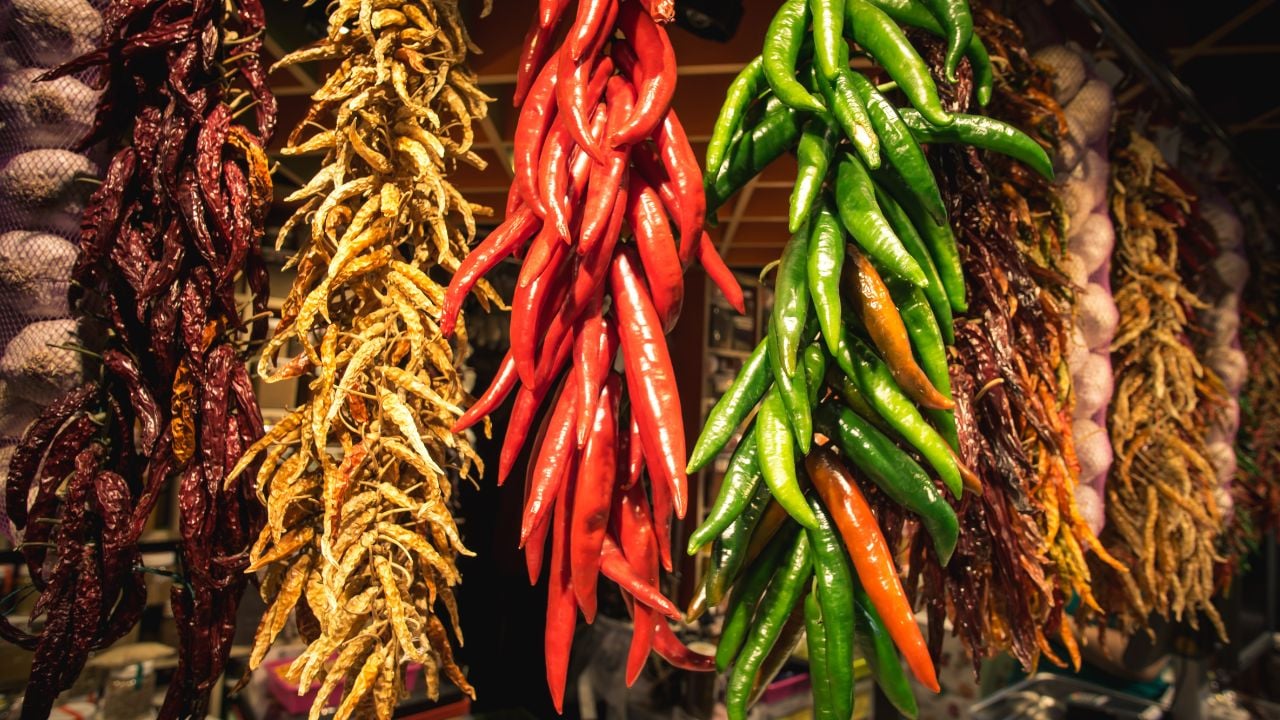
6. The ‘Red or Green’ Question
New Mexico adopted “Red or Green?” as its official state question in 1996, and nearly every counter in the state still asks it straight-faced.
It means which chile a diner wants smothered over their plate.
Newcomers usually pick red or green out of habit, not realizing there’s a third option.
Ask for “Christmas,” and the cooks bring both colors on the same plate.
No cook blinks.
Pick wrong at a family table, and somebody’s grandmother will let you know about it.
7. Higher Elevation Than Expected
The state sits a lot higher than many newcomers expect.
Albuquerque’s airport sits at 5,355 feet, and Santa Fe runs even higher, at roughly 7,000 feet above sea level.
That’s high enough to cause symptoms: Headaches, faster dehydration, and shortness of breath on a walk that wouldn’t wind anyone back home.
Fitness doesn’t change that.
The sun burns skin faster up there too, since there’s less atmosphere to filter it out first.
Baking stops behaving normally as well, since water boils at a lower temperature the higher you climb.
Locals keep sunscreen and water bottles within reach out of habit, not paranoia.
8. Historic District Rules
New Mexico’s Historic District and Landmark Act, tracked by the state’s preservation office, lets any city or town wall off a historic district.
That district then controls what gets built inside it.
Santa Fe used that law first, adopting a style ordinance in 1957 that still requires new construction in its historic districts to match Spanish Pueblo or Territorial Revival style.
It’s the same look tourists photograph around the Plaza.
Taos runs a matching Historic Overlay Zone, requiring what the town’s code calls “Taos Valley architecture” on anything built inside its boundaries.
That means Pueblo Revival and Territorial design, materials, and color.
Albuquerque backs the same idea in Old Town, where a landmarks commission has to approve the exterior of anything built or altered there.
A building permit alone won’t cover it.
Santa Fe’s version goes further still, limiting exterior walls to stucco, brick, stone, or slump block.
Walls finish mostly in browns, tans, and other earth tones a review board signs off on.
Aluminum siding isn’t allowed.
Pitched roofs in these districts can’t rise much higher than the homes already on the block.
A city board reviews every plan before anyone can build.
Buy a lot in one of these places expecting to build whatever you want, and the local planning office will explain otherwise.
9. Community Property Law
New Mexico is a community property state, one of only nine states left in the country.
State law treats income and property a couple acquires during marriage as owned equally by both spouses, with narrow exceptions like gifts and inheritances.
That’s true no matter whose name sits on the paycheck or the title.
That includes debt too.
A newcomer from a state that splits things differently can be startled by how this works: A spouse’s separate debt from before the marriage stays separate.
New debt the couple takes on together usually doesn’t.
Divorce starts from that fifty-fifty line, and a prenup is often the only way around it.
Psst! How much do you know about New Mexico? Take our quiz and see if you can ace it.
Quiz
New Mexico IQ
Answer these questions on New Mexico history and landmarks. We bet you can’t get them all right. Prove us wrong?
The Albuquerque International Balloon Fiesta is now the largest hot air balloon event on Earth. How many balloons showed up for the very first Fiesta in 1972?
The Chile Law
New Mexico backs its favorite crop with an actual law.
The Chile Advertising Act lets a business call its product "New Mexico chile" only if the peppers were grown in the state.
No more than five percent may come from anywhere else.
A business with an older brand name selling chile grown elsewhere has to print "NOT GROWN IN NEW MEXICO" right on the package.
State inspectors check.
Break the rule, and the state can pull the product off the shelf.
Few newcomers expect a chile pepper to come with an inspector.
