

9 Things West Virginians Are Tired of Explaining to Everyone Else

Congress admitted West Virginia as a separate state on June 20, 1863, while the Civil War was still running.
That’s 163 years of the same conversation.
People still treat the state as a leftover piece of another one, and the confusion has piled up.
These are the things West Virginians are tired of explaining to everyone else.
1. Virginia’s Sliver Sits Farther West
West Virginia’s name suggests the whole state sits west of Virginia.
Not exactly.
The southwestern tip of Virginia, near Cumberland Gap, sits farther west in longitude than any spot inside West Virginia’s borders.
Both states split from the same colony.
But the mountain ridges they follow run north to south, not east to west, so Virginia’s southwest corner juts out farther than West Virginia ever does.
Many Virginians have never noticed it, and many West Virginians never forget it.
2. Not Part of Virginia
West Virginia’s split from Virginia became official on June 20, 1863, when Congress admitted it as a separate state, not a leftover piece of one.
Thirty-four states already existed.
Pro-Union counties in the western mountains refused to secede with the rest of Virginia when the Confederacy formed.
Congress admitted their new state as a reward for staying loyal to the Union.
The mix-up still shows up on shipping labels and campaign mail today.
3. No Longer a Coal Economy
Does West Virginia’s economy still run on coal?
Not anymore.
Mining and logging together, the broad category that includes coal, employed about 20,400 people in West Virginia in 2025.
That’s a small slice of the state’s roughly 720,000 nonfarm jobs statewide.
Coal still shapes counties across the southern coalfields, and mining jobs still pay well above the state average.
But manufacturing alone accounts for about 7% of all jobs in West Virginia.
Manufacturing’s share is more than double what mining and logging combined provide, per West Virginia University’s Bureau of Business and Economic Research.
4. A Brand-New National Park
West Virginia’s New River Gorge became a national park not even six years ago, and many longtime visitors still call it a national river out of habit.
The old name still sticks.
Congress redesignated the site as New River Gorge National Park and Preserve in December 2020, making it the nation’s 63rd national park.
Before that, it had spent more than four decades as a national river, a different and lesser-known designation.
The gorge cuts through some of the oldest rock layers in the Appalachians.
Rafters, climbers, and hikers now share the canyon with trails miners once used to get to work.
5. Two Division I Football Teams
West Virginia’s football loyalties split between two Division I programs, not one.
Marshall University fields a full program in Huntington, on the opposite end of the state from West Virginia University’s campus in Morgantown.
Outsiders who’ve only heard of the Mountaineers are often surprised the Thundering Herd exists at all.
Marshall won the school’s first football national championship in 1992, beating Youngstown State for the I-AA title, college football’s second-tier classification at the time.
The two programs met annually as the Friends of Coal Bowl from 2006 through 2012, and West Virginia won every game.
That win streak stood at 10 straight by the 2010 meeting.
6. Not the Only State Song
Ask an outsider to name West Virginia’s state song, and “Take Me Home, Country Roads” is usually the only answer they’ve got.
Three more exist besides it.
West Virginia adopted “Take Me Home, Country Roads” as an official state song in 2014, more than 40 years after John Denver recorded it.
That’s still only West Virginia’s fourth official state song.
“The West Virginia Hills” became a state song in 1961.
Lawmakers added “This Is My West Virginia” and “West Virginia, My Home Sweet Home” together two years later, in 1963.
Fans and marching bands play “Country Roads” before and after nearly every West Virginia University football game, along with memorials and dedications across the state.
West Virginia Accidentally Named Two State Songs
West Virginia’s four state songs didn’t all arrive the same way.
The state’s forty-eighth Legislature named “West Virginia, My Home Sweet Home” an official state song back in 1947.
The fifty-fifth Legislature named “The West Virginia Hills” the state song in 1961 without realizing the 1947 designation still stood, according to state legislative records.
Lawmakers cleaned up the mix-up on February 28, 1963, keeping both songs official and adding “This Is My West Virginia.”
7. Legal Moonshine, With a Catch
West Virginia’s newest liquor law makes home-distilled moonshine legal for the first time in decades.
There’s a catch, though.
Under a 2024 law, West Virginia residents 21 and older can distill up to 5 gallons of spirits a year for personal use.
A two-adult household can go up to 10 gallons a year.
Selling any of it is still illegal, and so, oddly, is making it in the first place, at least under federal law.
Federal rules still treat unlicensed home distilling as a crime everywhere in the country, West Virginia included.
Penalties from the Alcohol and Tobacco Tax and Trade Bureau can include years in prison.
8. State-Fixed Potholes
West Virginia’s Division of Highways maintains almost every public road in the state, not the county or the city.
Even your street.
The state covers about 89% of all public roads, including many neighborhood and subdivision streets that a county road crew would handle almost anywhere else.
That setup makes West Virginia’s state-maintained system one of the largest in the country, with roughly 36,000 miles of roadway to patch and plow.
The money comes from gas taxes and vehicle registration fees, not local property taxes.
So when a pothole opens up outside a West Virginia home, the complaint goes to Charleston, not the county courthouse.
Psst! Think you know West Virginia? Flip through these cards and see how many you get right.
9. Green Bank, the Wifi Dead Zone
West Virginia gets stuck with a no-internet, no-cell-service reputation that outsiders bring up more than almost anything else about the state.
That reputation traces back to one small pocket of Pocahontas County, not the whole state.
One town causes it.
Green Bank Observatory anchors a federally protected radio-silence area that stretches roughly 13,000 square miles across parts of West Virginia, Virginia, and Maryland.
The Federal Communications Commission set the boundary to keep transmitters from interfering with the observatory’s radio telescopes.
Only households within about 10 miles of the telescopes face restrictions on WiFi and similar devices.
Everywhere else in the state, cell and internet service works about the same as in any other rural area.
8 West Virginia Land Boundary Disputes Rural Homeowners Get Wrong
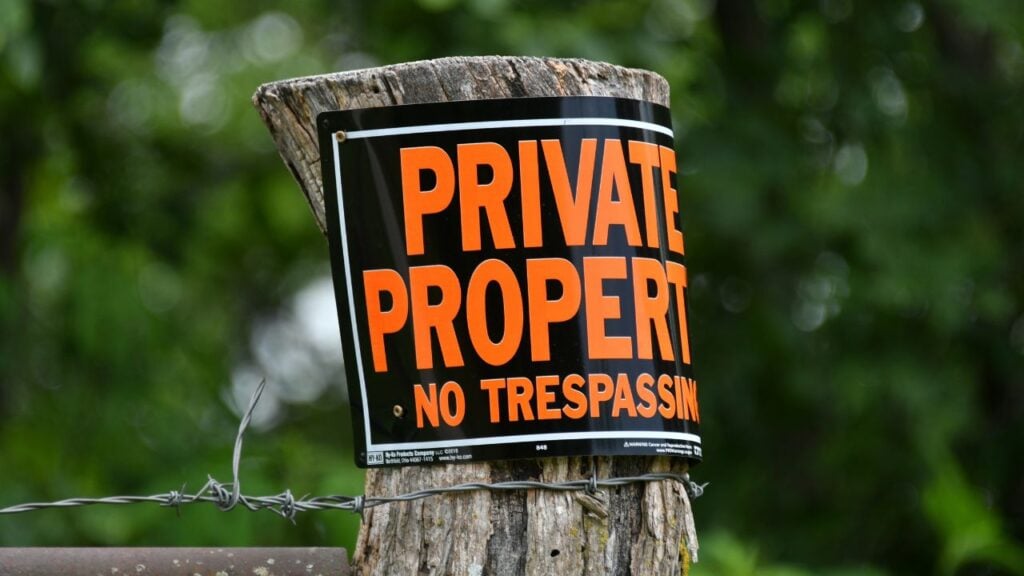
A neighbor’s fence drifts a few feet onto someone else’s property in West Virginia, and after enough years, the law can hand that strip of land over for good.
Lawmakers tried to kill that rule in 2025, and the bill to end it died in committee, so the old clock is still running on properties across the state.
8 West Virginia Land Boundary Disputes Rural Homeowners Get Wrong
9 West Virginia Habits Nobody Realizes Are a West Virginia Thing Until They Move

A West Virginia lunch box has carried the same thing since 1927: a pepperoni roll, wrapped in wax paper, no fork required.
Cross the state line with that same lunch, and the words “pepperoni roll” draw a blank look instead of a nod.
9 West Virginia Habits Nobody Realizes Are a West Virginia Thing Until They Move
