
9 Tornado Season Routines That Come Naturally to Oklahomans

April and May have averaged close to 37 tornadoes combined in Oklahoma every year since 1950, according to National Weather Service data out of Norman.
The same office invented the phrase “Tornado Emergency” on May 3, 1999.
Oklahomans built a set of routines around numbers like those, and none of it looks like panic from the outside.
These are the tornado season routines that come naturally to Oklahomans.
Note: This is general information, not official emergency guidance. Shelter programs and safety recommendations are subject to change, so confirm current guidance with the Oklahoma Department of Emergency Management.
1. Reconfirming the Storm Shelter’s Registration Every Spring
Oklahoma’s tornado activity is overwhelmingly a spring event.
April and May alone have averaged close to 37 tornadoes combined every year since 1950, per National Weather Service data out of Norman.
Many Oklahoma homeowners with a registered shelter treat that spring run-up as the prompt to make sure the listing is still accurate.
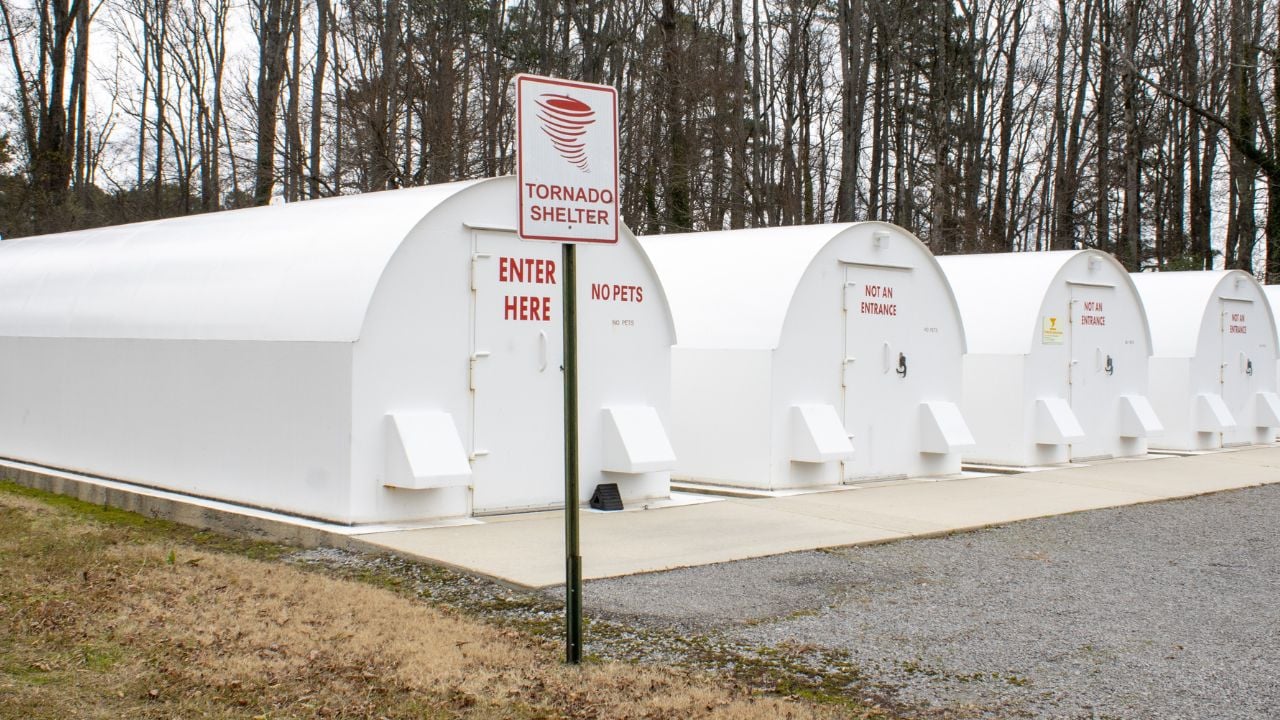
Oklahoma City runs a free shelter registry, and Edmond keeps a similar one.
Both cities ask residents to call back in whenever a phone number, an emergency contact, or the shelter itself has changed since the last time they registered.
If debris blocks the shelter’s usual exit after a storm, a current listing tells rescue crews exactly where to start digging.
Crews know where to look.
2. Choosing a Safe Room Over a Basement
Oklahoma home buyers and builders pass over a basement almost as a rule.
It isn’t about cost.
Much of the state sits on red clay soil that swells when it rains and shrinks when it dries out.
That constant movement is what cracks basement walls and lets them leak.
In the area hit by the 2013 Moore tornado, National Public Radio (NPR) reported that fewer than 1 percent of new homes there were being built with basements.
House hunters and homebuilders across the state ask about a safe room instead, above ground or below, since it sidesteps the same soil problem entirely.
Nothing about that soil favors a basement.
3. Applying for the State’s Shelter Rebate Anyway
Oklahoma homeowners register for the state’s SoonerSafe rebate almost every year it opens, even knowing the odds.
The Department of Emergency Management mostly picks winners at random, though some years priority goes first to residents in certain disaster-impacted counties before the rest are drawn.
It costs nothing to enter.
So homeowners resubmit year after year, the way anyone keeps entering a drawing that’s worth winning.
The Math Behind the SoonerSafe Rebate
Oklahoma’s SoonerSafe rebate tops out at $3,000, and it never covers more than 75% of the total bill.
A safe room typically runs $3,000 to $8,000 installed, and the rebate rarely covers the full cost.
The check only goes out after the shelter is built, paid for in full, and documented.
It doesn’t count as taxable income.
4. Knowing the Monthly Siren Test by Heart
Oklahomans who live in cities with outdoor sirens learn the monthly test schedule as well as they know the siren’s sound.
Edmond tests its sirens on the first Saturday of every month at noon, weather permitting.
Other Oklahoma cities keep to a monthly or weekly test schedule.
The distinction matters because the siren was never built to warn anyone indoors.
Edmond’s emergency management office describes the system as built for people who are already outside, not anyone already home.
A battery-powered weather radio broadcasting alerts from the National Oceanic and Atmospheric Administration (NOAA) is the backup that works indoors, power outage or not.
The noon whistle isn’t news.
5. Listening Hard for One Phrase
Oklahomans react differently the moment officials upgrade a warning to a Tornado Emergency, the National Weather Service’s highest tornado alert.
A Tornado Warning means a tornado has been spotted or shows up on radar.
A Tornado Emergency means a violent, confirmed tornado is already moving through a populated area.
The term was coined at the weather office in Norman on May 3, 1999, during the outbreak that tore through Bridge Creek and Moore.
Oklahomans still use it.
Psst! How storm-ready is your Oklahoma home? Run through this quick check and see where you stand.
6. Keeping a Helmet by the Shelter Door
Oklahoma’s official guidance breaks into three plain steps: Move inside, drop to the lowest floor, then cover up with whatever blocks debris.
The cover up step includes wearing a helmet or hard hat, since Oklahoma Emergency Management says it helps protect the head from flying and falling debris.
Households with a shelter keep a bike helmet stored right inside it, next to the water and the radio, not tucked away somewhere else in the house.
It’s kept close at hand.
7. Keeping Sturdy Shoes Right Where the Shelter Is
Oklahoma’s emergency planners list a change of clothing, rain gear, and sturdy shoes among the items to keep stored in the same safe spot a family plans to shelter.
Households with a shelter treat that pair of shoes the same way they treat the helmet next to it.
The shoes stay in place, not packed away for a trip that hasn’t happened yet.
A storm can scatter nails, glass, and splintered wood across a yard in seconds, and bare feet don’t hold up well against any of it.
Walking out of a shelter after the worst has passed usually means walking straight through whatever’s left of the yard.
Flip-flops don’t cut it.
8. Checking the Storm Prediction Center Before Breakfast
Many Oklahomans check the Storm Prediction Center’s daily outlook the way people in other states check a five-day forecast.
The federal agency that forecasts severe-weather risk for the entire country is based in Norman, inside the National Weather Center on the University of Oklahoma’s campus.
The outlook map colors each day’s risk from marginal to high, and central Oklahomans have learned to read it before they’ve had coffee.
It beats guessing.
9. The March 15 Tax Break Deadline
Oklahoma homeowners who finish paying for a safe room race a deadline to lock in the property tax break the state constitution allows for it.
Up to 100 square feet of a safe room installed after January 1, 2002, is exempt from property taxation under Oklahoma’s constitution.
The county assessor only grants that exemption for the current tax year if the paperwork is filed by March 15.
A filing that misses that date pushes the exemption to the following year instead.
That March window falls right as Oklahoma’s spring tornado season ramps up.
Homeowners who recently finished a safe room feel that deadline pressure every year the season arrives.
That covers many shelters built for a single household, so the exemption often applies to the whole thing.
That’s a full year lost.
