
9 Unwritten Freeway Rules Californians Follow Without Thinking

Anybody can drive the length of the 5 with a valid California license.
Driving like a local takes longer.
It’s the stuff no examiner tests and no sign spells out, the habits you soak up after years of on-ramps, gridlock, and one memorable ticket.
These are the unwritten freeway rules Californians follow without thinking.
Bail on a Sig Alert
When the traffic app lights up with a Sig Alert on your stretch of freeway, a Californian doesn’t sit and stew.
They bail.
Off at the next exit, onto the surface streets, ready to run parallel to the jam on Sepulveda or Ventura Boulevard.
Here’s the part outsiders miss: A Sig Alert isn’t any old slowdown.
The term goes back to Loyd Sigmon, a 1950s radio executive who built a device that recorded police traffic bulletins right off the air.
The California Highway Patrol (CHP) still uses his name for any unplanned mess that shuts a lane for 30 minutes or more.
So when a local hears “Sig Alert,” they hear “find another way home.”
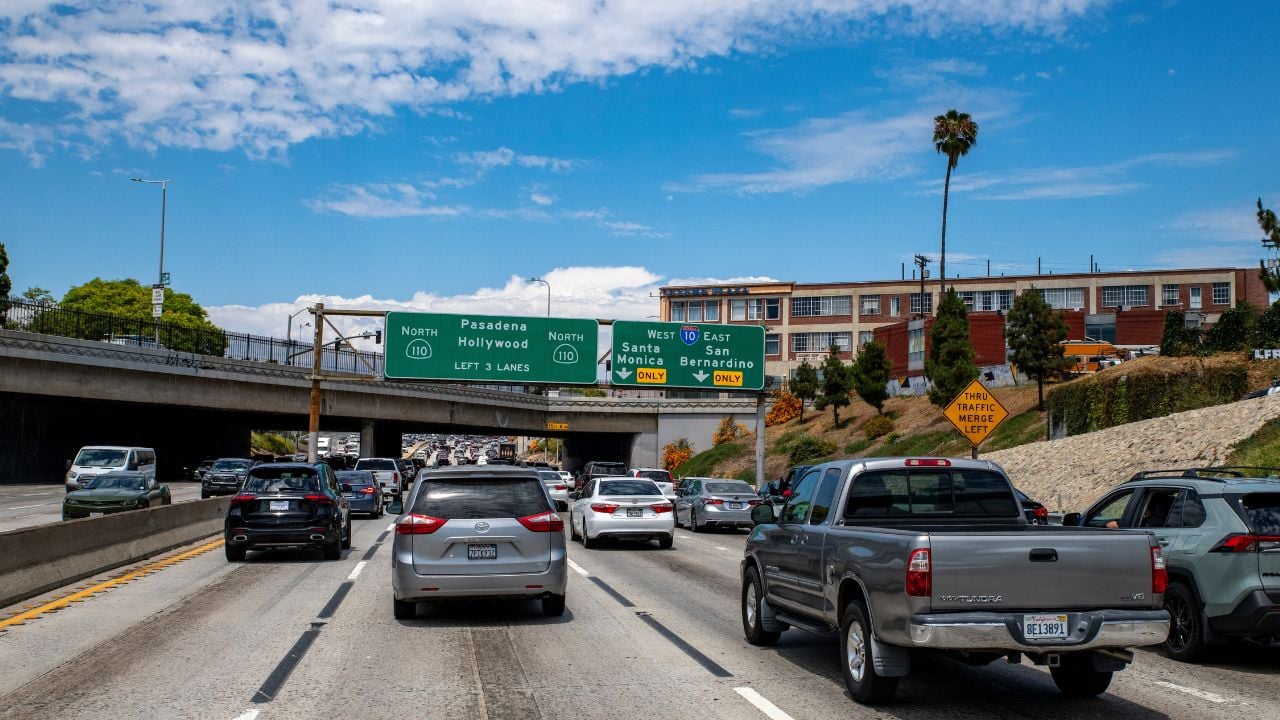
It’s the 405
Ask a Californian how to reach the airport, and you’ll get a route built from numbers with “the” bolted on the front.
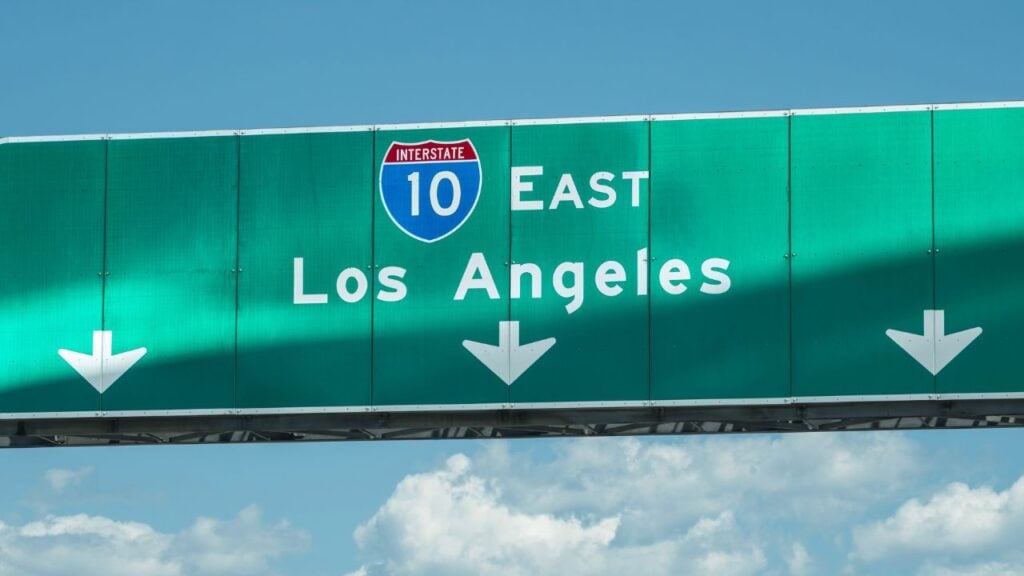
The 405, the 10, the 110.
Never just “405.”
That little word is a habit linguists trace to Southern California, where the freeways carried names long before the state hung numbers on them.
Drivers grew up on roads that had names, so when the numbers arrived, the article stuck.
Head north to the Bay Area, and it vanishes.
People up there say “101” and “880” with no “the” at all.
Say “the 880” in Oakland, and you’ve marked yourself as a visitor from down south.
One little word gives you away.
Left Lane Is for Passing
The far-left lane on a California freeway is for passing, not for cruising.
Camp there at 60 while faster cars stack up behind you, and you’re doing it wrong.
State law backs the etiquette. The vehicle code tells a slower driver to keep right and leave the left lane open for overtaking.
Locals slip past on the right when they have to, mutter something, and move on.
The move that marks a native: You drift back to the right the moment you’re done passing, without anyone asking.
Respect the Double Yellow
The carpool lane on the freeway sits behind a set of painted lines, and locals read them like a fence.
A broken white line means you can slide in or out.
A solid double yellow means stay put until it breaks.
Cross that double yellow to jump into the carpool lane early, and a CHP officer parked on the shoulder will happily write you up.
There’s another change worth knowing: The solo electric-car sticker that once let one person ride the carpool lane expired in 2025.
So these days it takes two people in the car, not a sticker on the bumper.
Wait for the dashes.
One Car per Green
Merging onto a busy California freeway often means stopping first, right there on the on-ramp, at a metering light.
One car per green. Then the next.
Caltrans runs these ramp meters to drip cars onto the freeway in spaced-out singles instead of one merging clump.
Californians treat the two-lane ramps like a law of nature: You pick a lane, you wait your turn, and one car rolls per flash.
Roll through a red metering light, and you can earn the same ticket you’d get for running a red light at an intersection.
Newcomers gun it. Locals idle up, tap the gas on green, and slot in.
One at a time.
Psst! How much do you know about California’s freeways and roadside history? Take our quiz and see if you can ace it.
Quiz
California Road IQ
Answer nine questions on California’s freeways, roads, and driving history. See how many you can ace.
The first freeway in the western United States opened in 1940. Which one was it?
Leave Room for Lane Splitters
Glance in your mirror on any California freeway, and you'll spot a motorcycle threading the white line between two lanes of traffic.
That's lane splitting, and California is the only state that has plainly legalized it between moving traffic.
A handful of other states now allow slower-speed lane filtering between stopped cars, but not the freeway version.
A 2016 law put lane splitting on the books in California, and the CHP even publishes tips on doing it safely.
So locals don't panic when a rider slips up the gap in stop-and-go traffic.
They ease a touch to one side and leave room.
Drift toward the center line to block a splitter on purpose, and you've announced you just moved to California.
Give the bike its lane.
Flash to Warn
An oncoming driver flicks their high beams at you twice as you come over a rise on the freeway, and a local reads it in a heartbeat.
Cop ahead. Slow down.
Drivers have flashed that warning for generations, and courts have generally called it protected speech under the First Amendment.
CHP officers don't love it, and depending on the moment, an officer might still pull you over.
Many Californians take the risk anyway, tapping the high beams for a stranger they'll never meet.
You'd want the same heads-up.
Throw the Thank-You Wave
Let another car merge in front of you on a jammed freeway, and you're owed one small thing back.
The wave.
A hand lifted in the rearview, or a quick tap of the hazard lights from the driver ahead, says thanks for the gap.
Skip it, and the person who let you in files you under rude for the rest of the commute.
Truckers do the hazard-flash version, two blinks after a big rig lets them back into the lane.
Californians hand out the same courtesy on the 5 and the 210 without a thought about where it started.
You wave every time.
Slug It Across the Bay
On the freeways feeding into San Francisco, a Californian with an empty passenger seat is leaving money and time on the table.
So they pick up strangers.
It's called casual carpool, an informal system where East Bay commuters line up at set corners and hop into any car headed across the Bay Bridge.
Fill the car with three people, and the driver skips the worst of the toll and rides the carpool lane over the bridge.
The riders get a fast, cheap trip into the city.
Nobody runs it.
There's no app and no sign-up, just decades of morning regulars lining up at East Bay parking lots in Oakland and Berkeley.
The etiquette runs on its own unwritten code: Riders wait their turn in line, keep the loud phone calls to themselves, and let the driver pick the music.
Californians have slugged across the Bay this way since the 1970s, long before ride-hailing companies offered the same trip for a fee.
12 Dead Giveaways You've Spent Too Many Years in California
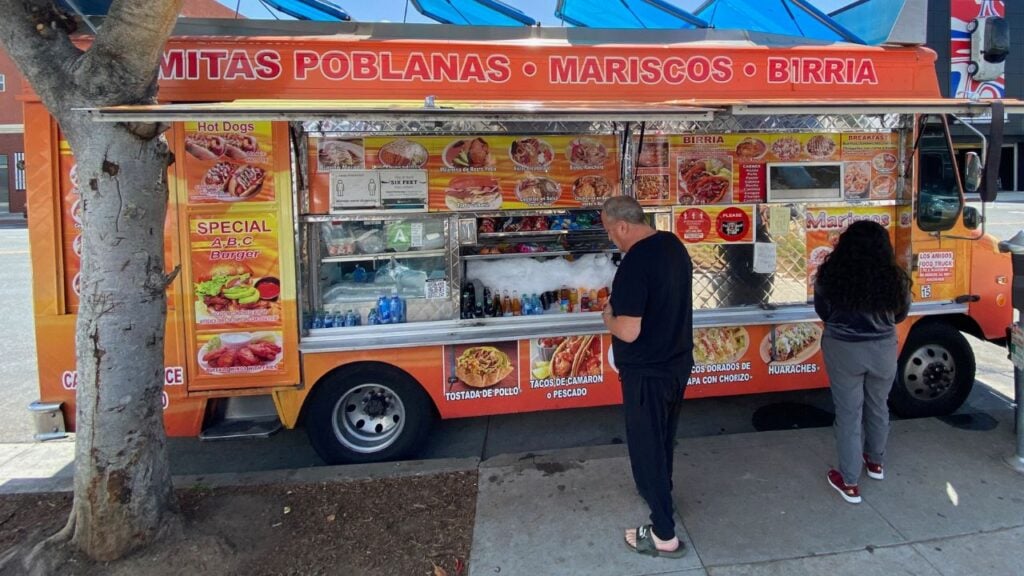
Anybody can visit California for a week, but living in California long enough changes how you talk, drive, and dress.
The signs show up in the small stuff, from the freeway number you add a "the" to, to the temperature that finally makes you reach for a jacket.
12 Dead Giveaways You've Spent Too Many Years in California
10 Things Californians Are Tired of Explaining to the Rest of Us
No, Californians don't all surf, and half the state lives nowhere near a wave.
The questions start the second someone hears the word California, and the answers wear thin after years of repeating them.
10 Things Californians Are Tired of Explaining to the Rest of Us
