
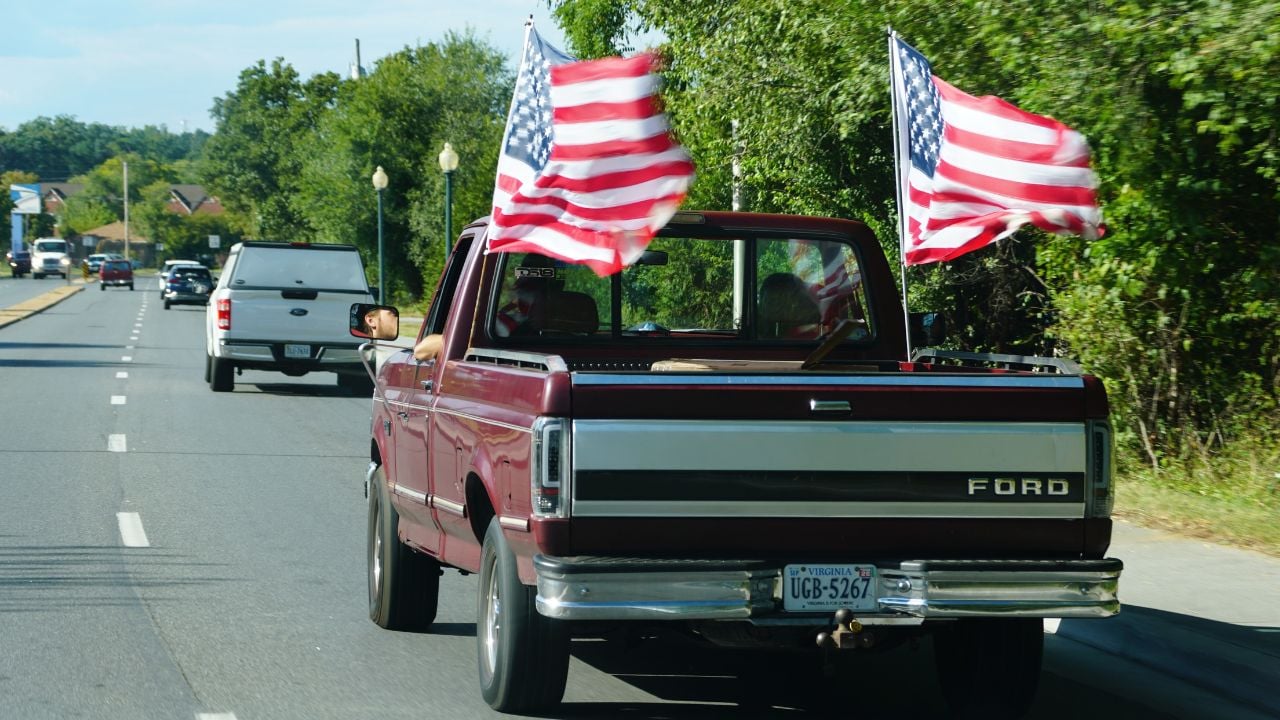
9 Virginia Backroads Locals Take to Skip the Interstate

Richmond drivers lost 40 hours to rush-hour traffic in 2025, nine more than the year before.
Some Virginians never spend a single one of those hours sitting in it.
These are the Virginia backroads locals take instead of the interstate.
1. U.S. Route 11
U.S. Route 11 stays in sight of I-81 for nearly the whole 339 miles it runs through the Shenandoah Valley, from Clear Brook near the West Virginia line to Bristol on the Tennessee border.
Virginia’s stretch loosely follows the old Great Wagon Road, the same corridor settlers walked south through the valley two centuries before the interstate went in.
I-81 skips the middle of Winchester, Staunton, and Lexington on purpose.
Route 11 doesn’t.
The road runs straight through all three, past the courthouse squares and the diners locals stop at.
I-81 carries the highest per-capita truck volume of any interstate in Virginia, logging more than 21 million truck trips a year.
Locals making a short hop, Harrisonburg to New Market, say, skip the on-ramp and take Route 11 instead, trading a little speed for a lane with no semi riding their bumper.
2. U.S. Route 50
Middleburg’s stretch of U.S. Route 50 runs beside I-66 for the eastern two-thirds of its trip across Virginia, then breaks off on its own past Aldie and Upperville, deep in the state’s horse country.
Split-rail fences and horse barns line the road for miles.
I-66 stays flat and heads straight for the mountains.
Route 50 climbs the Blue Ridge at Ashby Gap instead, the same pass Confederate and Union cavalry fought over during the Civil War.
Locals driving west from Fairfax or Loudoun County pick Route 50 over the interstate on purpose.
That’s the point.
Fewer merges, no beltway-adjacent backups, just a two-lane road through open horse country the rest of the way to the mountains.
3. U.S. Route 250
U.S. Route 250 became the official detour on a night in 2019 when a tractor-trailer and a tour bus collided on I-64 near the summit of Afton Mountain, and the Virginia Department of Transportation (VDOT) shut the interstate down in both directions.
Passenger cars got one instruction: Take the two-lane road already running alongside it through Rockfish Gap.
That road never closed.
Route 250 follows the 18th-century Three Notch’d Road, a route two hundred years older than the interstate running beside it.
Locals in Waynesboro and Staunton drive that same Rockfish Gap crossing on ordinary days too, without waiting for the interstate to shut down first.
A low bridge near Crozet keeps big rigs off it entirely, so Route 250 stays a passenger car’s shortcut through the gap.
4. Virginia Route 5
Charles City County’s stretch of Virginia Route 5 threads between the James River and a run of colonial-era plantations still standing: Shirley, Berkeley, Westover, Sherwood Forest.
I-64 covers the same distance a few miles north, but the interstate hits a genuine chokepoint right at Bottoms Bridge, narrowing from three lanes each way down to two for 29 miles into Williamsburg.
Route 5 bypasses the chokepoint.
The road runs past plantation gates and roadside produce stands, with the Virginia Capital Trail running alongside it for cyclists since 2015.
Locals making the Richmond-to-Williamsburg run on a weekend often skip the interstate entirely and take the river road instead.
No merging trucks, no brake lights backed up at the gap. Just the James River doing what it’s done since Jamestown.
5. U.S. Route 301
U.S. Route 301 forms what highway planners call the local complement to I-95 for much of its run through Virginia, an eastern alternative that peels off through Bowling Green and Port Royal instead of merging onto the interstate at all.
Fredericksburg’s stretch of I-95 backs up often enough that locals in Caroline County rarely bother with it for a regional trip.
Route 301 crosses the Rappahannock River on its own bridge, well east of the interstate’s chronic bottleneck.
That’s not an accident.
The road passes within a few miles of Fort A.P. Hill and the Northern Neck turnoff, country I-95 drivers never see because they’re watching the truck ahead of them instead.
Locals headed to the Northern Neck or Southern Maryland reach for Route 301 by habit, not by accident.
It’s the shortcut disguised as the long way.
Psst! Which backroad saves the most time depends on where you’re headed and which interstate you’re avoiding. Sort or filter the list below to find your route.
6. U.S. Route 1
U.S. Route 1 predates the interstate running beside it for nearly its entire length in Virginia, from South Hill near the North Carolina line up through Petersburg, Richmond, Fredericksburg, and Alexandria.
Interstates shadow almost every mile of it now: I-85 south of Petersburg, I-95 up to Alexandria, I-395 into Washington.
It never lost the job.
Alexandria renamed its stretch Richmond Highway in 2019, dropping the old Jefferson Davis Highway name, and locals there still use the road constantly for the two- and three-mile hops I-95 was never built for.
Merging onto an interstate just to go one exit is its own kind of headache.
Route 1 handles those short hops directly, no merge lane required.
7. U.S. Route 460
Central Virginia drivers headed to the Outer Banks or the Hampton Roads waterfront reach for U.S. Route 460 long before they reach for the interstate.
The road runs from Petersburg through Suffolk to Norfolk on a path that skips the Hampton Roads Bridge-Tunnel altogether, never touching the water crossing at all.
Route 460 is the workaround.
Highway historians call it the oft-ignored way through, and locals who’ve made the trip a few times stop ignoring it fast.
The road follows the colonial-era Trader’s Path for stretches of its nearly 240 miles across the state, a route far older than the interstate it replaces on this trip.
The Math Behind the Bridge-Tunnel Backup
The Hampton Roads Bridge-Tunnel on I-64 is running roughly 43% over the capacity it was built for.
VDOT designed the crossing for 70,000 vehicles a day, and it now carries close to 100,000.
That gap is the reason U.S. Route 460 keeps coming up in local trip-planning conversations, even on days when the map says it takes longer.
8. U.S. Route 52
U.S. Route 52 climbed Fancy Gap Mountain long before I-77 existed, and the older two-lane road is still there, tracing its own line up the same climb.
I-77 opened through the gap in July 1977, cutting a wider, faster route over the mountain for through-traffic.
That grade has a rough safety record.
Fog settles fast at this elevation, and I-77’s descent near Fancy Gap has produced some of Virginia’s worst pileups, including a 2013 crash that killed three people and shut the interstate down for hours.
The old road avoids it.
Drivers from Hillsville and Fancy Gap who know the mountain reach for Route 52 instead of I-77 once the fog rolls in, and plenty just keep using it for short local trips year-round.
9. U.S. Route 60
U.S. Route 60 crosses the Blue Ridge at White’s Gap, more than 30 miles south of where I-64 crosses at Rockfish Gap, climbing east out of Lexington toward Amherst.
The road stays rural and two-lane the entire way, with switchbacks steep enough that the stretch turns difficult to drive in snow and ice many winters.
Locals around Lexington and Buena Vista use it anyway for the direct run east, rather than driving north to reach I-64’s crossing first.
Route 60 saves the detour.
The road descends into Amherst and crosses U.S. Route 29 there before straightening out for the run toward Richmond.
Locals around Lexington and Amherst treat that stretch of Route 60 as the direct line east, not a scenic detour around the mountain.
The Manchester Turnpike carried that same route into Richmond starting in 1804, more than a century before I-64 existed.
7 Kroger Perks Virginia Shoppers Over 60 Keep Missing

Virginia’s Kroger stores dropped their old nickel-off senior discount back in 2017, and what replaced it doesn’t work like a Tuesday-only deal.
These are the Kroger perks some Virginia shoppers over 60 still leave sitting on the table.
7 Kroger Perks Virginia Shoppers Over 60 Keep Missing
8 Things Virginia Home Sellers Do That Kill the Sale
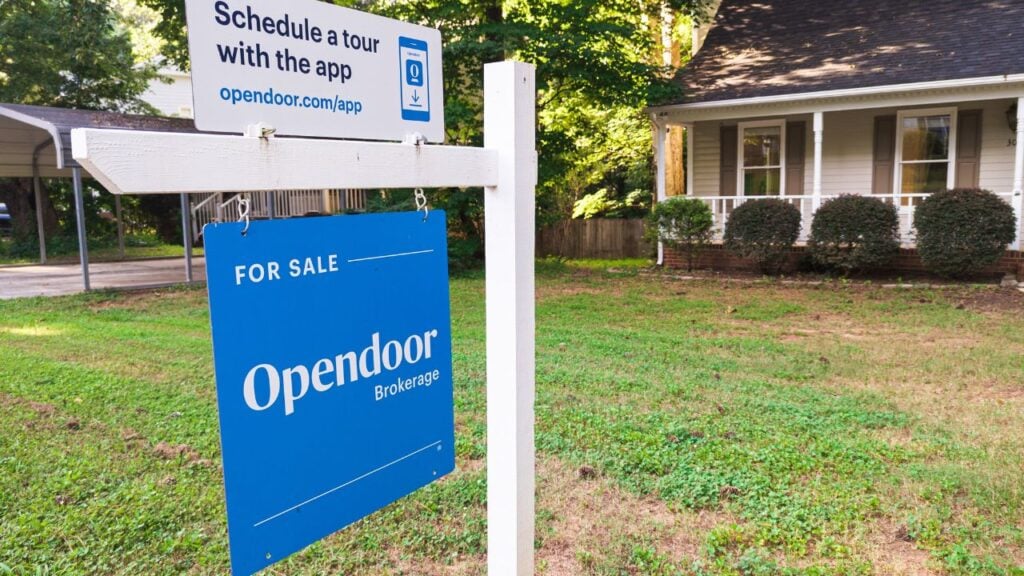
A signed contract in Virginia isn’t a sold house.
These are the mistakes that turn a Virginia seller’s accepted offer into a house back on the market.
