
9 Ways Being a Minnesota Grandparent Looks Different Now Than It Did 30 Years Ago

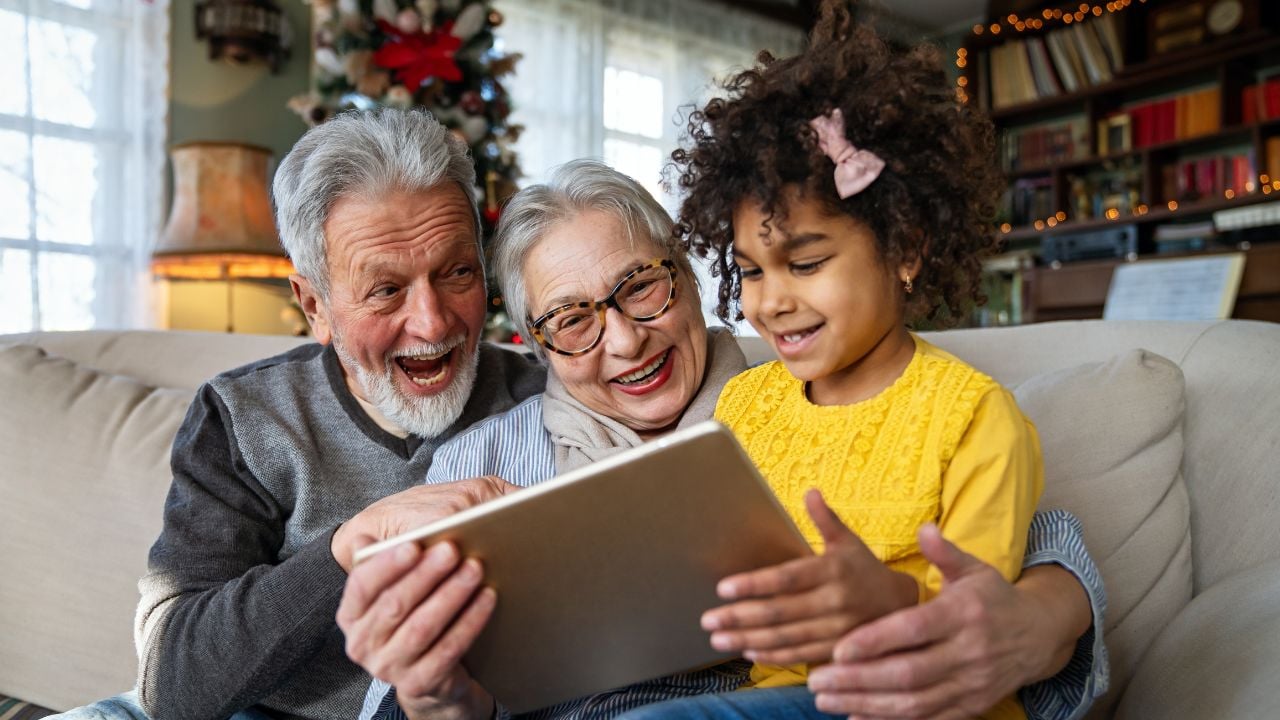
A Minnesota grandmother taps the green icon on her phone, and her granddaughter’s face fills the screen from a dorm room three states away.
Three decades ago, no grandmother could do that.
These are the ways being a grandparent looks different now than it did 30 years ago.
Working Well Past 65
Minnesota grandparents are working past the age their parents treated as a finish line.
Nationally, people ages 65 to 74 were in the labor force at a rate of just 16.3% in 1992.
By 2022, that rate had risen to 26.6%, according to the U.S. Bureau of Labor Statistics.
That’s not a one-year blip.
Minnesota’s 65-and-older population grew on a separate track over roughly the same stretch, adding 4.5 points of the state’s total.
That’s a bigger population of older Minnesotans, not proof of a bigger share choosing to work, but it means more of them are around to make that choice at all.
A grandparent who used to retire at 65 and settle into full-time babysitting now often keeps a paycheck coming in instead, whether that’s by choice or by budget.
Grandkids Farther Away
Grandparents are more likely to watch a grandchild grow up mostly through photos and video calls than to see them at the kitchen table every week.
Minnesota lost a net 3,000 workers to other states in 2023.
The state’s demographer found residents in their late teens and twenties are the age group likeliest to leave, often for college, and many never fully return.
That’s the grandkids’ generation.
Nationally, about 13% of grandchildren live within a mile of a grandparent.
Almost exactly as many, another 13%, live 500 miles away or more, per a 2025 study that mapped U.S. households down to the block.
That’s a wider split than many people would guess, and a grandparent’s experience increasingly depends on which side of that gap the family lands on.
The Mileage Gap Grandparents Face
Minnesota grandparents, like grandparents everywhere, tend to land on one extreme or the other of that distance gap.
About 47% of grandchildren live within 10 miles of a grandparent, and 13% live 500 miles away or more, almost a mirror image of each other.
The New Babysitting Shift
Grandparents are covering a shift their parents rarely had to work: A regular chunk of a grandchild’s week.
Mothers of children under 6 worked outside the home at a rate of 62.3% in 1996.
By 2023, that rate had grown to 68.9%, per the U.S. Bureau of Labor Statistics.
Somebody has to fill that gap.
About 1 in 5 parents, 21.8%, relied on a relative for child care in late 2022, according to a Census Bureau survey.
Grandparents usually get that call.
That’s a routine many grandparents 30 years ago never signed up for.
The Video Call, Not the Landline
Grandparents now catch up with grandchildren through a video call instead of a long-distance phone bill.
In 1996, just 22% of American adults had ever gone online, up from 14% in mid-1995, according to a Pew Research Center survey from that fall.
Going online was still new.
By 2021, 75% of Americans 65 and older were online, and 61% owned a smartphone, per Pew’s most recent count.
Almost nobody could video call a grandchild in 1996.
Now it happens on an ordinary Tuesday afternoon.
When Grandparents Become Parents
Some grandparents aren’t just babysitting anymore.
They’re raising a grandchild full time.
Nationally, 49.3% of grandparents who had grandchildren living with them had already been responsible for that child for 5 years or more, as of 2021.
That’s up from 39.3% just nine years earlier, in 2012, according to Census Bureau data.
That’s a fast rise.
Those caregiving grandparents are older, too: 60.1% were 60 or older in 2021, compared with 46.8% in 2012.
A grandparent who takes a grandchild in today is more likely staying for years, not riding out a rough patch.
The pace of that change suggests it’s only picked up speed in recent years.
Becoming a Grandparent, Later
Grandparents are arriving at the title later than their parents did.
The average age of a first-time mother nationally was 21.4 in 1970 and had risen to 24.9 by 2000, according to the Centers for Disease Control and Prevention (CDC).
By 2023, it reached 27.5.
Each generation waits a little longer to have that first child.
A parent who waits longer to start a family makes their parents wait longer for a grandchild, by roughly that same stretch.
A grandparent celebrating a first grandchild today tends to be older than a grandparent hitting that same milestone 30 years ago.
A Different Kind of Family
Minnesota grandchildren today are more likely to be born to parents who aren’t married than grandchildren were 30 years ago.
In Minnesota, 31.8% of babies were born to a mother who wasn’t married in 2021, according to the Minnesota Department of Health’s annual health statistics summary.
Nationally, that share has been rising for decades: 28% of U.S. births happened outside marriage in 1990, and 40.0% did by 2023, according to the Centers for Disease Control and Prevention’s National Center for Health Statistics.
Nearly double.
Almost 1 in 3 became roughly 2 in 5 across the country.
Minnesota’s family structures shifted along with the rest of it.
That shift changes the family a grandparent steps into, whether that’s a single parent, a cohabiting couple, or a blended household nobody would have called typical in 1996.
The paperwork and the traditions around a grandchild’s arrival look different now, even when the love doesn’t.
Psst! How much do you know about Minnesota history and family firsts? Take our quiz and see how many you can get right.
Quiz
Minnesota Family IQ
Answer these questions on Minnesota history and family-life firsts. We bet you can’t get them all right. Prove us wrong?
The Betty Crocker persona, still stirring up recipes in kitchens today, was created in 1921 by a company based in which Minnesota city?
One Roof, Three Generations
Grandparents are more likely to share one roof with grandkids across three generations than they were three decades ago.
Nationally, 18% of Americans lived in a multigenerational household in 2021, more than double the 7% who did in 1971.
The Midwest lags, though.
The region, Minnesota included, sits at 14%, the lowest multigenerational rate of any part of the country.
Even so, a grandparent under the same roof as grandkids today is taking part in something far more common than it was for their parents' generation.
That's true even in a region where it still trails the national norm.
College Savings Nobody Had
Minnesota grandparents helping pay for college today have a tool their parents never had.
Section 529 of the federal tax code, the plan many families now use to save for college, didn't exist until Congress created it in 1996.
Same year this comparison starts.
A grandparent who wanted to help with tuition back then had few formal options beyond a savings bond or cash handed over at the holidays.
Grandparents can now open a 529 account directly, name a grandchild as the beneficiary, and watch the money grow tax-free for qualified education costs.
A federal rule change took effect for the 2024-25 aid year.
It stopped counting money from a grandparent-owned 529 against a grandchild's financial aid, closing a gap that used to make families think twice.
That's one more way a grandparent's contribution reaches a grandchild's tuition bill today instead of sitting in a savings account nobody quite knew how to spend on school.
9 Signs You Grew Up in Minnesota, No Matter Where You Live Now

More than 690,000 Minnesotans claim Norwegian ancestry, more than any other state in the country, per Census Bureau ancestry data.
That number shapes more than a family tree, and it shows up in habits people carry with them for life, wherever they end up living.
9 Signs You Grew Up in Minnesota, No Matter Where You Live Now
