
9 Words South Carolinians Use That Stop Northerners Mid-Sentence

Order chicken bog in South Carolina, and you’re not getting a swamp. You’re getting dinner.
Words like hash, bay and Belks mean something different there than they do up north, and a Northerner can end up nodding along without understanding a thing.
Here’s the quick guide to what South Carolinians really mean, so you can keep up.
1. Buggy
In South Carolina, a buggy is a grocery cart.
Dialect surveys find the word widespread in the South, and dictionaries record it too.
If you tell a Northerner you’re grabbing a buggy, many will picture a horse.
You steer this buggy yourself.
2. Tabby
The word tabby names a building material that combines oyster shell with lime made by burning shells.
If you trace the material back, recent research indicates builders around Charleston understood how to make it before 1726.
Tabby didn’t appear in Beaufort County until construction began at Fort Frederick in 1731.
Brick and stone weren’t easily available in the Sea Islands, which lacked outcrops of clay and rock.
Beaufort has a handful of surviving tabby structures, including the Barnwell-Gough House, Tabby Manse and the Saltus House.
More tabby survives on Spring, St. Helena, Callawassie and Hilton Head Islands.
You’re looking at oyster shell.
3. Palmetto Bug
The word palmetto points to a tree, so a palmetto bug sounds like a tree pest.
The name usually refers to the American cockroach.
The palmetto bug is the largest of the cockroaches that infest South Carolina homes.
It might grow to an inch and a half long, with reddish-brown wings.
If you spot a palmetto bug indoors, you’ll usually find it in a basement, tool shed or garage.
One myth says the insect took its name from living in the stubs of palm fronds left on palmetto trunks.
4. Hosepipe
Hosepipe is what you might hear for a garden hose in South Carolina.
Merriam-Webster lists hosepipe as a chiefly British word for hose.
Its first known use dates to 1825.
When you ask for the hosepipe, many Northerners will hear a British word.
The water flows either way.
5. Hash
South Carolina hash usually goes over rice.
If you know hash as chopped meat mixed with potatoes and browned, you know the dictionary version.
In South Carolina, hash takes the place of honor that Brunswick stew has in Georgia, Virginia and North Carolina.
It’s no side dish.
Hash plays an important role as a congregational food.
You’ll find many rural fire departments, agricultural clubs and civic groups cooking it for community fundraisers.
One Word, Three Hash Styles
Hash varies in countless ways, but three loosely defined regional styles stand out.
If you travel the state, you might taste all three.
Lowcountry hash can use organ meats such as pork liver, cooked down in a vinegar-and-ketchup stock.
Midlands hash typically uses leaner pork with onions in a mustard-based stock.
Upstate hash is largely beef with onions and butter, with no dominant ketchup, vinegar or mustard base.
6. Bay
A Carolina bay is a freshwater wetland, according to the state Department of Natural Resources.
If you picture an inlet from the sea, these bays will surprise you.
Bay swamps got their name from an abundance of bay trees.
They’re oval depressions of uncertain origin. They range from three acres to thousands of acres.
Horry and Dillon Counties have the most bays.
If you want to see one, Woods Bay State Park near Turbeville and Little Pee Dee State Park near Dillon exist to preserve them.
They run northwest to southeast, parallel to one another.
No ocean is required.
Psst! How much do you know about South Carolina? Take our quiz and see how many you can get right.
Quiz
South Carolina Pop Quiz
Answer these questions on South Carolina places and history. We bet you can’t get them all right. Prove us wrong?
According to the South Carolina Encyclopedia, a joggling board’s single plank can extend as long as how many feet?
7. Bog
The word bog names a stew, and documentary maker Stan Woodward calls chicken bog the native stew of the Pee Dee.
If you expect a swamp, you get a meal.
If you order chicken bog, you’ll taste chicken, rice, sausage and onions.
Southern writer James Villas defines a bog as any stew that includes wet, soggy rice.
Loris residents decided in 1979 to make chicken bog the theme of an annual October festival.
The name was never well documented by its users.
The name stuck.
8. Belks
In South Carolina, the Belk department store is Belks.
Many stores pick up an s on the end of their names.
If you hear someone say they’re headed to the Belks, you know the plan.
It’s still Belk.
9. Surcee
In South Carolina, a surcee is a small gift.
Other names for the same small gift include sirsee, surcy, searcy and circe.
The word is chiefly Southern.
Where it comes from is uncertain.
A surcee lets you tell someone you’re thinking of them.
It’s small by design.
Northern Cart Words
Buggy isn’t the only regional word for a shopping cart.
Some Massachusetts shoppers say shopping wagon.
If you grew up saying shopping wagon, you’ve been speaking a regional word all along.
Cart words vary.
Four Regions Behind the Words
If you want a map for these words, Free Times splits South Carolina into the Upstate, Midlands, Pee Dee and Lowcountry.
Greenville, Spartanburg and Anderson anchor the Upstate in the northwest corner.
If you’re in Columbia, you’re in the Midlands, the middle swath of the state that runs toward Aiken.
Charleston and Hilton Head anchor the Lowcountry along the coast south of Georgetown.
Florence and Myrtle Beach anchor the Pee Dee in the northeast.
Chicken bog is Pee Dee food.
6 Things South Carolinians Do at a Tailgate That Nobody Else Would
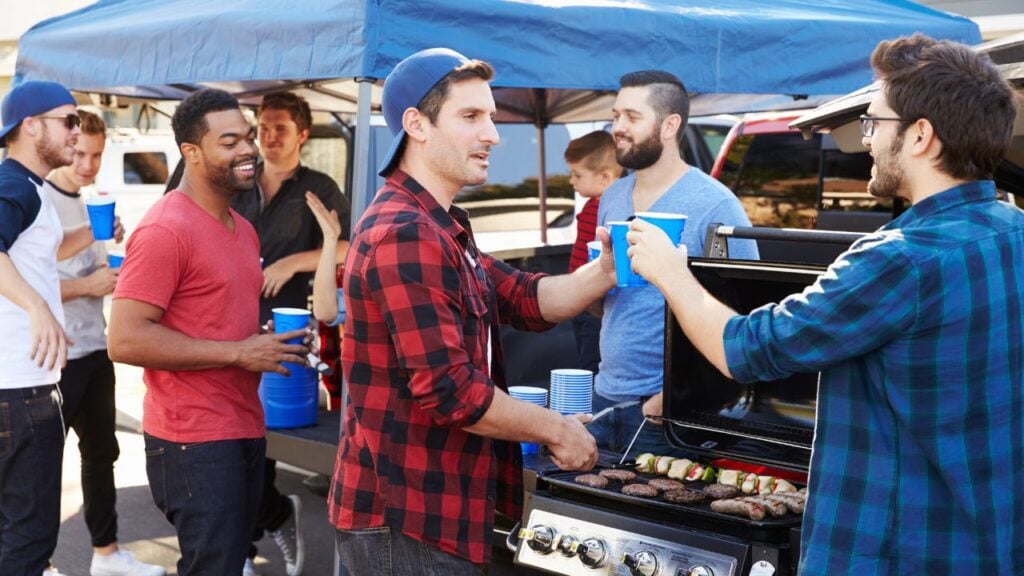
Game day in South Carolina starts long before kickoff.
A few of those traditions will surprise you.
6 Things South Carolinians Do at a Tailgate That Nobody Else Would
9 Restaurant Chains That Only Make Sense in South Carolina
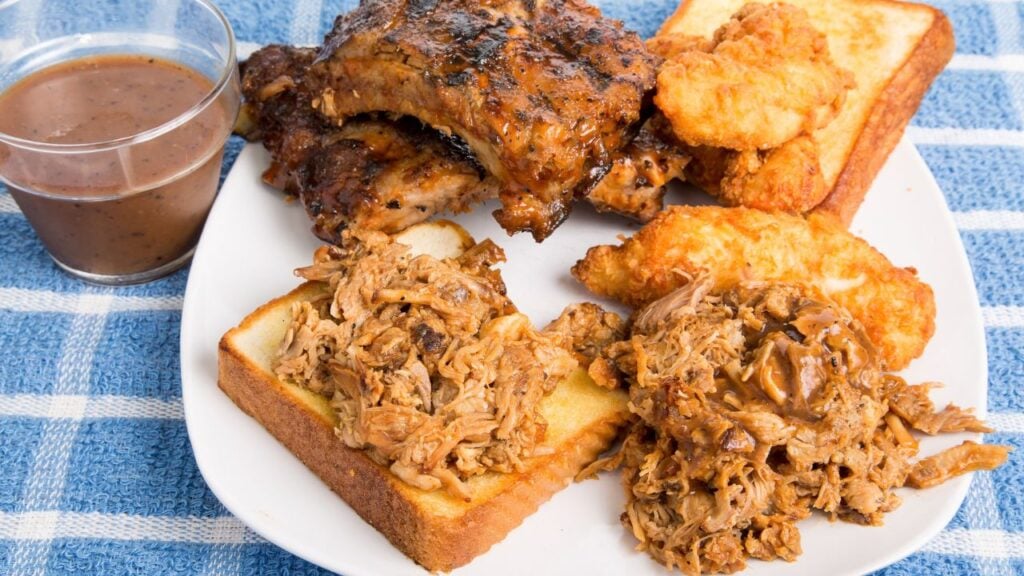
Some restaurant chains make sense in only one state.
A few of them will surprise you.
