
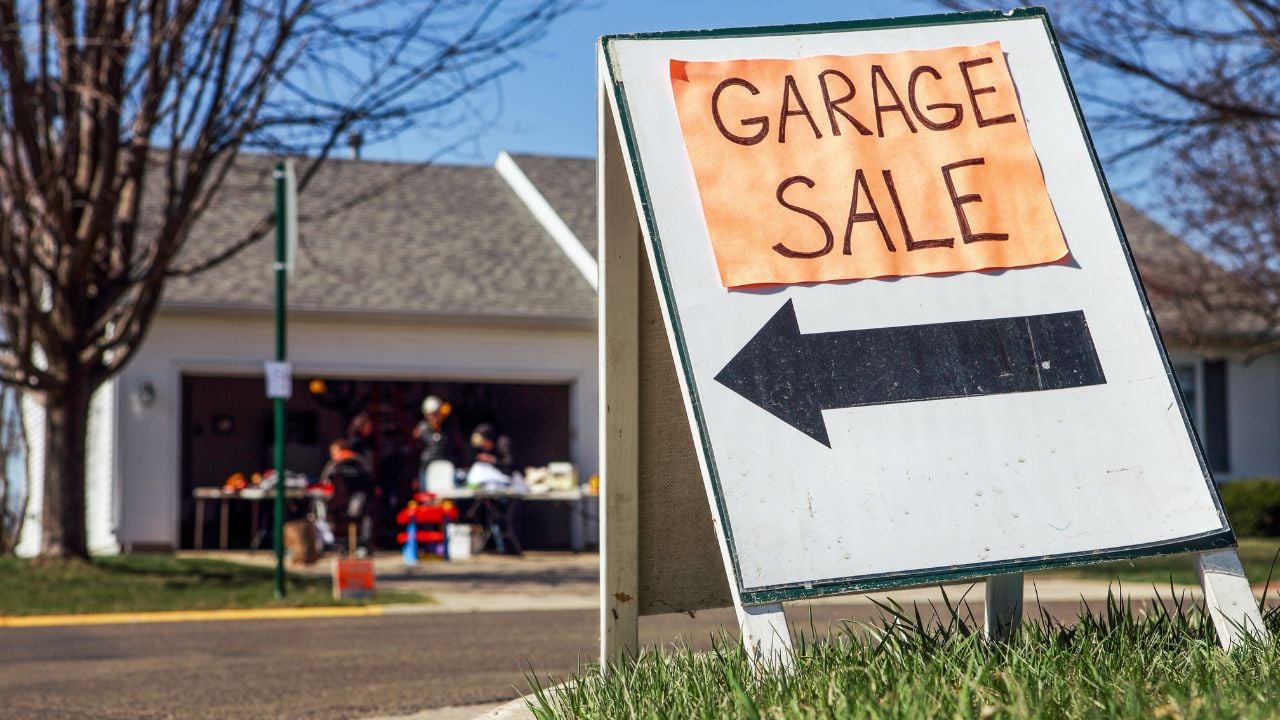
9 Yard Sale Rules California Sellers Break Without Realizing

A yard sale in California can break the law without a single fake price tag in sight.
These are the rules California yard sale sellers run into again and again, rarely on purpose.
Note: This is general information, not legal advice. Yard sale permit rules, fees, and sign restrictions vary by city and county and are subject to change.
1. Anaheim Sets Four Fixed Weekends
Four fixed weekends a year make up Anaheim’s entire yard sale calendar, and nothing outside them counts.
City code locks those dates to the first weekend of March, June, September, and December, full stop.
Pick a random Saturday in April, and the sale itself is the violation, not just a missing sign or a late permit.
That’s the whole calendar.
Anaheim also holds sales to a 7 a.m. to 7 p.m. window and gives sellers one hour after closing to clear the driveway before code enforcement notices.
One sign, three square feet, on the property holding the sale, is Anaheim’s limit, and corner lots get a single second sign at most.
2. Riverside County’s Cap Follows the Land
Buy a house in Riverside County, and the previous owner’s yard sale history can move in along with the keys.
The county’s ordinance caps any single parcel at three sales in 12 consecutive months, no matter who’s holding them or how many times the house changes hands.
A new owner inherits whatever count the last owner already ran, even two sales held the same spring before the house ever sold.
The cap follows the land.
Riverside County also holds sales to 8 a.m. to 8 p.m. and caps each one at three consecutive days.
A sign can go up five days early, never sooner than that.
Leave a sign standing in the public right-of-way after that, and the Road Commissioner can remove it and bill the seller for the cost.
3. La Puente Requires a Permit First
Many La Puente sellers assume a yard sale is a private matter between them and their own driveway.
Los Angeles County sheriff’s deputies can show up mid-sale and ask for proof that the seller owns what’s spread across the pavement.
Bring the receipt.
Items also can’t sit within three feet of the sidewalk or the street, even when the driveway is packed all the way to the curb.
City code still requires a permit filed at City Hall before any of that, capping each address at one sale every six months.
4. L.A. County Bans a Weekday Sale
In Los Angeles County’s unincorporated areas, a yard sale is legal on exactly two days of the week: Saturday and Sunday.
A Friday moving sale breaks the code no matter how small it is.
No exceptions for movers.
The last full weekend of every month needs no registration at all, and residents get two more sales a year once they register with the Department of Regional Planning.
Everything on the table also has to be secondhand personal property. New retail merchandise and food or drinks aren’t allowed at any L.A. County yard sale.
5. Cathedral City’s 90-Day Gap
Cathedral City allows four sales a year, and sellers assume that means whenever they want.
The code requires at least 90 days between each one, so two sales held close together in the same season can violate the spacing rule even while staying under four for the year.
A standard permit runs $25, but showing up to sell without a permit first adds a $75 penalty on top of the regular fee.
That’s a $100 mistake.
Gated communities pay more. A homeowners association (HOA) group permit covering a whole neighborhood runs $250, and signs can’t go up within 25 feet of Date Palm Drive, Ramon Road, or East Palm Canyon.
6. Pinole Gives Signs Just 24 Hours
Four sales of two consecutive days each, or one long sale instead: Pinole caps residents at that choice and nothing more.
Trade the four short sales for a single seven-day stretch, and either way the yearly total stops there.
The sign rule catches almost everyone. Pinole only allows a sale sign to go up 24 hours before the event and requires it down within 24 hours after.
Three days early doesn’t count.
A repeat violation within the same year can be charged as a misdemeanor instead of a simple infraction.
7. San Ramon’s Thursday Deadline
San Ramon gives sellers a firm deadline, not just a date range.
Registration is free, but the form has to reach the Planning Services Division by 4 p.m. Thursday before the sale weekend, not the morning of.
Miss Thursday, and the sale has to wait for another weekend.
Saturday morning is too late.
San Ramon also counts off-site directional signs against the total: One sign on the seller’s own property plus up to four more on a neighbor’s land, and each one needs that neighbor’s permission first.
8. Loomis Still Caps You at Three
Loomis skips the permit altogether, and sellers assume that means no rules at all.
The town’s code still limits residents to three sales a year, two consecutive days apiece, permit or not.
No paperwork, same math.
A fourth sale in the same year still breaks the code, even though nobody ever had to sign anything to hold the first three.
The town’s own code enforcement still responds to complaints about a fifth or sixth sale run on the same Loomis property in one year.
Psst! How much do you know about yard sale history? Take our quiz and see how many you can get right.
Quiz
Yard Sale Trivia Quiz
Answer these questions on yard sale history and records. We bet you can’t get them all right. Prove us wrong?
The self-proclaimed “World’s Longest Yard Sale” runs along which highway for about 690 miles through six states every August?
9. Third Sale Triggers a Tax Permit
A third yard sale within 12 months can turn a hobby seller into a retailer, at least on California's books.
The California Department of Tax and Fee Administration (CDTFA) excuses a resident from needing a seller's permit for an occasional sale of used household goods, but that exemption stops at two sales in any 12-month stretch.
Cross that line, even with a single folding table of old baby clothes, and the paperwork requirement kicks in the same as it would for a full-time reseller.
Two is the cutoff.
What Counts Toward California's Two-Sale Limit
California's seller's permit rule counts how many sales a household holds, not how much money any of them make.
A yard sale that loses money still uses up one of the two exempt sales, so a family that sells old furniture at a steep loss twice in one year still owes the state a permit for sale number three.
California's Temporary Seller's Permit Covers a Different Case
California's CDTFA built a second permit track for sellers who never fit the plain yard sale exemption at all.
A temporary seller's permit covers a single location for 90 days or less, the kind of stretch an extended estate sale or a short-term pop-up needs instead of the two-sale exemption.
It's a different track entirely.
The occasional-seller exception is the one that protects a normal cleanout, and it only holds up to two sales in any 12-month period before a third one closes the loophole.
Registering isn't expensive once that third sale is coming. The CDTFA states plainly that there's no charge for a seller's permit, so the cost of staying legal is the paperwork, not a fee.
9 Ways to Spot a California Transplant Anywhere in America

Some habits don't check the calendar or the forecast, and a California transplant carries theirs to whatever state comes next.
Sunscreen in December is just the start.
9 Ways to Spot a California Transplant Anywhere in America
11 Things Californians Miss Most After They Leave the State

Leaving California looks great on a spreadsheet, right up until February, when the produce aisle two states over can't match what got left behind.
The smaller mortgage doesn't buy back everything.
