
13 Experts Give Their Worst-Case Scenario AI Predictions

AI is both intriguing and terrifying. While there’s no doubt that new technology could better our world, many Americans fear the risks.
Science fiction writers and movie makers have long warned us about artificial intelligence. So, it’s not surprising that many of us feel uneasy about what an emerging AI market means for the coming decades.
Still, AI experts think our fears may be misplaced. There are many good reasons to worry about artificial intelligence, but they’re probably not the reasons you’re imagining.
What Probably Won’t Happen
Several films, books, and other mediums have tried to predict the dangers of AI. They typically stick to the same overplayed scenario. In it, AI-powered machines gain sentience, turn into the overlords of the human race, and eventually destroy it.
While AI-powered helpers-turned-human-killers play on our innate fears of technology (and therefore sell books and movie tickets), other scenarios are more likely. The IEEE, an organization dedicated to advancing technology to benefit humans, notes there are many other AI-related worse-case scenarios that will wipe out civilization; no sentient robots are required.
1: Rise of Deepfakes
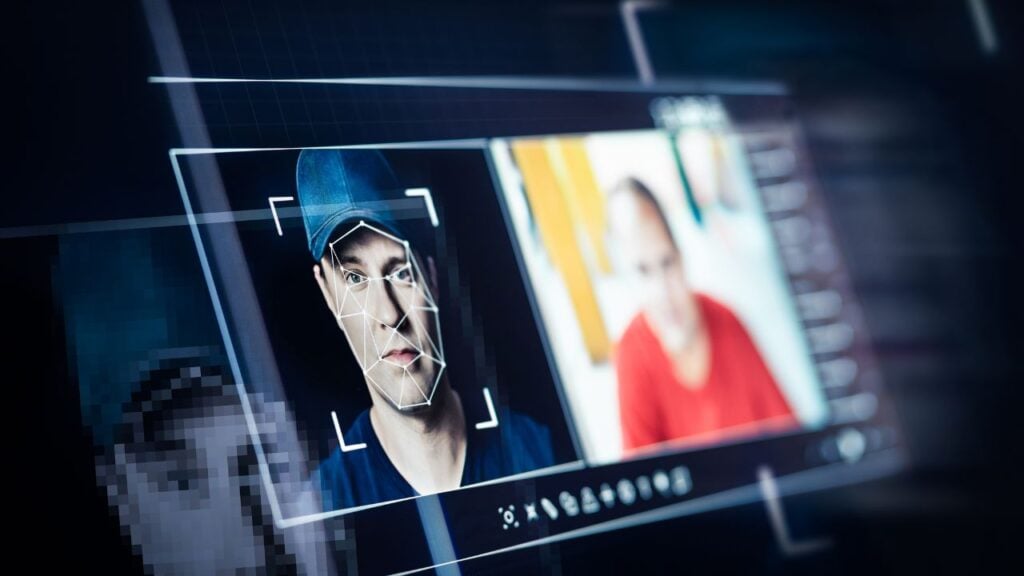
AI is already capable of creating convincing deepfakes. If we can’t tell the difference between truth and fiction, that could lead us to make terrible decisions.
According to AI experts in an interview with IEEE, deepfakes present a two-fold problem. If world leaders are presented with fake but convincing messages, they could choose to take detrimental action, leading to unnecessary wars. Alternatively, they may hesitate when given real information because they’re worried about deepfakes.
2: Control Might Not Be Possible

Roman V. Yampolskiy is an AI expert and a tenured faculty member in the Department of Computer Science and Engineering at the University of Louisville. He notes that controlling AI is assumed possible but not promised.
According to Yampolskiy, AI safety and security is an emerging field in which researchers assume they’ll be able to find a way to ensure complete control of AI technology. However, there’s no mathematical proof that suggests control is possible. So, once AI surpasses our intelligence, it may be impossible for humans to maintain any control over it.
3: Military Mistakes

AI-enabled systems provide speed, a major benefit to militaries. The first militaries to adopt AI systems gain a significant advantage over their enemies.
However, if a hacker manages to find a tiny flaw in any AI-powered military system, they could exploit it. Helen Toner, the Director of CSET, notes that a single point of failure could lead to a communication standstill and resulting panic.
4: Too Quick to Embrace
Governments and militaries have a significant incentive to adopt AI quickly. Those who adopt the technology first have an advantage over more cautious countries.
However, moving too fast in this field could be a problem. Vincent Boulanin, senior researcher at the Stockholm International Peace Research Institute (SIPRI) in Sweden, said in an interview with IEEE that catastrophes can occur when a government prioritizes speed over safety testing or human oversight.
5: Privacy Pitfalls

An AI-powered world could mean the end of basic privacy. Our texts, emails, device locations, purchases, and posts are all transmitted via data.
If we allow tech companies to harvest this data for their AI platforms, we’re essentially handing them all of our personal information. If governments own the AI platforms, the risk of autocrats using people’s information to control society becomes real.
6: The End of Free Will

In an IEEE interview, multiple AI experts warned that this sort of technology could literally lead to an end of free will. They warned that AI goes beyond tracking our online presence.
Over time, AI could end up knowing us better than we know ourselves. Based on past behavior, it can already predict what links we’ll click, what we’ll purchase, and what we’ll watch. We may not even notice as AI begins to go beyond predictions and exerts more forceful control.
7: All Eyes On It

Reports indicate that adults worldwide spend an average of seven hours per day online. That means we already spend a significant portion of our day staring at a screen. AI experts worry that new technology will make our screen time addiction even worse.
Algorithms already steal our attention regularly, and AI could make them even better at predicting what we want to see. By capturing our attention, AI could be detrimental to our relationships, careers, and hobbies.
8: A Biased System

In interviews with IEEE, AI experts warned that AI models have inherent biases that could lead to big problems. Despite best intentions, the training data and mathematical models used to create AI reflect the interests and perspectives of their creators.
AI can’t take into account the diverse perspectives of the world’s communities, which means it will create a certain level of conformity. Those who fall outside the range AI accounts for could miss out on jobs, quality healthcare, and more. At its worst, AI-managed systems could lead to racist or sexist systems.
9: Massive Unemployment

As Catriona Wallace, founder of the Responsible Metaverse Alliance, chair of the venture capital fund Boab AI, and founder of Flamingo AI, said in an interview with Pew Research, “AI will replace the jobs of a significant percentage of the population and a Universal Basic Income is not yet available to most.” Whether you’re a lawyer, a writer, or a computer programmer, AI could take your job away.
However, other experts disagree with Wallace’s hypothesis. While AI has the potential to eliminate many jobs, it could also create new ones. So, we might see a shift in work rather than massive unemployment.
10: Concentration of Power
Big tech already has a lot of power over our lives. AI could concentrate that even further.
AI Now, a research institute, recently published a report stating what should probably be obvious. If governments don’t act to regulate AI, big tech will gain more power over our everyday lives.
AI requires a large amount of data and big computer servers, which means established tech companies have a huge advantage in the field. Without regulation, we could see big tech companies become even more powerful in years to come.
11: Population-Level Depression

Since the boom of social media, we’ve seen face-to-face communications plummet. As regular social interactions decrease, depression and anxiety seem to become more prevalent. AI will only amplify this phenomenon.
Dmitri Williams, professor of technology and society at the University of Southern California, said in an interview with Pew Research that AI and blockchain technology will only lessen our need to interact with other humans in the real world. That could lead to heightened feelings of isolation, creating depression on a population level.
12: AI Hallucinations

In 2018, Google AI Researchers popularized the idea of AI hallucinations. As IEEE puts it, AI hallucinations are “mistakes in the generated text that are semantically or syntactically plausible but are in fact incorrect or nonsensical.” In other words, AI isn’t always to be trusted.
As AI advances, some believe you could ask for legal or medical advice rather than seeking a lawyer or doctor. However, if the machine could hallucinate and distribute erroneous facts, society is in for major problems.
Some AI experts believe that further training of the system will allow them to end hallucinations, while others aren’t so sure. Language and skills often rely on background information that’s never written or formally acknowledged, which could make it hard, or even impossible, for AI to learn.
13: Missing Out

AI isn’t all bad. It could lead to a huge number of benefits for the human race. However, fear of AI technology could lead governments to over-regulate.
If world leaders opt to regulate AI too stringently, societies may not be able to reap AI’s benefits. At the same time, they could still be subject to some of its serious drawbacks.
When Could All of This Happen?
The question of how long we have to wrestle with AI’s imminent rise is a good one. Experts don’t agree on how quickly the technology will advance, though most seem to think it will happen relatively fast.
Some experts believe that AI will be seamlessly integrated into our lives by 2035, while others think it will take longer. Most experts seem to agree that we will see AI singularity, which refers to a machine capable of human-level thinking with perfect memory, before the end of the century.
12 Ways Americans Can Make Big Money From AI

Like it or hate it, artificial intelligence is here to stay. Despite understandable concerns about AI, many Americans have found practical ways to generate income from it.
12 Ways Americans Can Make Big Money From Artificial Intelligence
16 Painfully Common Grammatical Mistakes

What’s worse than poorly used words and phrases? When those words and phrases are misspelled. These are some painfully common grammar fails among Americans that’ll make grammar-savvy individuals laugh or cringe.
16 Grammatical Mistakes So Common That People Don’t Think They’re Mistakes
