
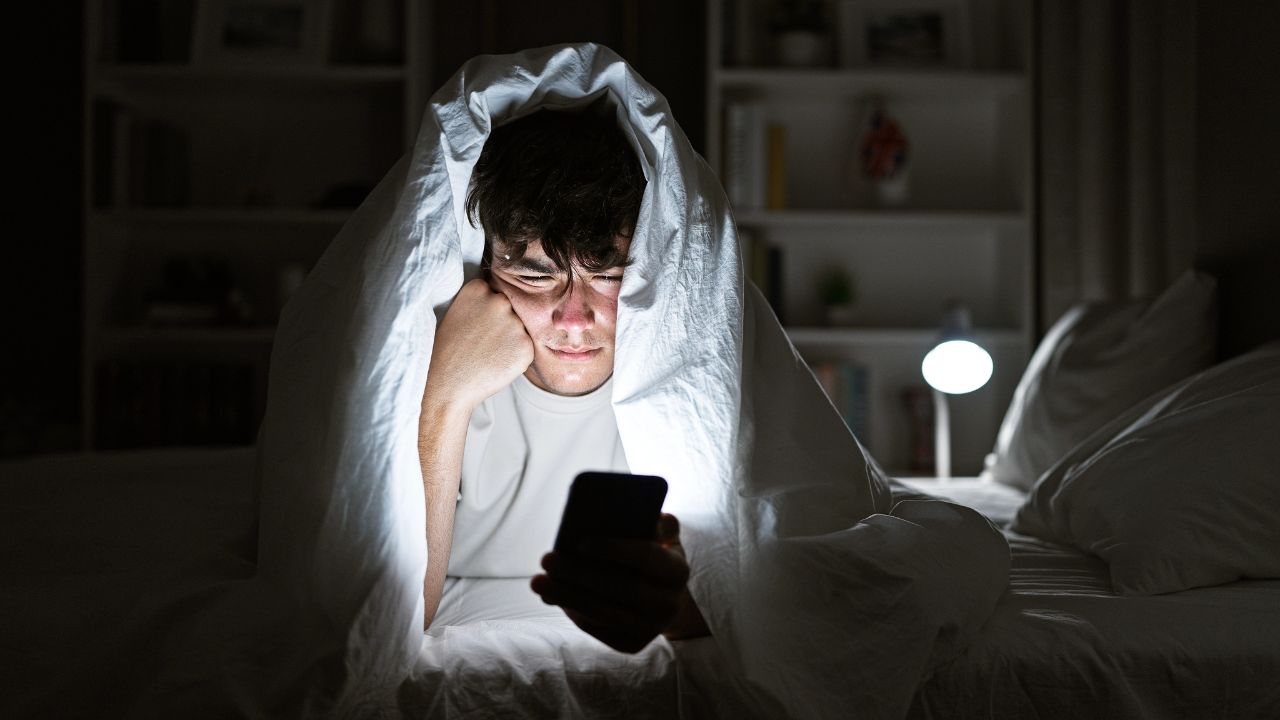
23 Facts About Phone Addiction Every Oklahoma Parent Needs to Know

Oklahoma parents know the struggle. You tell your kids to put their phones down, and they look at you like you just suggested living without Wi-Fi.
With a device where teens can do algebra homework, FaceTime friends, and edit TikTok shorts all at the same time, screens feel less like a tool and more like a permanent extension of their hands.
The truth is, phone addiction is real, growing, and something every parent needs to understand before it shapes the way their kids learn, sleep, socialize, and grow up.
Here are some facts about phone addiction that’ll shake you to your core.
Some Kids Check Their Phones Over 100 Times a Day
That’s once every ten minutes. Kids and teens aren’t “on their phones a lot,” they’re practically tethered to them.
Between messages, TikTok scrolls, and gaming alerts, there’s barely a moment of mental rest.
It’s not about boredom anymore. The phone has become the filler for every pause in life, waiting for the bus, sitting in the car, even walking to class.
And that kind of constant input doesn’t just distract, it rewires the brain’s ability to sit still, think deeply, or be comfortable doing nothing.
The Average Teen Logs Over 7 Hours of Screen Time Daily
That’s more time than they spend sleeping on a school night.
And no, that number doesn’t even count homework or online classes. It’s just entertainment.
YouTube, TikTok, Discord, Roblox, Snapchat, they all add up. A “quick check” turns into a lost hour faster than a YouTube ad loads.
Parents are realizing this isn’t just about wasted time; it’s about a shrinking attention span that struggles in the real world, where life doesn’t swipe up instantly.
Social Media Is Built to Hook Kids’ Brains
Apps like Instagram, TikTok, and Snapchat use variable reward systems, the same psychological trick slot machines use.
Each scroll might reveal something funny, dramatic, or shocking, so your brain keeps spinning the digital reels.
That’s why “just one more minute” never actually means one more minute. The design is intentional. The unpredictability is the addiction.
And for teens whose brains are still developing impulse control, that’s like giving a puppy unlimited treats and expecting it to sit still.
Dopamine Is the Digital Drug of Choice
Every notification, like, or heart gives a tiny dopamine hit, the brain’s feel-good chemical.
Over time, kids start craving it, needing the next buzz to feel good, even if the message is meaningless.
This chemical loop mimics substance addiction. Except this drug fits neatly into a back pocket and doesn’t cost a cent.
It’s why “taking their phone away” feels like a punishment worse than grounding. To their brains, it really is.
Sleep Deprivation Is the Hidden Side Effect
The glow of a screen tricks the brain into thinking it’s still daylight.
That means less melatonin, delayed sleep, and more mornings where “five more minutes” turns into missing the bus.
Even with night mode on, the blue light keeps the brain alert. Add the temptation of one more scroll, and bedtime becomes midnight faster than you can say “put your phone down.”
And the result?
Kids who are irritable, foggy, and more anxious, because poor sleep and constant scrolling feed each other in a loop.
Attention Spans Are Shrinking Fast
Teachers across America are noticing it. Kids can’t focus for more than a few minutes without the urge to check something.
It’s not laziness. It’s conditioning.
Phones have trained brains to crave constant novelty and immediate reward. A math problem doesn’t give that.
The result is a generation that can multitask between three apps but struggles to focus on a single conversation.
“Phantom Vibrations” Are a Real Symptom
Have you ever felt your phone buzz in your pocket only to realize that it didn’t?
That’s called “phantom vibration syndrome,” and it’s a legitimate neurological side effect of over-attachment.
It’s the brain’s way of expecting stimulation before it happens, a kind of tech-induced jumpiness.
And for teens, it’s a signal that their nervous systems have adapted to always being “on call.”
Family Conversations Are Getting Shorter
Studies show families now spend 30% less time talking during dinner compared to a decade ago.
Even when phones are face down, their presence changes behavior.
One buzz, one glance, and the conversation derails. What should be connection time becomes background noise to whatever’s happening on a screen.
It’s not just “rude.” It’s reshaping how kids learn empathy, eye contact, and how to listen without multitasking.
Screen Time Rules Don’t Always Work
Parents set limits. Kids find loopholes.
Whether it’s homework mode, alternate accounts, or “just checking the time,” the cat-and-mouse game is endless.
The problem isn’t a lack of discipline. It’s that phones are designed to override it.
Even tech CEOs like Steve Jobs and Bill Gates limited screen time for their own kids. That alone should tell us something.
Parents Are Addicted Too
Kids notice. Surveys show that over half of children say their parents are “on their phones too much.”
And they’re not wrong.
Scrolling through Facebook while telling your kid to “go outside” doesn’t exactly stick the landing.
When parents model distraction, kids absorb it as normal behavior, no matter how many screen-free charts hang on the fridge.
Anxiety and Depression Have Skyrocketed Since Smartphones
Rates of teen anxiety and depression have nearly doubled since 2012, the same year smartphones became mainstream.
Coincidence? Experts don’t think so.
The constant comparison, fear of missing out, and exposure to filtered perfection take a toll on self-esteem.
Every scroll becomes a silent competition that no one wins.
Phones Are Literally Rewiring the Brain
MRI scans show that heavy phone users have altered neural pathways, especially in areas tied to impulse control and focus.
It’s like the brain has been remodeled to expect constant stimulation, leaving less patience for real-life interactions.
And when everything in life feels slower than a TikTok clip, boredom starts to feel unbearable.
Notifications Trigger Mini Stress Attacks
Each alert, whether a text, like, or email, triggers a burst of cortisol, the body’s stress hormone.
The more notifications, the more spikes.
Even when ignored, that constant alert state keeps the body slightly tense. It’s why some people feel anxious just seeing their phone light up.
In a sense, the very tool meant to connect us is quietly stressing us out 24/7.
Peer Pressure Makes It Worse
When everyone else is online, being offline feels like social exile. Teens worry they’ll miss a group chat, a meme, or a viral trend.
That’s not vanity. It’s survival instinct in the age of social belonging.
Missing a beat means feeling left behind.
And the pressure doesn’t end after high school; it just shifts from Snap streaks to Slack notifications.
Phone-Free Zones Actually Work
Families that create “no-phone” spaces, like dinner tables, car rides, and bedrooms, see real results. Kids talk more, argue less, and sleep better.
The hardest part? Parents following their own rule.
But when adults commit too, kids see the difference.
The table suddenly becomes a conversation again instead of a charging station.
Many Teens Admit They’re Addicted
When asked, 50% of teens say they “feel addicted” to their phones.
They know it’s a problem. They just can’t stop.
That awareness is the first step toward breaking the cycle. But it’s hard to fight an addiction when the dealer fits in your hand.
Even deleting apps isn’t a cure when your entire friend group lives inside them.
Real-Life Social Skills Are Declining
Teachers and employers report younger generations struggling with face-to-face interactions.
Small talk, eye contact, even tone reading, it’s all weaker than before.
Phones provide communication without discomfort, but they also remove the human feedback loop that builds confidence.
It’s not that teens don’t care. It’s that they’re out of practice.
Phones Affect Physical Health Too
Neck pain, eye strain, and posture problems are becoming normal even in middle schoolers.
“Tech neck” isn’t just a meme; it’s a real diagnosis now.
Add in sedentary hours spent scrolling, and you’ve got a generation that moves less than any before it.
Phones may keep kids connected, but they’re also keeping them still.
Addiction Apps Don’t Always Help
Ironically, some “screen-time management” apps end up feeding the obsession.
They track usage but also create another reason to open your phone.
For many families, it’s like trying to cure a sugar addiction with candy-flavored medicine.
True change still has to start offline.
Kids Lose Track of Time Completely
Ask any parent how long their child’s “ten more minutes” really lasts.
The sense of time vanishes online, where there’s no natural stopping point.
Social feeds and games are designed that way, no credits, no endings, just infinite scroll.
It’s part of why so many kids feel exhausted but can’t explain where the day went.
Tech-Free Days Can Reset the Brain
Families who try one day a week without screens often notice better moods and calmer energy within hours.
The first few are rough, but then something shifts.
Kids rediscover board games, conversation, and even boredom that turns creative.
It’s not about cutting tech entirely. It’s about remembering who we are without it.
The Best Fix Starts With Awareness
You can’t fix what you don’t acknowledge. Recognizing the signs, restlessness without a phone, checking constantly, trouble sleeping, is the start.
Kids mirror what they see. If parents model balance instead of obsession, kids notice that too.
Because at the end of the day, phones aren’t the enemy. Dependency is.
Awareness is still the strongest signal we’ve got.
Remember When Everything Had Color? These 18 Things Definitely Did

There was a time when even the most ordinary things were bursting with color.
But now?
We’ve swapped charm for minimalism, and for some reason, we all agreed to pretend it’s better. Here are some everyday things that used to be colorful but aren’t anymore.
Remember When Everything Had Color? These 18 Things Definitely Did
17 Life Hacks That Are Harder Than the Non-Hack

Life hacks are supposed to make your life easier, and sometimes they really do. However, the internet is rife with hacks that aren’t actually effective.
17 Life Hacks That Are Harder Than the Non-Hack
Think You Belong in a Different Decade?
From big bands to big hair, our playful Decade DNA Quiz reveals which classic American era fits your personality best. It’s fast, fun, and full of vintage flair.
Meet Your Match. Discover Your Decade DNA. (Your Vintage Roots Are Showing)

