16 Medical “Cures” From the Past That Sound Terrifying to Missourians Now

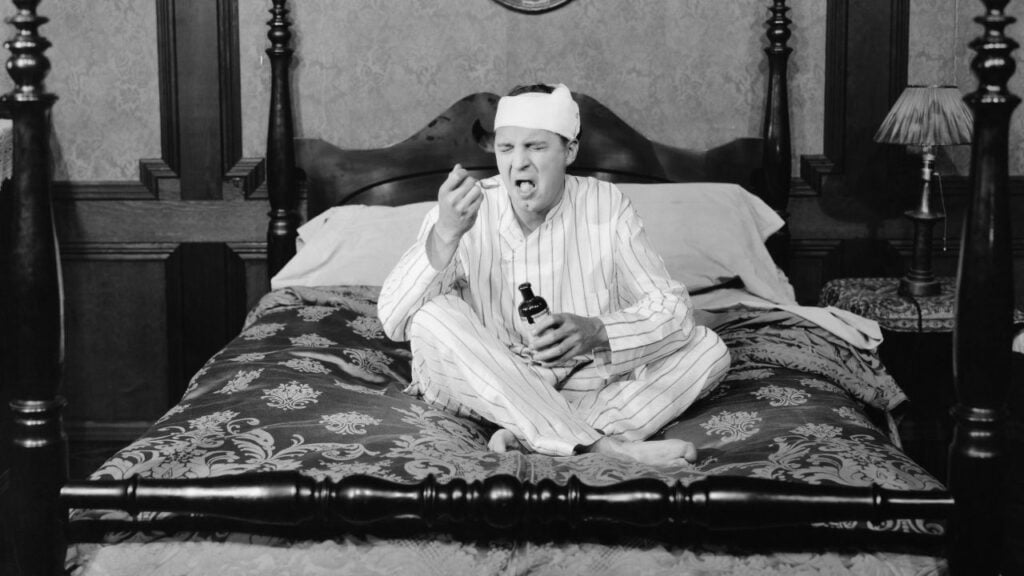
If you think cough syrup tastes bad now, imagine when it was made with heroin.
Or picture your doctor telling you the cure for headaches was to drill a hole in your skull.
For centuries, medicine was a mix of superstition, experimentation, and a whole lot of bad ideas.
Missourians today might complain about long wait times at urgent care, but at least no one is strapping frogs to our throats or pouring mercury down our gullets.
These are some of the once-medical “cures” that sound terrifying to Americans now.
Bloodletting for Everything
Doctors once believed that nearly every illness was caused by having “too much blood.” The cure?
Drain it out.
Patients were cut with sharp instruments or treated with leeches that sucked the blood right out of them. George Washington’s final illness was treated this way, and historians believe it probably hastened his death.
Today, the idea of bleeding someone to make them better sounds straight out of a vampire movie.
But for centuries, it was standard care for fevers, infections, and even headaches.
Mercury as Medicine
Mercury, the toxic silver liquid we now handle with hazmat suits, was once swallowed as a cure-all.
Doctors prescribed it for syphilis, constipation, and even the flu. The logic was that mercury would purge “bad humors” from the body.
In reality, it poisoned people slowly, leading to tremors, tooth loss, and organ damage.
These days, Americans don’t want mercury anywhere near them.
Trepanation (Drilling Holes in Skulls)
If you had migraines, seizures, or mental health issues centuries ago, one possible “cure” was trepanation. That meant drilling a hole into your skull to release “evil spirits” or balance brain pressure.
It’s hard to imagine sitting still while someone bores into your head without anesthesia.
Today, brain surgery exists, but at least it’s done in sterile operating rooms, not with stone tools or rusty drills.
Americans may complain about long ER wait times, but at least no one is reaching for a hand-cranked drill.
Tobacco Smoke Enemas
Yes, this is exactly what it sounds like. In the 18th century, European and early American doctors literally blew tobacco smoke into patients’ rectums.
It was especially used to treat drowning victims. The belief was that nicotine would stimulate the heart and lungs back to life.
The phrase “blowing smoke” actually comes from this bizarre practice.
By the 19th century, doctors realized it was not only ineffective but potentially harmful.
Arsenic Pills for a Healthy Glow
Victorians once believed arsenic pills gave them clearer skin, brighter eyes, and a healthier complexion.
Advertisements promised that small daily doses of this deadly poison would make you more attractive.
People took them without realizing that arsenic slowly destroyed organs and could cause cancer.
Today, Americans reach for Neutrogena or Olay, not arsenic powder in a bottle.
The FDA would faint at the idea of arsenic skincare making it past the first round of approval.
Radium Water
When radium was first discovered in the early 1900s, it was seen as a miracle substance. Companies sold “radium water” and “radium tonics” that promised to boost energy, cure arthritis, and restore youth.
One wealthy American businessman, Eben Byers, drank so much radium water that he literally poisoned himself to death. His jaw fell apart before he passed.
Today, radioactive water sounds like a Marvel villain’s origin story, not a health drink.
Imagine Americans swapping their Stanley tumblers of iced coffee for a glowing bottle of radium.
No thanks.
Heroin Cough Syrup
Before the FDA cracked down, drug companies freely sold heroin as a safe cough suppressant.
Bayer, the same company behind aspirin, once marketed “Heroin Syrup” for children and adults with colds and coughs.
It was touted as non-addictive until patients became, well, addicted.
Imagine sending your kid to school with a lunchbox packed with PB&J, a juice box, and a vial of heroin cough syrup.
Americans today panic over too much sugar in Gatorade; heroin in the medicine cabinet is unthinkable.
Electroshock Therapy for Depression
In the mid-20th century, patients with depression or schizophrenia were sometimes treated with electroconvulsive therapy (ECT).
While modern ECT is carefully controlled and still used in rare cases, the early versions were terrifying.
Patients were often shocked without anesthesia, leading to memory loss, broken bones, and trauma.
Back then, it was considered a miracle treatment. Today, Americans cringe at the thought of uncontrolled electricity coursing through someone’s brain.
It’s no wonder Hollywood horror films love to feature old-fashioned shock therapy scenes.
Cocaine for Toothaches
In the late 1800s, cocaine was a legitimate ingredient in dental treatments.
It numbed pain quickly, so dentists prescribed it for toothaches, surgeries, and even as a general pick-me-up.
Parents could buy cocaine drops for teething babies. Yes, babies. The “soothing” effect was real, but also highly addictive.
Now, Americans joke about needing “wine o’clock” to get through parenting, but no one is reaching for baby cocaine at Walgreens.
Lobotomies
From the 1930s through the 1950s, lobotomies were a common treatment for mental illness. Doctors used an ice-pick-like instrument to sever connections in the brain’s frontal lobe.
The idea was to calm patients, but in reality, it often left them permanently disabled or emotionally blunted.
Rosemary Kennedy, the sister of President John F. Kennedy, was famously lobotomized and lived with severe impairments afterward.
Today, the idea of performing brain surgery through the eye socket feels like a pure nightmare.
Americans would rather binge-watch true crime documentaries than picture themselves in that operating chair.
Snake Oil (Literally)
The term “snake oil salesman” comes from real history. Traveling peddlers in the 1800s sold bottles of “snake oil” that supposedly cured everything from arthritis to baldness.
Sometimes, the bottles did contain actual snake oil, but often it was just mineral oil, alcohol, or even turpentine.
People desperate for relief bought into the promises, only to realize they’d been scammed.
Modern Americans may still fall for sketchy supplements on Instagram, but at least the FDA keeps rattlesnakes out of our medicine.
Putting Frogs on Patients
Yes, frogs. Some doctors believed placing live frogs on sick patients could draw out disease.
For sore throats, a frog was sometimes strapped under the chin. For other conditions, people might be told to carry frogs in their pockets as “healing charms.”
Needless to say, the frogs weren’t thrilled about their medical career.
Americans today might buy a Squishmallow frog for comfort, but no one’s strapping Kermit under their jawline.
Drinking Urine as a Tonic
In several cultures, urine was once believed to have powerful healing properties. People drank it to “purify” the body, cure infections, and even extend life.
European medical texts from the 1600s actually recommended “urotherapy” for fevers and wounds. Some soldiers in desperate conditions were told to drink their own urine to survive.
Americans now would rather spend $7 on a green juice at Whole Foods than even consider this practice.
Kombucha may be funky, but at least it doesn’t come straight from the bladder.
Mummy Powder as Medicine
During the Renaissance, Europeans ground up ancient Egyptian mummies and sold the powder as medicine. It was believed to cure headaches, stomach issues, and internal bleeding.
The so-called “mummia” was mixed into drinks or applied as a paste.
Wealthy people often kept jars of it in their homes, thinking it was the ultimate healing secret.
Today, Americans get squeamish over expired vitamins. Imagine sprinkling human remains into your morning coffee. Hard pass.
Mustard Plasters for Chest Pain
For coughs, chest congestion, or pneumonia, doctors once spread a paste of ground mustard seeds and water onto a cloth and pressed it against the skin.
The mixture created an intense burning sensation, which people believed “drew out” illness. In reality, it often caused painful blisters and skin damage.
Modern Americans reach for Vicks VapoRub or Mucinex.
The idea of slapping a stinging mustard poultice onto your chest sounds more like a bad prank than a cure.
Powdered Skulls for Epilepsy
In early modern Europe, people believed ground-up human skulls could cure epilepsy and other “fits.” Apothecaries sold powdered bone scraped from the skulls of the dead, sometimes mixed into wine or hot drinks.
The idea was that life force from the deceased would transfer to the living and calm their seizures.
Unsurprisingly, it didn’t work, but the trade in human remains was booming for centuries.
Today, Americans are horrified by the idea of drinking bone dust for medicine.
We’ll stick with neurologists and prescription meds, thank you very much.
19 Historical U.S. Myths That Annoy History Buffs to the Core

If your teacher taught it in history class, it’s normal to assume it’s true. Ask any historian, though, and you might be surprised to learn the stuff of school history lessons is often riddled with inaccuracies.
19 Historical U.S. Myths That Annoy History Buffs to the Core
Remember When Everything Had Color? These 18 Things Definitely Did

There was a time when even the most ordinary things were bursting with color.
But now?
We’ve swapped charm for minimalism, and for some reason, we all agreed to pretend it’s better. Here are some everyday things that used to be colorful but aren’t anymore.
Remember When Everything Had Color? These 18 Things Definitely Did
Which Classic American Decade Is Totally You?
Take a quick break and discover which classic American era matches your personality and old-school soul. Our Decade DNA Quiz is fast, fun, and full of feel-good retro energy.
Meet Your Match. Discover Your Decade DNA. (Your Vintage Roots Are Showing)