
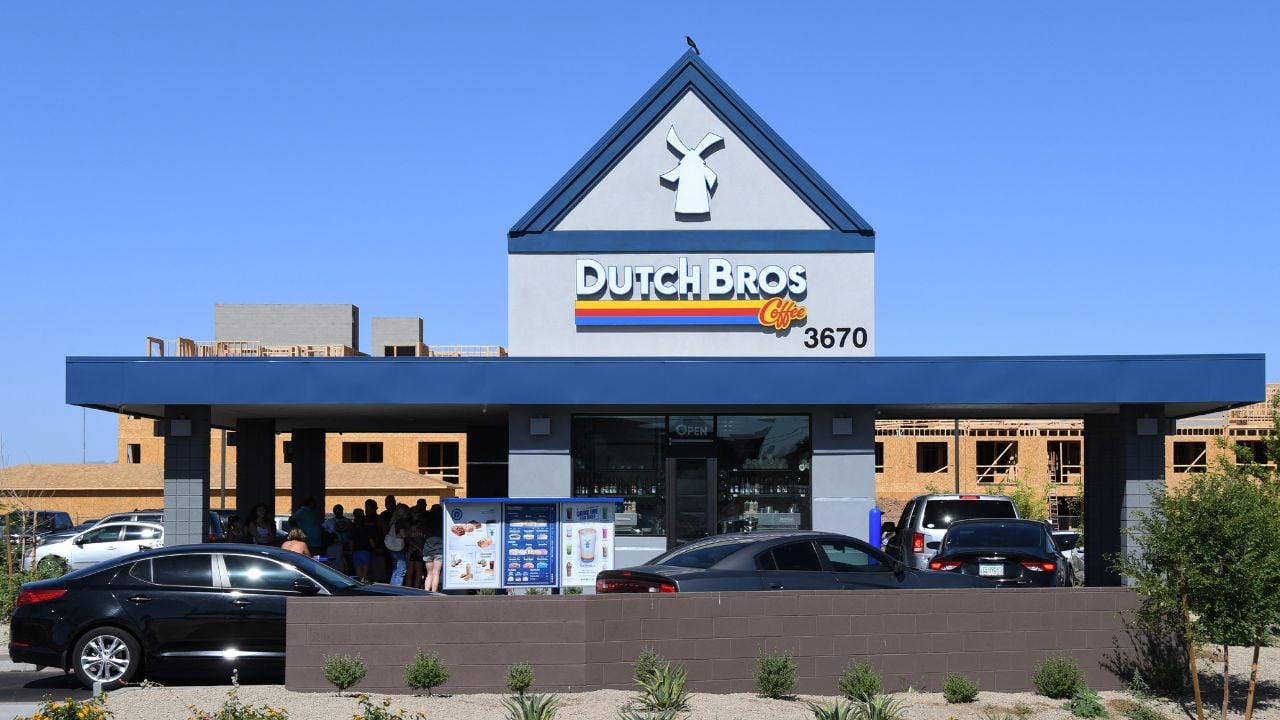
9 Dutch Bros Quirks Only West Coasters Understand. Can You Relate, Californians?

In 1992, two brothers from Dutch descent named Dane and Travis Boersma were looking for a way off their family’s struggling dairy farm in Grants Pass, Oregon.
Travis had discovered espresso at college and liked the idea.
They scraped together $12,000, bought a cart and an espresso machine, set up between the railroad tracks and the post office in downtown Grants Pass, and started serving drinks while playing their favorite music and talking to everyone who stopped by.
That’s the founding energy of Dutch Bros, and it has never left the brand.
From a single pushcart to over 1,000 locations in 18 states and counting, Dutch Bros has maintained the culture its founders built, which explains almost everything about why West Coasters are the way they are about their coffee.
This isn’t a Starbucks situation. It’s not a Dunkin’ situation either.
Dutch Bros is its own thing, and Californians who’ve been regulars since before the national expansion will tell you that with an unsolicited drink recommendation ready to go.
Here are nine Dutch Bros quirks only West Coasters understand.
The Line Is Always Long
Dutch Bros drive-through lines are famously long.
Locations in Oregon, California, and Arizona during peak hours can have waits that would cause most fast food customers to recalculate and drive away.
Dutch Bros regulars get in line anyway because the wait is part of the experience in a way that’s hard to articulate to someone who hasn’t done it.
Part of the wait is justified by the preparation time.
Dutch Bros drinks are made to order, and the customization involved in a peak-hour rush requires real-time.
The experience of rolling up to a Dutch Bros location with a full line and getting in it anyway is a West Coast cultural act.
You chose this.
You’re not going to Starbucks around the corner. You’re doing Dutch Bros today, and the line is the price of admission.
Companies in the industry that track brand sentiment have noted that Dutch Bros scores highest among Gen Z customers in the QSR (quick service restaurant) category, meaning young West Coasters choose Dutch Bros over every other fast food or coffee option.
The Blue Rebel Isn’t a Regular Energy Drink
Dutch Bros’ proprietary Blue Rebel energy drink is its own product in a category that already has well-established names like Red Bull and Monster.
It has succeeded in that category not through price or distribution, but through the Dutch Bros customization culture.
The Blue Rebel comes in a dizzying array of combination options.
You can get it mixed with any of the fruit flavors Dutch Bros carries, topped with soft-top whipped cream, layered, blended, or in a version that has never been formally named but has been handed between friends and described in DMs for years.
The drink has over 9,000 possible variations when you factor in the full menu customization system.
West Coasters who grew up on Dutch Bros have Blue Rebel orders the way other people have Starbucks secret menu items, except that the Dutch Bros versions were created through genuine experimentation rather than TikTok challenge culture.
Your Blue Rebel order is your own.
The Blue Rebel situation is also why more than 80 percent of Dutch Bros product sales are cold drinks, which surprised analysts who wondered if the brand could expand into colder regions.
The answer is yes, because the Blue Rebel doesn’t require warm weather to be appealing.
It requires the Dutch Bros experience, which travels.
The Broistas Know You
Dutch Bros employees are called broistas instead of baristas, and the distinction isn’t just branding.
The company hires for personality and trains for culture in a way that produces staff who are genuinely energetic, genuinely friendly, and genuinely interested in making the drive-through feel like a stop at a friend’s place rather than a transaction.
Dutch Bros’ hiring process focuses almost entirely on character, positivity, and how someone makes other people feel.
The Dutch Bros vibe requires a personality that can’t always be taught like skills. Regular West Coast customers of the brand know the difference immediately when they encounter it versus any other drive-through operation.
The “Dutch Mafia” is what loyal Dutch Bros customers call themselves.
You don’t call yourself a Starbucks Mafia member. You also don’t wait in long Dutch Bros lines just for the coffee.
Long-time West Coast Dutch Bros regulars have relationships with specific broistas at their location.
They know names, and the broistas know orders.
Your Order Exists Outside the Official Menu
Dutch Bros has a listed menu and a secret menu. Fans know about both.
The secret menu items are documented in the app and on fan sites, and regular Dutch Bros people have discovered combinations through trial and conversation that exist outside both of those resources.
The Annihilator, the Caramelizer, the Kicker, and the Shark Attack are named Dutch Bros drinks that have achieved their own cultural status.
But West Coast regulars who’ve been going long enough have personal orders that started from a conversation with a broista and evolved over time into something that’s theirs specifically.
“What’s your Dutch Bros order?” is a real West Coast social question with the same energy as asking someone their Myers-Briggs.
The Annihilator person is different from the Blue Rebel person is different from the hot Americano person, who is clearly very serious.
The breadth of the customization system, which allows for alternative milks, soft-top additions, extra shots, different syrups, and flavoring in essentially any combination, means that the total universe of possible Dutch Bros drinks is several thousand strong.
West Coast regulars have barely scratched the surface, and they’re already completely committed.
Sticker Collectibles Are a Real Part of the Experience
Dutch Bros runs sticker programs and stamp programs and seasonal collectibles that tie regular visits into a reward system that West Coast fans track with genuine enthusiasm.
Getting the stickers when they’re available and collecting them across a season has a trading card energy that appeals to people who are deeply into the Dutch Bros experience.
The Dutch Bros app has digital stickers alongside its rewards system, and the physical sticker giveaways at various promotions have been treated as events by devoted regulars.
This is the brand community operating at full capacity: the product is the coffee, but the experience extends into collecting, sharing, and showing loyalty in visible ways.
West Coasters who keep Dutch Bros stickers on their water bottles, laptops, and cars are doing the same thing that people do with band merch or sports team decals.
It’s signaling affiliation.
It’s saying this place is part of my life, and I want that to be visible.
The collectible culture at Dutch Bros has deepened over time as the brand has grown, and longtime West Coast customers who remember when this was a small regional chain have a specific kind of original-fan pride about the whole thing.
They were there before the IPO. They were there before the expansion.
This is their thing that became everyone’s thing, and they’re proud of that.
The Founders’ Story Genuinely Matters to Regulars
The Dutch Bros origin story, two Dutch-descended brothers starting a coffee cart after their dairy farm failed, isn’t corporate mythology invented by a branding team.
It’s documentably true, and it shaped every aspect of how the company operates.
Dane Boersma was diagnosed with ALS in 2004, and Travis kept building the company while his brother’s health declined.
Dane passed away in 2009. Dutch Bros has raised money for ALS research every year since through Drink One for Dane, an annual event that still runs at locations across the West Coast.
The first Friday in October, drinks are discounted and the proceeds go to ALS research.
West Coast Dutch Bros regulars who have been going for years know this history in the same way people know the founding story of a band they love.
The music matters, but so does the context.
At Dutch Bros, the coffee matters, but so does knowing that the person who started it did it honestly, built it with real values, and that those values are still in the company.
Travis Boersma, who became a billionaire from the business but reportedly still wears flip-flops as CEO of a publicly traded company, is a specific kind of Pacific Northwest entrepreneur figure that West Coasters recognize and respect.
You can get rich and stay yourself. Dutch Bros did it.
The Expansion Has Made Everyone Feel Something
Dutch Bros went public in 2021 and began expanding seriously beyond the West Coast, moving into the South and eventually as far east as Florida.
West Coast regulars had a complicated reaction to this that mirrored what Texans felt when Whataburger sold to private equity.
On one hand, expansion means more people get to experience Dutch Bros, which is good.
On the other hand, there’s a version of Dutch Bros that belongs specifically to the Pacific Northwest, a version that existed in Grants Pass, Oregon, in the mid-1990s, when it was local and scrappy and yours in a specific geographical way.
The company has been thoughtful about this, maintaining the culture and training standards aggressively as they scale.
Every new broista goes through the same character-based hiring process. Every location maintains the music, the energy, and the personal interaction model.
West Coast people who’ve visited new-market Dutch Bros locations generally report that it still feels right.
Oregon Dutch Bros people have a particular relationship to the brand that Californians and Arizonans understand in their own version.
It’s a West Coast thing collectively, but it’s also a hometown thing specifically.
Both of those can be true at once.
Philanthropy Is Part of the Identity
Dutch Bros has a genuine commitment to community giving that long-time customers know as a core part of the brand rather than a marketing effort.
Local locations have autonomy to support causes in their communities, and the company has historically discouraged publicizing individual charitable acts because “we just do the work” is the operating philosophy.
Drink One for Dane is the most visible example, but Dutch Bros has a history of showing up at local fundraisers, supporting youth sports, and contributing to community events in the cities where it operates.
This culture comes directly from the founding brothers and has been maintained through every phase of growth.
West Coasters who’ve been going to Dutch Bros for a long time have probably encountered some form of this community presence without necessarily connecting it to a corporate initiative.
That’s intentional.
When the local Dutch Bros shows up at the school fundraiser, it’s because the people at that location decided to, not because a headquarters memo said to.
This authenticity is one of the reasons the Dutch Bros loyalty runs as deep as it does.
You’re not just buying coffee from a corporation. You’re buying coffee from a place that was built by two brothers in a small Oregon town who believed that doing good was the point, and that the coffee was just the delivery mechanism.
11 Mistakes People Make When Buying Food at Costco

Even in the wonderland of Costco savings, customers commonly make mistakes that can (often unknowingly) spoil the fun. Here are some tips on what errors to avoid so that every Costco run you make turns out to be a win.
11 Mistakes People Make When Buying Food at Costco
24 McDonald’s Facts You Never, Ever Knew

Think you know McDonald’s from the inside out? We’re willing to bet you don’t. Discover just how McDonald’s-savvy you are by seeing how many of these facts you can answer.
24 McDonald’s Facts That Will Forever Change Your View of the Fast Food Chain
