

9 Winn-Dixie Habits That Prove You’re a Floridian From the Deep South

Winn-Dixie has been feeding the Deep South since 1925, through bankruptcy, rebranding, and everything in between.
When a children’s novel is named after a grocery store and that grocery store is in your neighborhood, you know you’re dealing with something that has embedded itself in regional culture at a level that most retailers never achieve.
Think you’re a true Winn-Dixie fan?
Here are 11 Winn-Dixie habits that prove you’re a Floridian from the Deep South.
Your Chek Cola Has Been in the Fridge Since Before You Can Remember
Winn-Dixie’s private label soft drink, Chek, comes in over 20 flavors, plus diet and caffeine-free varieties. D
eep South households that grew up shopping at Winn-Dixie have had Chek cola in the refrigerator with such regularity that it became the default understanding of what soda tastes like at home.
Chek grape. Chek orange. Chek creme soda.
These flavors have been showing up in Deep South refrigerators for generations at a price point that makes Coca-Cola and Pepsi feel like a splurge for special occasions.
Winn-Dixie people know the difference, and most don’t think it’s a sacrifice.
The logo checkmark that is part of the modern Winn-Dixie branding comes from an older store called Kwik Chek, and the Chek soft drink line carries that heritage forward.
When a Deep South shopper grabs a two-liter of Chek orange on a Thursday afternoon, they’re participating in something that goes back decades.
Visitors to Deep South households who open the fridge for the first time and see Chek cola often have questions.
Deep South people answer them efficiently: it’s good, it’s cheap, and the grape one is better than you think.
End of explanation.
You Know the “Beef People” by Reputation
Winn-Dixie earned the nickname “The Beef People” through its early history of using western supplier contacts to bring beef by the railcar to Florida and undercut competitors on price.
The nickname stuck across the decades and became part of the chain’s identity even as the specific beef sourcing changed.
Deep South Winn-Dixie regulars know the meat counter in a specific way. The beef has a quality reputation that comes from that historical nickname, and longtime customers approach the Winn-Dixie meat section with confidence that they won’t get a bad cut.
Whether this confidence is fully current or is partly inherited from decades of brand reputation is a fair question.
The confidence exists either way.
The Beef People identity is one of those Winn-Dixie facts that Deep South people mention when explaining why their parents always shopped there.
“My mother said the meat was always good. The Beef People.”
Deep South BBQ culture and Winn-Dixie’s beef reputation have a natural overlap.
In a region where knowing your meat matters and getting the cut right is a point of pride, shopping at “The Beef People” carries a logic that doesn’t require explanation.
The Deli Hot Bar Is What You Picture When You Think About Dinner
The Winn-Dixie hot bar has fed a meaningful number of Deep South families on weeknights for decades, and regulars who grew up depending on it have a specific set of items they always check for when they walk through the door.
The fried chicken situation. The sides. Whatever the daily special happens to be.
The hot bar at Winn-Dixie exists at the intersection of Southern comfort food and practical weekday cooking.
It’s not gourmet, and it’s not trying to be.
It’s reliably good, it’s Southern in character, and it solves the problem of what’s for dinner when nobody has the time or energy to answer that question from scratch.
Mac and cheese. Fried okra. Collard greens. Mashed potatoes with gravy.
These aren’t side items at a Winn-Dixie deli.
They’re the Southern food canon in a $7.99 per pound format, available Monday through Sunday, and Deep South regulars treat them with the respect they deserve.
The post-church Sunday Winn-Dixie deli run is a Deep South institution. You’re dressed up, you’re hungry, and you need something that’s already cooked and will feed everybody without requiring a plan.
The deli has been that answer in Southern communities across five states for decades.
You Were Affected by the 2005 Bankruptcy More Than Expected
Winn-Dixie filed for Chapter 11 bankruptcy in February 2005, closing or selling hundreds of stores and eliminating thousands of jobs.
Deep South communities that had depended on the store for decades felt this as something close to a community loss, not just a retail closure.
The bankruptcy ended the Davis family’s ownership of the company after eighty years of building it, which felt like an ending even for people who didn’t know the family history.
When a store has been in your neighborhood since before your parents were born, the financial news reads differently than ordinary business coverage.
Deep South communities that lost their local Winn-Dixie during the restructuring went through a grocery store identity adjustment that wasn’t entirely about practicality.
The store was part of the fabric of the neighborhood, and its absence left a specific kind of gap.
Some of those locations became Food Lions or Aldi stores.
Neither felt quite the same to people who grew up going to Winn-Dixie.
The comeback from Chapter 11 and the subsequent years of reinvention under Southeastern Grocers, followed by the Aldi acquisition of the banner, is a story that Deep South people who follow it closely describe with the mixed feelings of someone watching a family brand navigate a complicated world.
You want it to be okay.
You’re not entirely sure it always is.
The Winn-Dixie App Changed Your Life
Winn-Dixie launched a Customer Reward Card in 2002, which Deep South regulars adapted to with the ease of people who understood that loyalty points were the new version of green stamps.
The evolution to the Winn-Dixie app has extended that relationship into digital personalized coupons, rewards tracking, and shopping list functions.
Deep South Winn-Dixie shoppers who use the app have specific routines around it.
You clip the coupons before you go. You check the weekly ad. You note which things on your regular list have a deal attached.
The app has turned the Winn-Dixie shopping trip into a strategy exercise that regulars approach with the seriousness of a game that has real money at stake.
The rewards program also generates deal alerts based on purchasing history, which means longtime regulars eventually get personalized deals on exactly the things they buy.
This sounds like a small feature. But it produces a sense of being known by the store that deep-South loyalists respond to.
Winn-Dixie knows you buy the Chek grape and the ground beef and the buttermilk, and it gives you deals on those things.
That’s a relationship.
New shoppers who encounter the app for the first time and see how many points they’d have accumulated if they’d been using it for years go through a specific regret calculation.
Deep South Winn-Dixie regulars who’ve had the app since 2020 don’t have this problem.
The Bakery Means Holidays
Winn-Dixie bakery items have appeared at Deep South holiday tables with such regularity that they’ve achieved a kind of traditional status that’s hard to shake even when other options appear.
The king cake at Mardi Gras. The pound cake at Easter. The seasonal pies during Thanksgiving week.
In Louisiana specifically, the Winn-Dixie king cake has a cultural position that bakeries outside the region would find difficult to understand.
It’s not that it’s the best king cake in New Orleans. It’s that it’s widely available, reliably good, and it shows up in homes and offices and church potlucks as the approachable version of the tradition.
Pound cake is deep-seated in Deep South food culture, where a good pound cake is a gift, a condolence, and a celebration all at once, depending on the occasion.
Winn-Dixie pound cakes have shown up at funerals, reunions, and baby showers with the quiet confidence of something that doesn’t need introduction.
Deep South Winn-Dixie people have strong opinions about which specific seasonal items are worth getting from the bakery and which ones to skip in favor of the deli or the produce section.
This expertise has been built up over years of trial and forms part of the practical knowledge base that longtime regulars carry without thinking about it.
You’ve Watched the Name Change Discussion With Strong Feelings
In 2020, news reports emerged that Winn-Dixie was considering a name change due to the origins of “Dixie” as a term connected to the Mason-Dixon line and the culture of the antebellum South, following the same conversation that led the Dixie Chicks to rebrand as The Chicks.
Deep South Winn-Dixie regulars had reactions to this news that were complicated and varied.
Some felt the name change was overdue and appropriate.
Others felt the store’s 100-year identity in the region was being debated by people who didn’t understand what the name meant in their communities on a daily grocery-shopping level.
The conversation happened loudly on social media, and the store didn’t change its name.
The company’s statement acknowledged that “many things have changed” but that it remained “responsive to the needs and concerns of the communities we serve.”
It was a careful position, and the Deep South communities that had been shopping at Winn-Dixie for generations had varying levels of engagement with what it meant.
This is the kind of cultural moment that a regional grocery store brand very rarely has to navigate.
The fact that it got navigated without a name change and without a significant loss of customer loyalty says something about how deeply embedded Winn-Dixie is in the communities it serves, however complicated the history of the name itself.
“America’s Supermarket” Was a Real Claim
From 1985 to 2001, Winn-Dixie’s advertising slogan was “America’s Supermarket.”
At its peak in 1987, the chain operated over 1,100 stores across the South and had revenues that made it one of the largest retailers in the country.
That scale has contracted significantly, but the residual pride from that era is still present in the way longtime customers talk about the store.
“We grew up when Winn-Dixie was everywhere” is a statement that carries a specific nostalgia for the Deep South grocery landscape before Walmart supercenters changed the economics of regional chains.
The “America’s Supermarket” era of Winn-Dixie is cultural history for communities in Alabama, Florida, Georgia, Louisiana, and Mississippi in a way that isn’t about the slogan.
It’s about the time when the anchor store in your shopping center was Winn-Dixie, and that was just the structure of the world.
Deep South people who grew up in the 1970s, ’80s, and early ’90s have grocery store memories that are Winn-Dixie memories.
The layout, the smell, the Saturday morning shopping with parents, the specific products that were always there.
They’re not just commercial memories. They’re neighborhood memories.
You Know Exactly Which Locations Are Left
The Winn-Dixie footprint has changed considerably over the years. Deep South regulars who have been tracking the changes know their remaining local options with the clarity of someone who’s been through the store closures and needs to know what’s still standing.
The Aldi acquisition of Winn-Dixie and Harveys Supermarket stores from Southeastern Grocers was announced in 2023, which produced another round of Deep South grocery store concern.
What would happen to the Winn-Dixie brand?
Would locations be converted?
Would the name survive?
By late 2025, Southeastern Grocers announced it was closing stores outside Florida and rebranding under the name “The Winn-Dixie Co.” for Florida locations.
This is a significant contraction that Deep South regulars in non-Florida states processed as a real loss, however expected.
Deep South people who’ve lost their local Winn-Dixie have had to find their grocery store loyalty somewhere else, which is a meaningful adjustment that goes beyond convenience.
The store you grew up with closing isn’t an ordinary commercial event. It’s the end of a relationship with something that was part of your neighborhood’s identity.
Winn-Dixie regulars who’ve been through this know exactly what that feels like.
11 Mistakes People Make When Shopping at Winn-Dixie

It always starts the same. You walk into Winn-Dixie for “just a few things,” and 45 minutes later, you’re wheeling out two bags of chips, a frozen shrimp tray, three kinds of cereal, and a receipt long enough to use as a scarf.
Whether you’re a loyal weekly shopper or just stopping in for a few things, chances are you’ve made at least one of these common Winn-Dixie mistakes.
11 Mistakes People Make When Shopping at Winn-Dixie
Best Bang for Your Buck: Publix vs. Walmart vs. Winn-Dixie
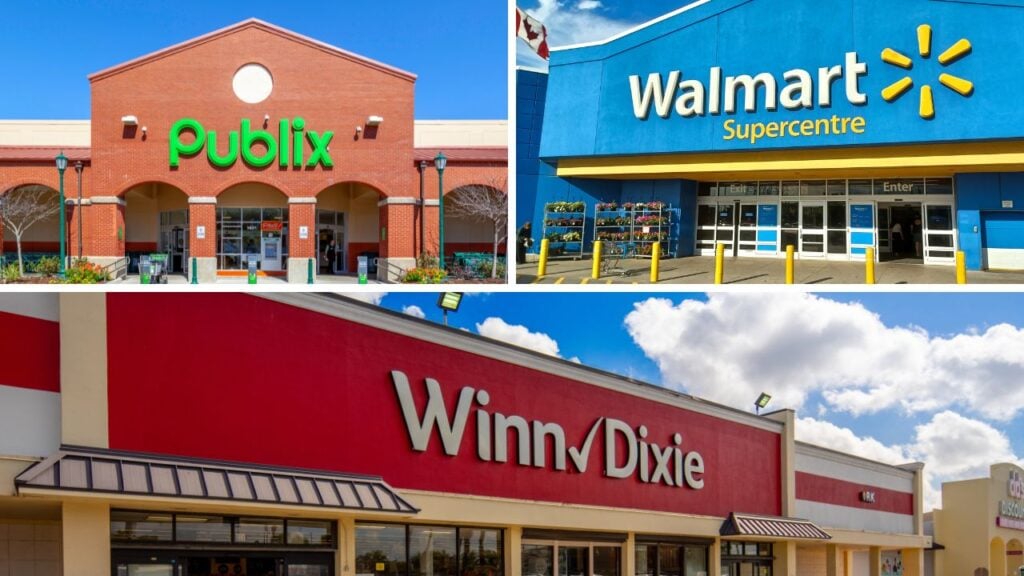
In true bargain-hunter fashion, we pulled from basket price studies, read loyalty-program fine print, and analyzed delivery fees to determine exactly how Publix, Walmart, and Winn-Dixie stack up in value.
Publix vs. Walmart vs. Winn-Dixie: Who Really Gives Customers the Best Bang for Their Buck?

I watch the Weekly Specials in the Circulars which I receive in Clermont, FL., especially for the “Meat” Specials. I have a Winn-Dixie Savers Card and have saved a lot on Meat Cuts. I have a degree in Animal Science with emphasis on Beef Cattle and also studied Meats and the Cuts from Beef & Pork. I was raised in a Farming & Ranching Family in Texas and operated a Cattle Ranch in Texas for 20 years, so I know Beef from the points of texture, color, specific cuts, and overall quality. The Winn-Dixie Meat Counter has quality Meat Cuts and the different Cuts are labeled correctly, unlike much of the competition. I purchase all of my Beef at Winn-Dixie due to the quality and price benefits.