
10 Things Grocery Stores Do That Pennsylvanians Have No Idea Are Happening

The next time you push a cart through your favorite grocery store, take a second to really look around.
Every aisle, every shelf, every song on the speakers, every smell drifting toward you, has been engineered to nudge your wallet open a little wider.
Grocery stores are some of the most carefully designed retail spaces on earth.
The average supermarket carries around 44,000 different items, according to the Food Marketing Institute. The layout you walk through has been studied, tested, and tweaked for decades.
The result is a shopping experience that feels casual but operates with the precision of a casino floor.
Here are the things grocery stores do that many Pennsylvanians have no idea are happening.
Produce Gets Misted to Sell Heavier
Those automatic mist sprinklers that hit the lettuce every few minutes look like they’re keeping things fresh.
They’re doing a little more than that.
The misting does help maintain crispness and visual appeal. But the added water also adds weight, and produce is often sold by the pound.
That dewy stack of greens you grab weighs more wet than dry, which means a slightly higher price at the register for the same product.
Stores aren’t doing anything illegal here.
It’s a standard practice that works because the misted produce looks more appealing and because most shoppers never think to shake the water off before bagging.
The Music Is Set to a Specific Tempo
That mellow background music in the Whole Foods produce section isn’t there by accident.
The tempo is dialed in to slow you down.
Research going back decades shows that slow-paced music makes shoppers linger longer in stores, and the longer you linger, the more you tend to buy.
Many grocery chains adjust the tempo throughout the day, with brighter tunes during peak rushes to keep things moving and slower tracks during evenings when shoppers are more open to browsing.
The result is a mood-setter that runs in the background of your entire trip.
You don’t even register the song. The tempo registers in your pace.
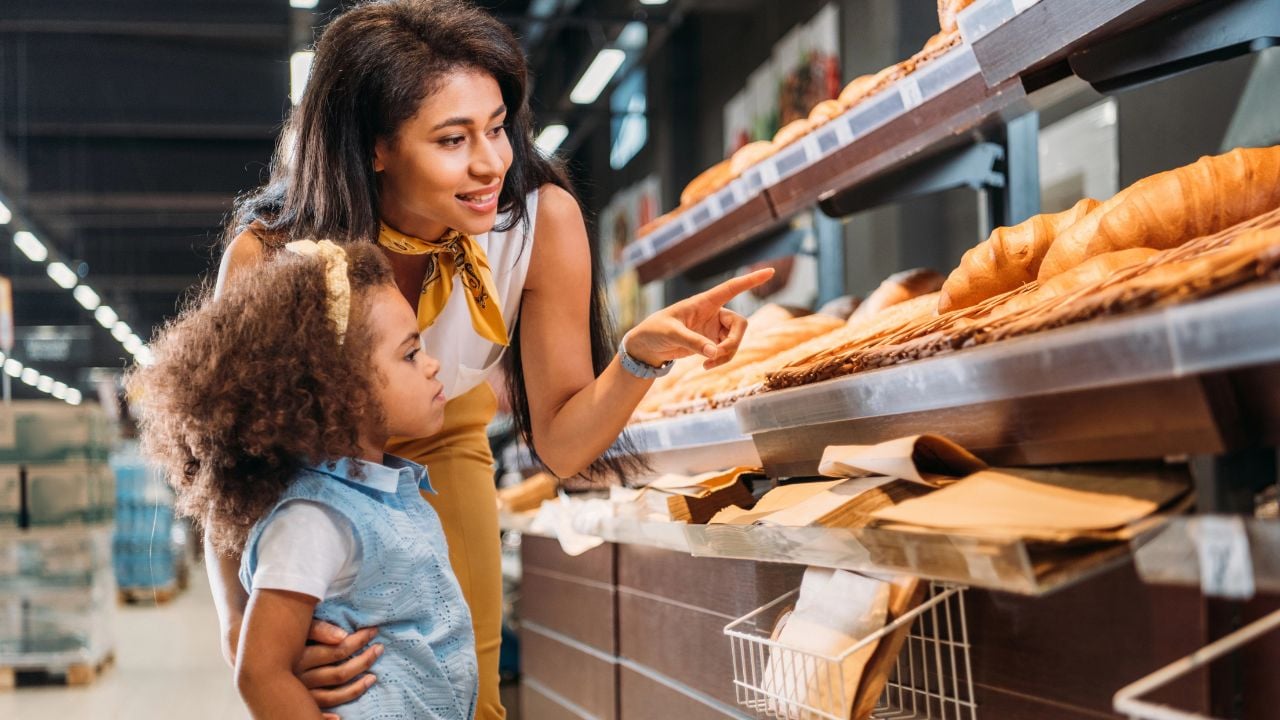
The Smell of Fresh Bread Is Strategic
Have you ever noticed how the warm scent of bakery bread hits you the moment you walk into many grocery stores?
That’s by design.
Many stores route the bakery near the entrance and pump that warm yeast smell toward the doors using ventilation.
The strategy was perfected in the late 1990s and lives on for one simple reason: Hungry shoppers buy more food.
The smell triggers appetite before you’ve even grabbed a cart.
By the time you make it five aisles in, your stomach has already nudged you toward bigger choices, and the bakery did its job without saying a word.
Eye-Level Shelves Aren’t Where the Deals Live
Brands pay real money for eye-level shelf space, and the products that land there aren’t always the ones you’d choose if you were comparing prices.
Stores treat prime shelf positions like advertising space.
The big brands with the bigger marketing budgets get the spots your eyes hit first, and those are typically the higher-margin items the store wants to move.
The cheaper, store-brand or smaller-label versions often sit on the top or bottom shelves where fewer eyes wander.
Look down. Look up. The savings live there.
Most shoppers just grab what’s in front of them and never realize a better deal sat at knee height the whole time.
The Kids’ Cereal Is Placed at Toddler Eye Level
This one’s a documented Cornell finding, and it’s almost diabolical in its precision.
A 2014 study from Cornell’s Food and Brand Lab analyzed 65 cereals across 10 stores and found that cereals marketed to kids sit at roughly half the shelf height of adult cereals.
The mascots on those kid-targeted boxes also gaze downward at an average angle of 9.6 degrees, designed to make eye contact with a child looking up.
Translation: the box is staring your kid down.
It’s known in the industry as triggering “pester power,” and the math behind it is sharp enough that researchers measured the gaze angles of cartoon characters to figure out how it works.
Milk and Eggs Are at the Back on Purpose
You came in for a gallon of milk. Why is it always in the farthest corner of the store?
Stores deliberately place staples like milk, eggs, and bread at the back of the building to force shoppers to walk past as many other aisles as possible to get there.
Every aisle you pass is another chance for something to catch your eye and land in the cart.
A quick milk run becomes a meandering tour.
It’s the single most-used grocery store layout tactic in America, and almost nobody walks in thinking, “they’re making me walk past the chips again on purpose.”
Most Shoppers Are Funneled to the Right
Watch where people go when they walk through the door. The vast majority turn right.
It’s a documented behavioral pattern, sometimes called the right-turn bias, and grocery stores design their entrance flow around it.
Stores often place high-margin items, fresh produce, or premium displays along the natural rightward path so shoppers encounter them first while their carts are empty and their resistance is low.
You’re being guided without even feeling it.
The store reads your instincts and puts the temptations exactly where you’ll see them when you’re most willing to grab something.
End-Cap Displays Aren’t Always Discounted
Those big bright displays at the ends of the aisles look like sale events, and a lot of shoppers grab from them on instinct.
Plenty of end-cap items are priced at full retail, sometimes even higher than they’d be on their regular shelf inside the aisle.
The bright signage, the volume of the display, and the prime location are doing the work of suggesting a deal that isn’t always there.
Check the price tag before tossing it in.
A “featured” item might be a small price cut compared to a cheaper competitor sitting two aisles over, or it might not be a discount at all.
Stores Periodically Rearrange to Reset Your Habits
Ever notice your store moves things around for no apparent reason?
It’s not random, and it’s not because the manager is bored.
Stores periodically rearrange their layout specifically to disrupt the autopilot routes their regulars have built up. Once you know exactly where your seven items are, you breeze through and leave.
Rearranging forces you to search, and searching means walking past products you’d otherwise skip.
That hunt is where the impulse buys live.
It’s a real frustration for shoppers and a real revenue lever for stores, and the cycle repeats every couple of years like clockwork.
The Checkout Lane Is the Last Sales Pitch
You’ve made it to the register. You think the selling is over.
It’s not.
The narrow corridor leading to the checkout, lined with candy, gum, mints, magazines, batteries, and tiny gadgets, exists for one reason: boredom shopping.
While you wait, your eyes wander.
The impulse-buy zone catches your attention exactly when your willpower is at its lowest, after a long shop and right before payment.
That last-second pack of gum isn’t a coincidence.
It’s the carefully calibrated final move in a game the store has been playing with you since you walked in the door.
11 Mistakes People Make When Buying Food at Costco

Even in the wonderland of Costco savings, customers commonly make mistakes that can (often unknowingly) spoil the fun. Here are some tips on what errors to avoid so that every Costco run you make turns out to be a win.
11 Mistakes People Make When Buying Food at Costco
16 Rudest Things People Do at ALDI
Regulars know that ALDI runs like a well-oiled machine… until someone shows up and ruins it.
These are the rudest things customers do at ALDI that mess things up for everyone else. Especially the folks just trying to grab their $1.89 hummus and get on with their day.
