
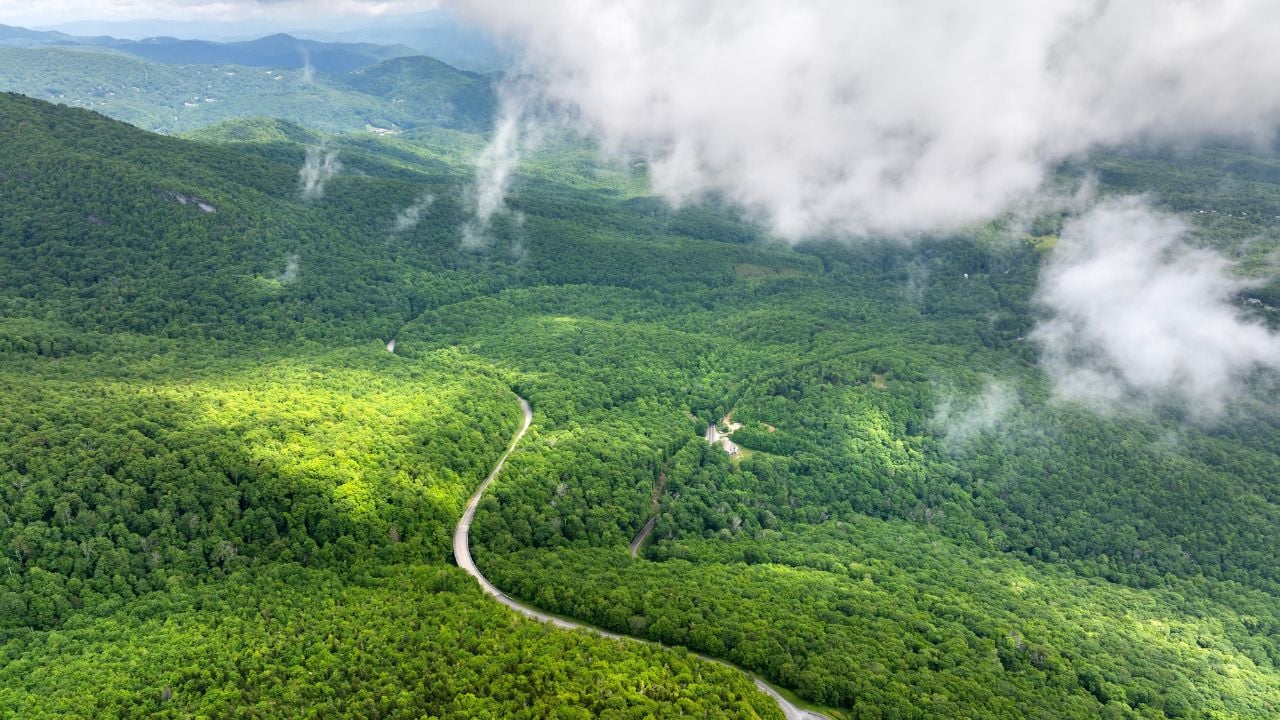
12 North Carolina Surprises Visitors Never See Coming

Think you’ve got North Carolina figured out after a weekend on the coast?
You don’t.
Between Charlotte’s skyline and a ferry line out on NC-12, tourists drive past many of the state’s best qualities.
These are the unique places in North Carolina and state facts tourists never see coming.
Mount Mitchell
North Carolina climbs a lot higher than most road trips let on.
Mount Mitchell, northeast of Asheville, tops out at 6,684 feet, the tallest peak east of the Mississippi.
Nothing in New England or anywhere down the Eastern Seaboard stands taller.
Bring a jacket.
You can drive most of the way up off the Blue Ridge Parkway, and the summit stays far cooler than Asheville, with snow that can linger into spring.
Reed Gold Mine
The country’s first gold rush didn’t start out West. It started in North Carolina.
Back in 1799, a 12-year-old named Conrad Reed found a 17-pound rock in Little Meadow Creek and hauled it home.
His family used it as a doorstop for three years.
A jeweler finally recognized it as gold in 1802.
That strike at Reed Gold Mine, east of Charlotte in Cabarrus County, was the first documented gold find in the United States, and it set off a rush decades before anyone panned a stream in California.
Expensive doorstop.
Birthplace of Pepsi
A North Carolina pharmacist poured the first glass of Pepsi, long before it went national.
That druggist, Caleb Bradham, mixed it at his New Bern soda fountain in 1898 and called it Brad’s Drink.
Catchy?
Not so much.
He renamed it Pepsi-Cola later that same year.
New Bern, down where the Neuse and Trent rivers meet, still runs a shop on the site of that original pharmacy, about two hours from Raleigh.
Venus Flytrap Country
One of the world’s strangest plants grows wild almost only in North Carolina.
The Venus flytrap sprouts naturally within about a 75-mile radius of Wilmington, mostly in the boggy Carolina bays near the coast.
That’s it.
The state made poaching a wild flytrap a felony in 2014, so pulling a plant out of the ground can land a person in prison.
Your garden-center flytrap is perfectly legal.
A flytrap growing beside a Wilmington swamp is protected.
Biltmore House
The largest house in America sits in North Carolina.
This Asheville estate sprawls across 175,000 square feet, with 250 rooms, 35 bedrooms, and 43 bathrooms.
Forty-three bathrooms.
George Vanderbilt opened it on Christmas Eve, 1895, and his descendants still own it today.
No privately owned home in the country comes near that footprint.
Cheerwine
A cherry-red soda most of the country has never tasted was invented in North Carolina.
Cheerwine came out of Salisbury in 1917, dreamed up by a grocer named L.D. Peeler during a wartime sugar shortage.
The name comes from the burgundy color and the fizzy cherry kick, not from anything in the bottle.
Peeler’s family still runs the company more than a century later, which makes Cheerwine one of the oldest soft drinks in America produced by the same family.
Order it at a Bojangles down the road, and you’ll fit in with the locals.
Sweet Potato Capital
North Carolina grows most of the nation’s sweet potatoes, and it isn’t a close race.
Farms here, mostly out in the eastern coastal plain, produce close to 60% of every sweet potato grown in the United States since 1971.
The state has led the country every year since then, and lawmakers named the sweet potato the official state vegetable.
That casserole on your Thanksgiving table probably started in a field off US-264.
Krispy Kreme’s Hometown
The first Krispy Kreme doughnut came out of a North Carolina fryer back in 1937.
Vernon Rudolph rented a building in Winston-Salem, bought a secret yeast-dough recipe off a New Orleans chef, and started selling to local groceries.
Word spread.
He cut a hole in the shop wall to sell hot doughnuts straight to people walking by.
The glowing “Hot Now” sign came later, but that fresh-off-the-line idea started right there.
Winston-Salem, up in the Piedmont Triad, still claims that original store, and the chain now runs shops worldwide.
High Point
North Carolina hosts the biggest furniture show on the planet, and outside the trade, almost nobody’s heard of it.
Twice a year, High Point Market fills the small city of High Point with buyers, designers, and 11 million square feet of showrooms.
There are sofas everywhere.
Around 75,000 people pour in each April and October, turning a city of roughly 114,000 into the furniture capital of the world for a week.
Hotels book up for an hour’s drive in every direction.
Then the crowd clears out, and High Point empties again until the next market.
Moonshine and Motorsports
Stock-car racing in North Carolina was born from outrunning the law.
During Prohibition and the years after, bootleggers up in the Wilkes County hills souped up their cars to haul moonshine past federal agents on twisting back roads.
Speed won.
On weekends, those same drivers raced one another to settle whose ride was quickest, and organized racing grew straight out of it.
Junior Johnson, a Wilkes County native, hauled liquor before he took 50 NASCAR wins, and by his own account, he never got caught running shine.
The state even maps a Moonshine and Motorsports Trail through the hills where it started.
Barbecue Divide
Few states argue about barbecue like North Carolina, and the state splits clean down the middle.
Out east, pitmasters cook the whole hog and dress it in a thin vinegar-and-pepper sauce, with no tomato anywhere near it.
Head west, and it changes.
Around Lexington and the Piedmont, cooks use only the pork shoulder and stir a little ketchup into the vinegar, which turns the sauce reddish.
People here defend their side hard.
Bring it up at a Cook Out drive-thru, and you’ll spark a friendly feud.
Pick a side.
Ocracoke Island
North Carolina keeps a village you can’t drive to, out at the far end of the Outer Banks.
Ocracoke Island has no road connection to the mainland, so the only way in is by ferry or small plane.
There’s no bridge.
From Hatteras, the state runs a free ferry that takes about 40 minutes across Pamlico Sound.
The Cedar Island and Swan Quarter ferries down the coast take much longer, past two hours across open water.
Once you land, most visitors leave the car parked and get around Ocracoke Village by bike, on foot, or by golf cart, out where NC-12 finally runs out of road.
9 Forgotten North Carolina Laws That Are Somehow Still Legal
A handful of odd laws are still sitting on the books in North Carolina.
The next time you visit, a couple could catch you off guard.
9 Forgotten North Carolina Laws That Are Somehow Still Legal
6 Overhyped North Carolina Mountain Stops (and 6 Worth the Winding Drive)
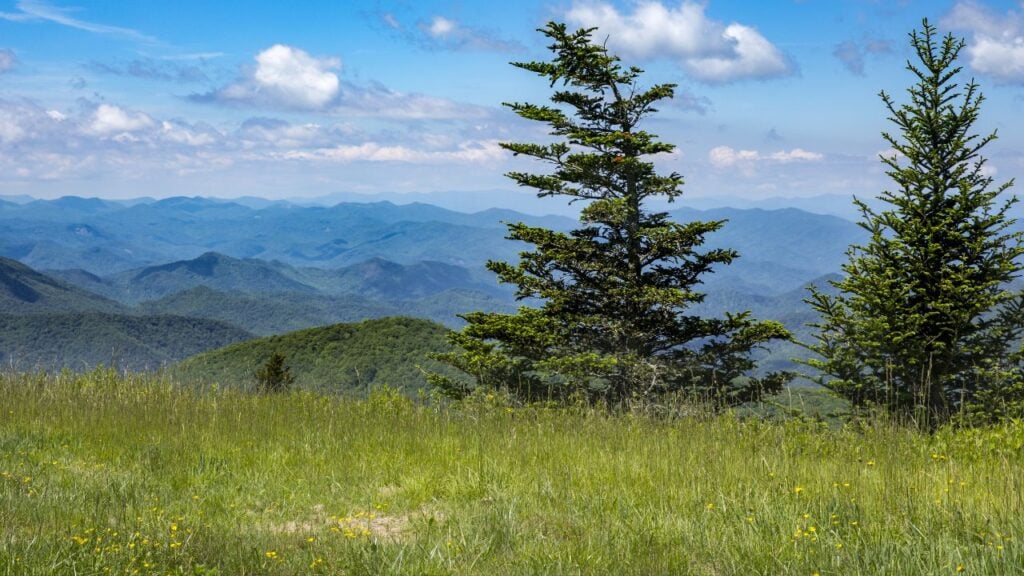
Some North Carolina mountain stops pay back the winding drive with a view you’ll never forget.
Others pay you back with a gift shop and a parking lot.
6 Overhyped North Carolina Mountain Stops (and 6 Worth the Winding Drive)
