
10 Hurricane Myths Longtime South Carolinians Still Believe

A man on Sullivan’s Island stretches masking tape across his front windows in a careful X.
He learned it from his father, who swore it kept the glass from shattering.
Neither of them ever checked whether it works.
These are the hurricane myths longtime South Carolinians still believe.
1. We Always Dodge the Big Storms
South Carolinians tell themselves a comforting story every June: The big storms always curve away at the last second.
The record says otherwise.
Hurricane Hugo came ashore near Charleston in 1989 as a Category 4, one of the strongest storms to ever strike the state.
Rewind further, and it gets worse.
The 1893 Sea Islands hurricane drowned an estimated 1,000 to 2,000 people across the Lowcountry, most of them from the Gullah Geechee communities out on the barrier islands.
The coast that “always gets missed” has taken hits about as hard as anywhere in the country.
Luck runs out.
2. Taping the Windows Helps
Masking tape does nothing to protect a window in a hurricane.
South Carolinians have pressed it into Xs across sliding glass doors for generations anyway.
Tape won’t stop the glass from breaking, and it won’t hold it together when a flying tree limb hits at highway speed.
What it does is worse.
Taped glass tends to break into big, heavy shards instead of a spray of small pieces, and those large shards are the flying debris that sends people to the emergency room.
Board the windows with plywood or put in proper shutters, and skip the tape aisle.
3. Crack a Window for the Pressure
Another storm-day tradition in South Carolina is cracking the windows open to “equalize the pressure” so the house won’t burst.
A hurricane won’t pop your house like an overfilled balloon, and opening a window only makes things worse.
Give the wind a path inside, and it shoves up against your roof and walls with nowhere else to go.
That’s how roofs peel off.
The National Weather Service is blunt about it, telling people to keep every window and door shut and latched.
Sealed tight beats cracked open.
4. The Category Is the Whole Story
South Carolinians size up a coming storm by a single number, its category.
That number comes from the Saffir-Simpson scale, which measures only wind, not storm surge, not rainfall, not the inland flooding that arrives days later.
So the category tells you how hard the wind blows and almost nothing about the water.
And the water is what kills.
Roughly 88% of hurricane and tropical storm deaths in the United States come from water, mostly storm surge and flooding, not the wind everyone fixates on.
A “weak” Category 1 can still drown a town.
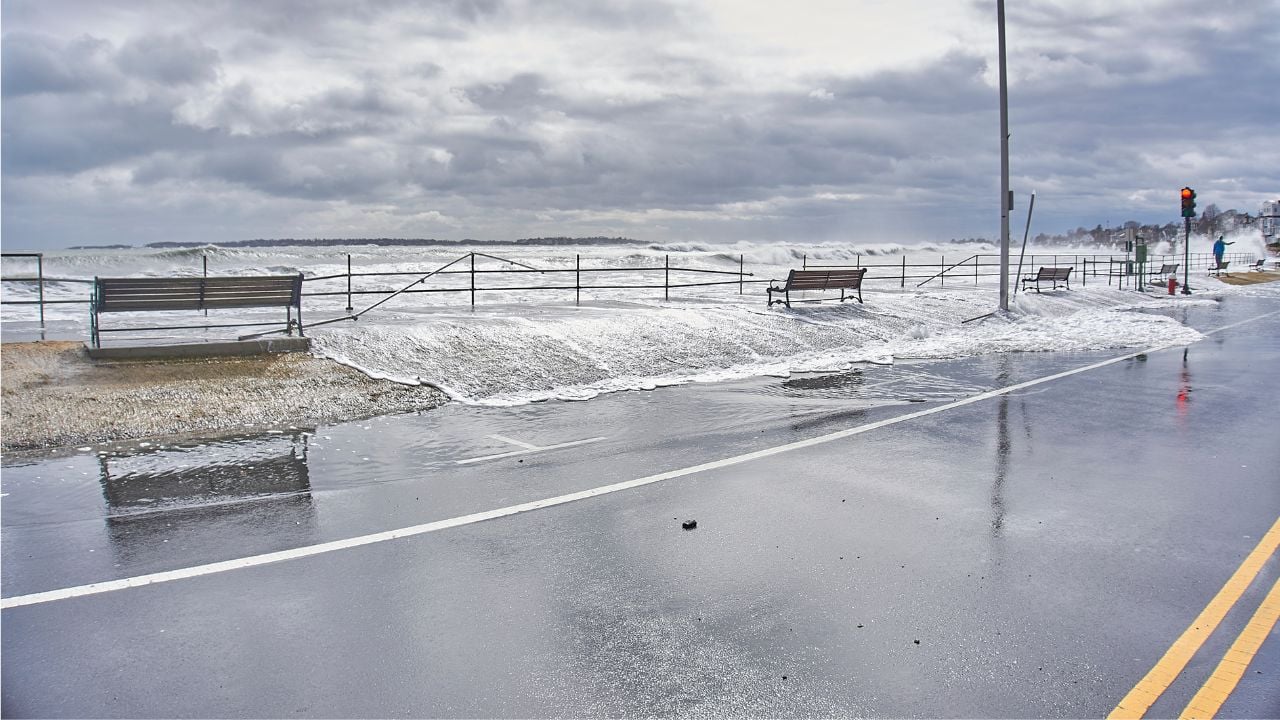
5. Storm Surge Is Just High Tide
Many South Carolinians picture storm surge as a slightly higher tide, a little water over the dock, and gone by morning.
It’s a wall of water.
Storm surge is the ocean itself, shoved ashore in a dome that can stand many feet deep and level whatever it reaches.
When Hugo hit, the surge near McClellanville and Bulls Bay rose to nearly 20 feet, the highest ever recorded on the U.S. East Coast at the time.
Twenty feet.
Families sheltering in a McClellanville school ended up climbing onto cafeteria tables and lifting their children toward the ceiling as the seawater poured in.
Psst! How much do you know about hurricane science and the storms in South Carolina’s history? Take our quiz and see if you can ace it.
Quiz
Hurricane History Pop Quiz
Answer these questions on hurricane science and the storms that hit South Carolina. We bet you can’t get them all right. Prove us wrong?
What is the highest storm surge ever recorded in the United States?
6. Inland Means You're Safe
Move a few counties inland, and many South Carolinians figure a hurricane becomes somebody else's problem.
Hugo is the proof it doesn't.
Six hours after landfall, its center was still hurricane-strength when it reached Charlotte, more than 150 miles from the water.
An airport tower there clocked a gust of 99 mph, and the winds snapped tens of thousands of trees deep into the Piedmont.
Then there's the rain.
The inland flooding and the tornadoes spun off by a fading hurricane kill people who never saw the coast, sometimes hundreds of miles from where it made landfall.
Distance from the beach isn't the same as safety.
7. You Can Leave at the Last Minute
Longtime South Carolina residents pride themselves on timing, waiting out the panic and slipping away just before the storm.
Anyone who lived through Floyd knows how that ends.
When Hurricane Floyd threatened in 1999, so many people fled at once that Interstate 26 turned into a parking lot, and a two-hour drive from Charleston to Columbia dragged on for most of a day.
South Carolina learned from it and now reverses the inbound lanes of I-26 so every lane runs away from the coast.
But a lane reversal only helps if you leave when officials call it.
Wait too long and you're stuck on the highway when the wind arrives, which is the worst place to be.
8. A Strong House Beats Evacuating
Some South Carolinians out on the barrier islands trust their construction over any evacuation order, sure a well-built house can take whatever comes.
The house might.
You might not.
Those evacuation orders have little to do with wind stripping off shingles.
They exist because storm surge can fill the first floor with seawater and cut off every road out.
That's why South Carolina built its "Know Your Zone" system, which splits the coast into lettered evacuation zones so residents know the moment their address falls under an order.
No structure keeps you alive underwater, and no ambulance is coming while the surge is up.
9. The Eye Means It's Over
Halfway through a hurricane, the wind over South Carolina can drop to an eerie calm, and the sky can clear.
That's the eye.
It's a trap.
The calm center takes anywhere from a few minutes to an hour to pass, and then the back wall of the storm arrives with winds roaring in from the opposite direction.
People die in that second half because they stepped outside during the lull, certain the worst had already gone by.
10. The Danger Ends With the Wind
When the last gusts finally fade over South Carolina, the worst of it feels finished.
It often isn't.
More people are hurt or killed in the days after a hurricane than during the storm itself, and one of the biggest killers sits right in the garage.
A portable generator run indoors, or too close to the house, floods the rooms with carbon monoxide, an invisible, odorless gas that has killed whole families in their sleep.
Outside, downed power lines can still carry current, and a foot of moving water can carry off most cars.
Those hazards kill people every hurricane season, often days after the storm's name has left the news.
8 South Carolina Beach Towns Locals Love (and 3 Tourists Overrun)
Ask a South Carolinian to name their favorite beach and watch them stall.
They have an answer, but the best stretches of Carolina sand rarely make the billboards along I-95, and locals would like to keep it that way.
8 South Carolina Beach Towns Locals Love (and 3 Tourists Overrun)
9 Things South Carolinians Do That Baffle Everyone Who Moves In
Buy a house in South Carolina, and your new neighbors start acting strange within a week.
They wave at your car from three driveways away, hand you a paper cup of something boiled and salty, and keep calling every soft drink a "Coke."
9 Things South Carolinians Do That Baffle Everyone Who Moves In
