
The Cheapest Places to Retire in North Carolina in 2026

One of the cheapest places to retire in North Carolina right now is Kinston, where the typical home is worth $119,300.
That’s less than half the statewide median.
Drive into the eastern half of the state, and a Social Security check covers a lot more of the month.
North Carolina doesn’t tax that check, either.
These are the cheapest places to retire in North Carolina, and what your money buys in each town.
Note: This is general information, not financial or tax advice. Tax rules and dollar amounts are subject to change, so confirm the current details with a professional.
The Cheapest Places to Retire in North Carolina
Every town below sits far under the state’s home prices, and retirees choose each town for a different reason.
1. Eden
Eden sits on the Virginia line where the Dan and Smith rivers meet, and a house there runs about $120,700.
That price buys a brick ranch with a yard, not a share of a building.
Retirees float the Smith River on inner tubes in summer and drive home in ten minutes.
You pay small-town money in Eden and still get river access without a coastal price tag.
Two rivers, no crowds.
2. Henderson
In Henderson, a lake sits at the edge of town, and the typical home runs near $123,800.
Bring the boat.
Kerr Lake spreads out just north of it, tens of thousands of acres of open water for a boat and a cooler.
The town sits about an hour north of Raleigh, close enough for a hospital run and far enough to skip city prices.
Water like that usually comes with a beach price tag, and in Henderson it doesn’t.
3. Kinston
Kinston holds the lowest home price on this list.
Downtown filled back in around Mother Earth Brewing and a food scene that put the small city on the map.
Beer helped.
The Neuse River runs past the edge of town, and a raised Civil War gunboat sits downtown in its own museum.
At $119,300, a retiree lands in a place that spent the last decade getting more interesting, not less.
4. Laurinburg
Laurinburg anchors Scotland County down near the South Carolina line, with homes around $134,200.
St. Andrews University sits right in town, so a small campus keeps concerts, lectures, and ballgames on the calendar.
It’s flat, warm, and under two hours from Myrtle Beach for a beach day.
You get a college town’s calendar without a college town’s rent.
College perks, country prices.
Psst! Want to see how North Carolina’s cheapest retirement towns stack up on rent and income, not just home price? Sort the table below and find your match.
5. Roanoke Rapids
Roanoke Rapids runs along the Roanoke River in the northeast corner, and a home there costs about $142,700.
Water everywhere.
Lake Gaston sits minutes away, a long reservoir shared with Virginia that fills with anglers and pontoon boats all summer.
The old mill canal is a walking trail now, flat and shaded for a morning loop.
For anyone with family up north, the I-95 on-ramp is right there for the holiday drive.
6. Lumberton
Lumberton straddles the Lumber River right off I-95, and houses run near $152,600.
The Lumber River is a dark, slow blackwater run, now a state park built for a canoe and no hurry.
Slow water suits it.
Lumberton lands about halfway between New York and Florida on I-95, so the kids passing through have no excuse.
Under $155,000 gets a retiree a walkable downtown, a river, and a driveway the family can find on a holiday.
7. Mount Airy
Mount Airy costs the most on this list and still lands under $185,000, with a median home value of $181,900.
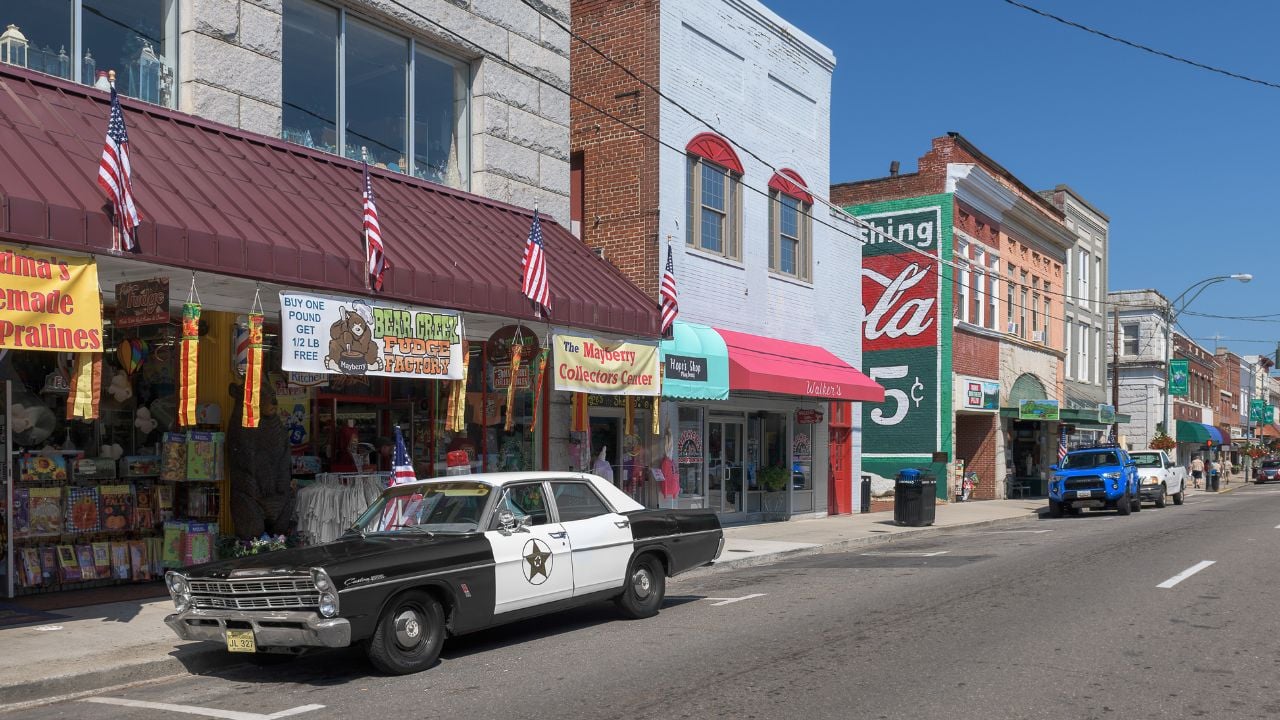
This is the real Mayberry, Andy Griffith’s hometown, and the shops along Main Street lean all the way into it.
The town sits in the Blue Ridge foothills, so summers run milder than the coastal plain, and wine country starts just down the road.
Squad car tours and all.
How Much Do You Need to Retire in North Carolina?
You need less here than in most of the country, and these eastern towns pull the figure down further.
Statewide, the median home is worth $288,900, and typical rent runs $1,228 a month.
Every town on this list beats both by a wide margin.
North Carolina’s overall cost of living sits near 97.8 on a scale where 100 is the national average.
Below average, in plain terms.
Pair a paid-off house in Kinston or Eden with a Social Security check the state doesn’t tax, and a modest monthly budget covers more than newcomers expect.
Does North Carolina Tax Retirement Income?
Not all of it.
North Carolina doesn’t tax Social Security at all, so that part of your income arrives whole.
The rest, a pension, a 401(k), an individual retirement account (IRA) withdrawal, meets the state’s flat 3.99% income tax in 2026.
That rate dropped from 4.25% the year before, and it keeps falling.
One rate, no brackets.
Certain government and military pensions escape it, protected under the state’s Bailey settlement.
So a couple living on Social Security and a modest pension keeps most of what lands in the account.
What About Property Taxes?
They’re low, and retirees can push them lower.
North Carolina’s average effective property tax runs about 0.61% of a home’s value, among the lower rates in the country.
On a $120,000 house, that’s roughly $730 a year.
Not nothing, but close.
Owners 65 and older who fall under an income limit can shield a large share of their home’s value through the state’s homestead exclusion.
North Carolina offers other tax breaks that homeowners over 65 leave on the table year after year.
FAQ
A few questions that come up before anyone signs a deed.
What is the cheapest place to retire in North Carolina?
Kinston, in the eastern part of the state, has the lowest typical home value on this list at about $119,300. Nearby Eden and Henderson run close behind, all far under the statewide median.
Does North Carolina Tax Social Security or Pensions?
North Carolina doesn’t tax Social Security at all. Most other retirement income, including pensions and 401(k) or IRA withdrawals, is taxed at the flat 3.99% state rate in 2026, though some government and military pensions are exempt.
What Are Property Taxes Like for Retirees in North Carolina?
They’re low, averaging around 0.61% of a home’s value statewide. Homeowners 65 and older who meet an income limit can lower the bill further through the homestead exclusion or the circuit breaker program.
Is North Carolina an Affordable State to Retire In?
Yes. Its overall cost of living sits slightly below the national average, and small eastern towns like Kinston, Lumberton, and Roanoke Rapids push housing costs well below the state median.
In Mount Airy, the extra you pay over Kinston buys hills, cooler summers, and a downtown built around the Andy Griffith Museum.
Yadkin Valley tasting rooms sit a short drive out through the foothills, close enough to make an afternoon of it and still get home for supper.
Does North Carolina Tax Social Security? What Retirees Pay in 2026

You already know North Carolina leaves your Social Security check alone.
The surprise is the slice of your income the state does reach, and the rate it charges for it.
Does North Carolina Tax Social Security? What Retirees Pay in 2026
9 North Carolina Property Tax Breaks Homeowners 65+ Overlook
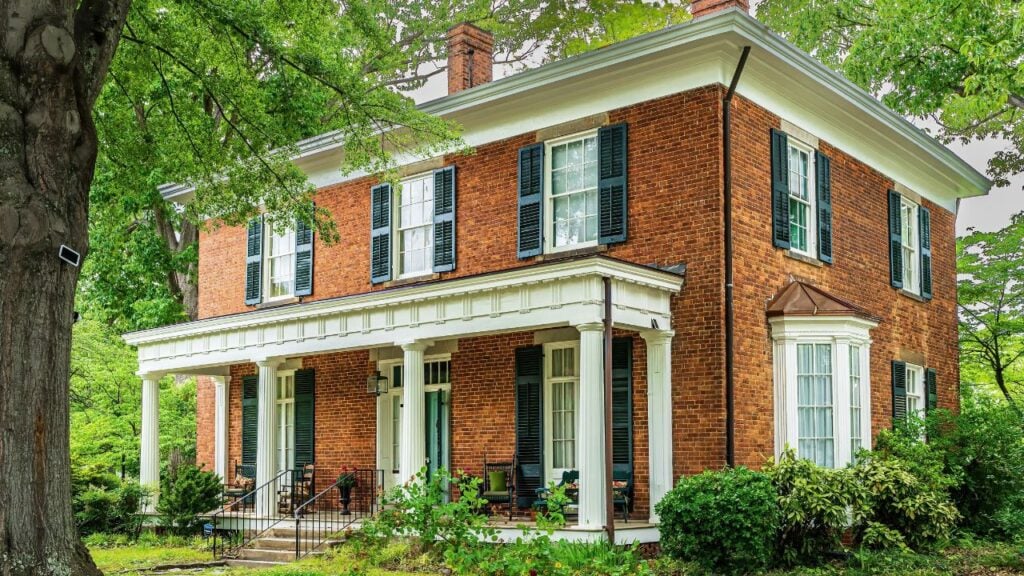
Turning 65 in North Carolina can shrink your property tax bill, but the county won’t call to tell you.
Most of these breaks sit in a drawer at the tax office until somebody asks.
9 North Carolina Property Tax Breaks Homeowners 65+ Overlook
