
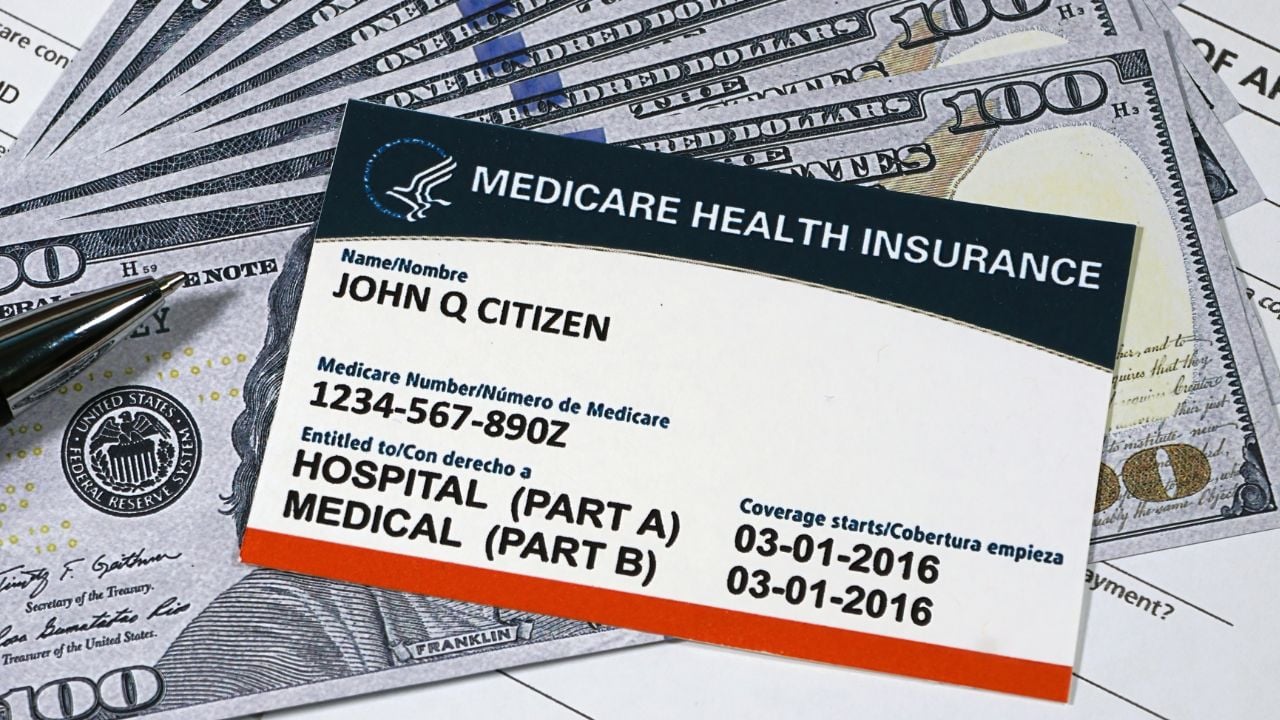
Medicare’s 2027 Premium Is Projected: What It Means for Pennsylvania Retirees

Think your Medicare premium increases are behind you, Pennsylvania?
They aren’t.
The projected 2027 Part B premium goes up again, before your next Social Security cost-of-living raise even shows up.
This is what the projected premium means for Pennsylvania retirees.
Note: This is general information, not financial or medical advice. These figures are projections and subject to change, so confirm the current numbers with Medicare.
Already in Your 2026 Check
Pennsylvania retirees felt this shift back in January, before anyone brought up 2027.
The standard Medicare Part B premium for 2026 is $202.90 a month, according to the Centers for Medicare & Medicaid Services (CMS).
That was a jump from $185 in 2025.
That’s roughly $18 more a month, taken out before your Social Security payment ever reaches you.
The annual Part B deductible rose too, to $283 before your coverage starts paying its share.
A hospital stay carries its own charge, with the 2026 Part A inpatient deductible set at $1,736 before Medicare covers the rest.
It’s already in effect.
So the 2027 talk isn’t some far-off worry for retirees in Erie or Allentown. It builds on a bill Pennsylvanians are already paying.
The 2027 Projection
The 2027 estimate is where Pennsylvania retirees are turning their attention now.
Medicare’s trustees project the 2027 Part B premium at $209.50 a month.
That’s about $6.60 more than the 2026 premium.
The figure comes from the 2026 Medicare Trustees Report, the yearly checkup on the program’s finances.
Spread across twelve months, that projected increase adds close to $80 to what a Pennsylvania retiree hands Medicare over the year.
It looks small each month, but it adds up over a year.
A Projection, Not a Promise
That $209.50 figure isn’t locked in for Pennsylvania retirees or anyone else.
A projection is a forecast, not a bill.
Last year’s report guessed the 2027 premium would reach $218.60, nearly ten dollars higher than the current estimate.
This year’s report walked that number back, since health costs didn’t rise as fast as the trustees once feared.
Estimates move.
The official 2027 premium won’t be set until the government announces it in the fall, close to Medicare’s open enrollment.
Until then, $209.50 is the best guess a Pennsylvania retiree has to plan around.
Why It Keeps Going Up
Part B doesn’t get more expensive by accident for Pennsylvania retirees.
By law, the premium is set to cover 25% of what Part B costs to run.
Taxpayers pick up the other three-quarters.
Part B pays for doctor visits, lab work, and outpatient care, not the hospital stays that fall under Part A.
So when Medicare spends more on those services, your share of the tab goes up with it.
CMS points to two drivers behind the 2026 increase: People using more care, and higher payment rates to doctors and providers.
More care means higher bills.
Neither trend slows down for a retiree in Bethlehem or State College.
The COLA Tug-of-War
For most Pennsylvania retirees, the premium doesn’t stand on its own.
It comes straight out of your Social Security raise.
Each year brings a cost-of-living adjustment (COLA), the bump meant to keep Social Security roughly even with inflation.
Medicare pulls the Part B premium straight out of that check, so a bigger premium eats into a bigger raise.
Early estimates put the 2027 COLA around 3.6%, though the real number isn’t set until October.
One cushion helps here, called the hold-harmless rule.
For most people, your Part B premium increase can’t run larger in dollars than your COLA raise, so the payment that reaches your account won’t shrink from one year to the next.
Your check won’t go backward.
But a higher premium still means less of that raise stays with a retiree in Scranton or Harrisburg.
Psst! How much do you know about Medicare and Social Security’s history? Take our quiz and see if you can ace it.
Quiz
Retirement History Pop Quiz
Test yourself on Medicare and Social Security’s past. We bet you can’t get them all right. Prove us wrong?
Who was handed the very first Medicare card, back in 1966?
Higher Earners Pay More
Not every Pennsylvania retiree pays the same Part B premium.
Higher earners owe an income-related monthly adjustment amount (IRMAA), a surcharge stacked on top of the standard premium.
In 2026, that surcharge starts once your income passes $109,000 as a single filer, or $218,000 for a couple filing jointly.
The more you made, the more you owe.
At the top, per those same Kiplinger figures, a single retiree earning half a million dollars pays $689.90 a month for Part B.
That's the ceiling.
The same surcharge applies to your Part D drug plan, too.
Medicare looks back at your tax return from two years earlier, so a one-time event like a home sale or a large withdrawal can push a Pennsylvania retiree into a surcharge they didn't see coming.
Three Million Pennsylvanians Feel It
The projected increase reaches a wide swath of the state.
More than 3 million Pennsylvanians carry Medicare, from the Lake Erie shore down to the Philadelphia suburbs.
Close to 55% of them hold a Medicare Advantage plan instead of Original Medicare.
Here's the part that surprises people:
A Medicare Advantage plan doesn't erase the Part B premium.
It follows you either way.
So a retiree outside Pittsburgh on an Advantage plan still pays that Part B premium to the government, then pays their private plan on top of it.
When the 2027 number comes out this fall, nearly every one of those Pennsylvania enrollees will meet it, Advantage or Original Medicare alike.
9 Reasons Pennsylvania Retirees Are Eyeing the Carolinas

A couple from Altoona spends another February scraping the driveway, then starts pricing ranch houses outside Charleston.
The pension check reads the same in both places, but almost everything around it changes.
9 Reasons Pennsylvania Retirees Are Eyeing the Carolinas
10 States Most Worried Social Security Is Running Out
Few Pennsylvanians admit their retirement money worries out loud.
Mindfully American read three months of national search data to see which states keep asking whether Social Security is running out, and Pennsylvania cracks the top five.
The 10 States Most Worried Social Security Is Running Out, and Pennsylvania Cracks the Top 5
