
8 Mistakes Tourists Make Planning a Smokies Trip for Tennessee’s First Cool Weekend

The Great Smoky Mountains is America’s most-visited national park, and Tennessee’s first properly cool weekend often feels like when that entire crowd shows up at once.
These are the mistakes visitors make when they plan a trip to the Smokies during Tennessee’s first cool weekend.
1. Getting Too Close During the Elk Rut
Great Smoky Mountains runs its elk rut from early September to late October, and that window covers almost every calendar guess for Tennessee’s first cool weekend.
Bulls know it, too.
The National Park Service says bull elk in Cataloochee Valley will defend their territory during the rut, and the required buffer is at least 25 yards, or farther if an animal reacts at all.
A crowd trying to photograph the bugling on a first-cool-weekend afternoon can push right past that line without meaning to, especially when everyone else at the pull-off is doing the same thing.
Bring the zoom lens.
What “Too Close” Means for Elk
Great Smoky Mountains enforces the 25-yard elk buffer as a floor, not a target.
The rule covers any distance that changes how an elk behaves, so a bull that lifts its head and stares from 40 yards away means a visitor has already crossed the line.
Move back first.
Rangers can cite that stare-down the same as a closer approach, since the standard is the animal’s behavior, not a tape measure.
2. Expecting Peak Color on the First Cool Weekend
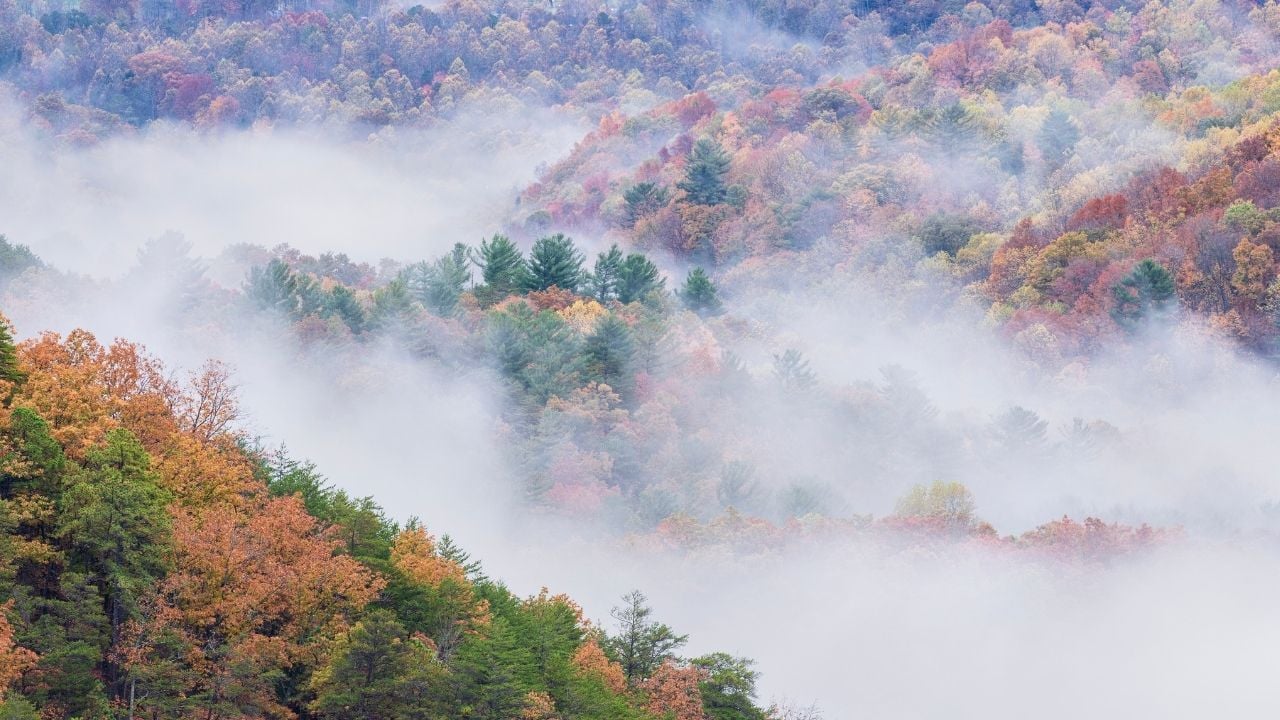
Great Smoky Mountains’ fall color season runs from September through mid-November, and Tennessee’s first cool weekend usually lands within the first few weeks of that stretch, not the last.
Green still hangs on.
Great Smoky Mountains carries the National Park Service’s own label as America’s most-visited national park, and a lot of that fall traffic is chasing this same short color season.
Show up on the first properly cool Saturday expecting a full sweep of red and orange, and much of the season the National Park Service describes as running clear into November hasn’t caught up yet.
There’s more of it still coming.
3. Assuming the Frost Is Still Weeks Away
Great Smoky Mountains often gets its first frost in late September, according to the National Park Service’s own weather data, well before many Tennesseans would call the season cool.
Elevation gets there first.
The National Park Service’s weather page states that the park’s first frosts often occur in late September, while lows by November are usually near freezing.
A boardwalk or overlook that felt merely brisk back home can carry a slick, icy sheen by the time a first-cool-weekend crowd reaches Newfound Gap or Kuwohi at sunrise.
Watch your footing up top.
4. Banking on a Vehicle-Free Wednesday That Already Ended
Great Smoky Mountains closes the Cades Cove Loop Road to every car, truck, and motorcycle each Wednesday.
The National Park Service runs that program only from May 6 through September 30.
October gets none of it.
A first-cool-weekend visitor who arrives in October finds the loop back to seven-day car traffic, exactly when the National Park Service says traffic is heavy in fall.
The single one-way lane means a slow-moving car can back up the entire loop for the whole afternoon, with no midweek break in sight.
Expect the wait.
Psst! How much do you know about Great Smoky Mountains National Park? Take our quiz and see how many you can get right.
Quiz
Smoky Mountains IQ
This quiz covers wildlife and history many visitors never learn about Great Smoky Mountains, and it’s tougher than it looks. Think you can clear all nine questions?
In September 2024, a request from the Eastern Band of Cherokee Indians led the U.S. Board on Geographic Names to rename the park’s tallest peak. What’s it called now?
5. Packing for the Valley, Not the Summit
Great Smoky Mountains can feel like light-jacket weather at Gatlinburg's edge and true winter a few thousand feet up, on the very same first-cool-weekend afternoon.
A single forecast won't cover both.
The National Park Service says temperatures can swing 10 to 20 degrees Fahrenheit between the base of the mountains and the summits.
A comfortable morning at Sugarlands can turn into a gloves-and-hat wait at Newfound Gap or on Kuwohi's summit, especially once those September frosts start reaching lower with each passing week.
Layers make the difference.
6. Extending the Weekend Into a Trail Closure
Great Smoky Mountains closes Bullhead Trail, one of the routes up Mount LeConte, Monday through Thursday each week this fall, a schedule that runs clear through November 19, 2026.
Monday can ruin those plans.
The National Park Service lists the closure on its current closures page, tied to trail rehabilitation work.
Turning a Friday-to-Monday trip around the first cool weekend into a LeConte summit attempt on that extra Monday means finding a locked gate, not a trailhead.
Weekends still work fine.
7. Trusting a Map App Through Leaf-Season Traffic
Great Smoky Mountains sits mostly outside cell coverage, and fall's heavier traffic is exactly when a phone's map app tries hardest to find a way around it.
Then the signal drops anyway.
The National Park Service warns that vehicle navigation systems can send drivers the wrong way on one-way roads or into dead ends in the mountains.
A map app hunting for a shortcut around backed-up Newfound Gap Road during peak leaf season can route a driver onto Parson Branch Road or Rich Mountain Road.
Both are one-way gravel roads the park keeps open only into November, and neither was built for through traffic.
A paper map skips all of that.
8. Underestimating Fall Bears
Great Smoky Mountains' bear population doesn't slow down once the weather cools.
It speeds up.
The National Park Service says both male and female bears can nearly double their weight in fall, packing on calories from acorns and nuts before winter.
That means more bears working trails, campgrounds, and picnic areas exactly when first-cool-weekend crowds let their guard down.
Getting too close carries fines up to $5,000 and up to six months in jail.
Fifty yards is the legal minimum distance from any bear in the park.
That number is worth remembering at a crowded Cades Cove pull-off.
Checking the Park's Live Alerts Page
Great Smoky Mountains keeps every current closure, trail rehabilitation, and road condition posted on one alerts page.
It updates daily.
Laurel Falls Trail is the clearest example on that page right now. The National Park Service planned an 18-month rehabilitation starting in January 2025, then hit design changes after crews found unexpected ground conditions during construction.
The agency's own project page now expects the trail closed clear into 2027.
12 Signs Your Quiet Small Town Is About to Become the Next 'Hidden Gem.' Tennesseans Can Relate

Leiper's Fork lots sold for a small fraction of today's prices back in the early 1990s, when almost nobody in Williamson County wanted in.
That same land costs far more now, and the signs that a small Tennessee town was about to change were there the whole time.
12 Signs Your Quiet Small Town Is About to Become the Next 'Hidden Gem.' Tennesseans Can Relate
6 Medical Bills Tennessee Patients Can Negotiate Down but Almost Never Do

Tennessee law gives a hospital only 30 days to produce a complete, line-by-line bill once a patient asks for one in writing.
Few people ever ask, and that one request is where the negotiating room on a Tennessee medical bill starts.
6 Medical Bills Tennessee Patients Can Negotiate Down but Almost Never Do
