
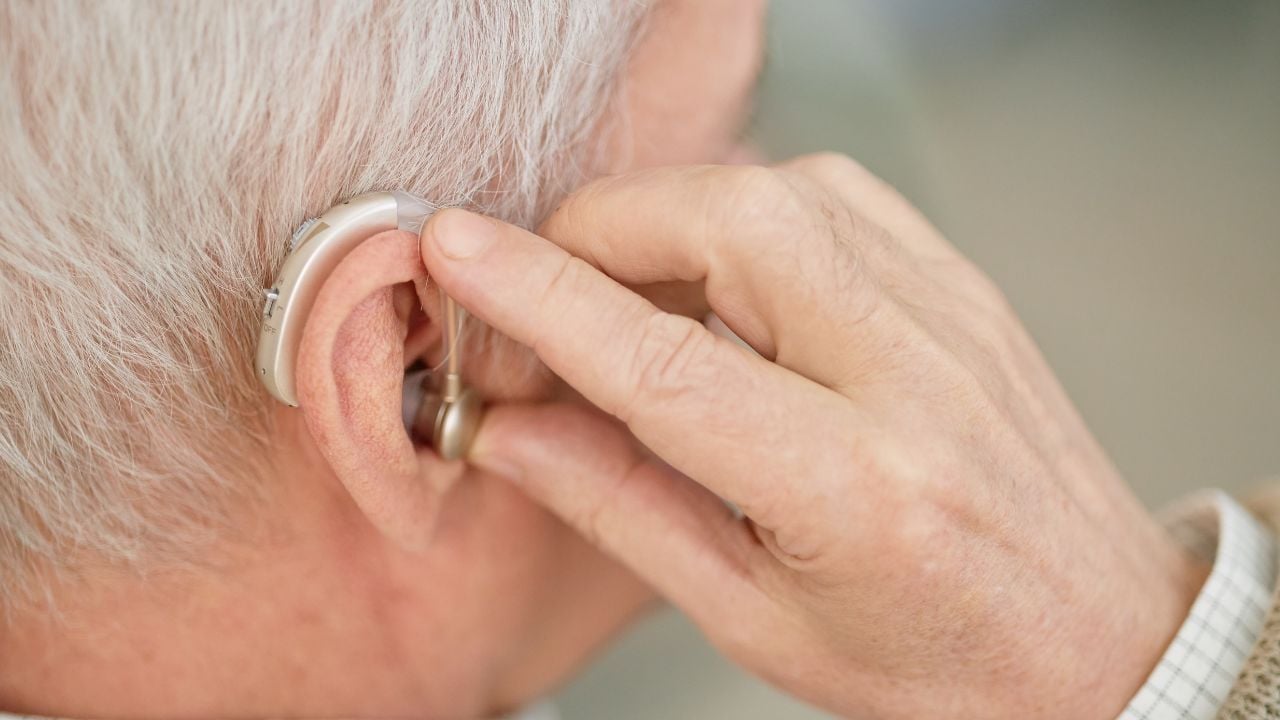
Does Medicare Cover Hearing Aids? What Florida Retirees Pay in 2026

Does Medicare cover hearing aids? For most Floridians on Original Medicare, the answer is no.
Parts A and B pay for a long list of things, but routine hearing aids and the exams to fit them aren’t on it.
That surprises many people at the audiologist’s front desk.
Here’s the fuller picture: Original Medicare skips the aids themselves, some Medicare Advantage plans chip in an allowance, and a doctor-ordered hearing test is still covered.
What many retirees from Pensacola to Key West don’t realize is how far that price can drop once you know where to look.
Note: This is general information, not medical or insurance advice. Coverage rules, premiums, and prices change often, so confirm the current details with Medicare or your plan.
Does Medicare Cover Hearing Aids?
Original Medicare, meaning Part A and Part B, doesn’t cover routine hearing aids or the exams to fit them.
That’s the short answer.
It’s been true since Medicare began in 1965, when Congress left hearing aids off the list, and that line has barely moved since.
So the device in your ear, the fitting, the follow-up adjustments: You’re on the hook for all of it under Original Medicare.
Part B still helps with one piece of the puzzle, though, and it’s worth knowing which.
What Part B Does Pay
Part B covers the medical kind of hearing test, the diagnostic exam your doctor orders to figure out what’s wrong.
Say you’ve got ringing, dizziness, or sudden hearing loss, and your physician sends you for a hearing or balance exam.
Medicare treats that as diagnostic care.
You pay 20% of the approved amount after you meet the Part B deductible, which is $283 in 2026.
The whole thing turns on why you’re in the chair.
Medicare covers a test to diagnose a medical problem, but not a routine screening to fit and sell you a hearing aid.
No order, no coverage.
What Hearing Aids Cost
A pair of prescription hearing aids runs $1,000 to $4,000 at a typical clinic, and premium models run past that.
That price usually bundles the exam, the fitting, and the follow-up visits into one number.
Florida won’t tax your pension, but a $3,000 set of hearing aids lands just as hard on a fixed income.
Ouch.
If you’re planning to retire in Florida on a set budget, that’s a bill worth getting ahead of.
The good news?
You’ve got three ways to shrink that number, and none of them involves paying full sticker price at the audiologist.
Psst! How much do you know about hearing and Medicare? Take our quiz and see if you can ace it.
Quiz
Hearing Health IQ
Answer these questions on hearing, Medicare, and the ears. We bet you can’t get them all right. Prove us wrong?
Untreated hearing loss is tied to a higher risk of which condition?
The Medicare Advantage Route
A Medicare Advantage plan, also called Part C, is a common way Floridians get help paying for hearing aids.
Private insurers run these plans, and they fold in extras that Original Medicare leaves out.
Nearly all of them include a hearing benefit.
The average plan hands you a hearing aid allowance of about $960 a year, though some go higher, and many cap how often you can use it.
This is popular turf.
More than half of people on Medicare now choose an Advantage plan, and the market runs hotter still across Florida, packed with options from Miami to The Villages.
Just read the fine print because that allowance rarely covers the whole bill, and you usually have to buy through the plan's network.
Over-the-Counter Hearing Aids
Buying hearing aids off the shelf is the second way to spend less, and it barely existed a few years ago.
Since 2022, the Food and Drug Administration (FDA) has let adults buy over-the-counter (OTC) hearing aids with no prescription, no medical exam, and no professional fitting.
They're built for adults 18 and up with mild to moderate hearing loss.
The price gap is huge.
Many OTC pairs run a few hundred dollars instead of a few thousand, sold online under names like Jabra Enhance and Eargo or right off a pharmacy shelf.
In 2024, the FDA cleared Apple's AirPods Pro to work as a basic hearing aid through a software update.
OTC aids have a ceiling, though.
Severe hearing loss still calls for a trip to the audiologist.
The VA and Extra Help
The third way depends on your history because veterans get the best deal of all.
If you served and you're enrolled in VA health care, the Department of Veterans Affairs (VA) covers hearing aids for eligible veterans, often at no cost.
Hearing loss and tinnitus rank among the most common service-connected conditions, so this reaches many of Florida's veterans.
Not a veteran?
Florida Medicaid covers hearing aids for some low-income residents, and people who qualify for both Medicare and Medicaid can lean on the two together.
Community health centers and hearing aid assistance programs fill more of the gap, so it's worth a few phone calls before you pay the full price.
Frequently Asked Questions
Quick answers to what Florida retirees ask most about Medicare and hearing aids.
Does Medicare cover hearing aids?
No. Original Medicare, Parts A and B, doesn't cover routine hearing aids or the exams to fit them. Some Medicare Advantage plans add a hearing aid allowance.
Does Medicare cover hearing tests?
Yes, when a doctor orders one. Part B covers diagnostic hearing and balance exams, and you pay 20% after the Part B deductible. Routine screenings to fit aids aren't covered.
How much do hearing aids cost without insurance?
A prescription pair typically runs $1,000 to $4,000 at a clinic, and premium models cost more. Over-the-counter models often run a few hundred dollars.
Do Medicare Advantage plans cover hearing aids?
Many do. Nearly all Medicare Advantage plans include a hearing benefit, with an average allowance around $960 a year, though caps and network rules apply.
Are over-the-counter hearing aids worth it?
For mild to moderate hearing loss, they can be a low-cost option, and they've been sold without a prescription since 2022. Severe hearing loss still needs a professional.
One more move can shave the price at the clinic: Ask to unbundle the aids from the services, so you pay for the device and the fittings separately.
Some Florida audiologists will quote a lower device price that way, and you only pay for the follow-up visits you book.
What Florida's Property Insurance Crisis Means for Retirees on Fixed Incomes

Florida's no-income-tax promise loses some of its shine the day the property insurance bill lands.
For retirees on a fixed income, one renewal notice can rewrite the whole budget.
What Florida's Property Insurance Crisis Means for Retirees on Fixed Incomes
8 Bank and Credit Union Perks Florida Seniors Aren't Using

Between free checks, waived ATM fees, and coverage rules almost nobody reads, Florida banks and credit unions hand out more than they advertise.
Most of these perks sit unused until someone asks.
