

9 Money Mistakes Georgia Retirees Make in Their First Year

A couple closes on a brick ranch in Marietta in May, thrilled to trade northern winters for Georgia’s mild ones.
But by the time they unpack their last box, they’ve already missed a deadline that cost them.
Their county’s senior tax break had an April 1 deadline, and nobody at the closing table said a word about it.
These are the money mistakes that drain a Georgia retiree’s bank account their very first year.
Note: This is general information, not financial or tax advice. Tax rules and dollar amounts are subject to change, so confirm the current details with a professional.
1. Not Splitting Your Exclusion
Georgia lets residents 65 and older shelter up to $65,000 of retirement income from state tax, and those 62 to 64 can shield $35,000.
Here’s the part some couples miss: That exclusion belongs to each spouse, not to the household.
A married couple, both over 65, can protect up to $130,000 a year.
But only income in a person’s own name counts toward that person’s slice.
When one spouse holds the pension, the big 401(k), or the only individual retirement account (IRA), the other spouse’s $65,000 sits there unused.
That’s a costly gap.
Draw from both spouses’ accounts, and put rental or investment income in both names, so neither exclusion goes to waste.
2. Senior School Tax Break
One property tax deal many new arrivals miss isn’t automatic, and it isn’t the same in any two counties.
Many counties hand older homeowners a senior homestead exemption that erases some or all of their school taxes, the biggest line on a Georgia tax bill.
In Cobb County, a homeowner who turns 62 by January 1 can wipe out every school tax on the property, with no income limit.
Cherokee County makes you wait until 67 for the full break.
The rules shift county by county, and the age, income cap, and forms change with them.
Two things stay constant.
You have to apply, and the deadline in many counties is April 1.
Miss it, and you can pay a school tax bill you were fully exempt from.
3. Overpaying Your Car Tax
Bring a paid-off car across the state line, and Georgia still charges you before the tag office issues a plate.
The state charges a one-time title ad valorem tax (TAVT) instead of an annual car tax.
New residents pay a reduced rate of 3% of the vehicle’s value, far below the 7% a Georgian pays when buying a car outright.
On a car valued at $30,000, that’s about $900.
The trap is the clock.
You get 30 days after moving to register, and blowing past that window adds penalties on top of the tax.
Two cars in the driveway means two of these bills, so budget for the title tax before your first trip to the tag office.
4. Skipping Your Quarterly Taxes
For decades, a Georgia retiree let an employer pull taxes from every paycheck before the money ever landed.
Retire, and that job becomes yours.
Pull cash from a 401(k) or an IRA with no tax withheld, and both the Internal Revenue Service (IRS) and Georgia expect you to pay as you go, four times a year.
Anyone expecting to owe $500 or more in state tax is supposed to send Georgia estimated payments on Form 500-ES.
Skip them, and you owe a penalty on top of the tax you already owed.
The safe move is to cover at least 100% of last year’s tax bill across four payments, or 110% if your income runs high.
Set a reminder for April, June, September, and January, and the surprise never comes.
You’re the payroll department now.
5. Part-Time Job Trap
Many Georgia retirees take a part-time gig the first year, greeting shoppers, driving a shuttle in Alpharetta, or consulting a few hours a week.
Then they assume that big retirement exclusion covers the paycheck too.
It doesn’t.
Only $5,000 of earned income, meaning wages and self-employment, fits inside the exclusion.
The rest of the shelter is reserved for pensions, IRA withdrawals, interest, dividends, and rental income.
So, a retiree who earns $20,000 bagging groceries can only shield a quarter of it under that heading.
The wages aren’t lost, but they land on top of your other income, and Georgia taxes them at its flat rate.
Know that before you say yes to the job.
Psst! How much do you know about Georgia and the money side of retirement? Take our quiz and see if you can ace it.
Quiz
Georgia Retirement IQ
Answer these on Georgia, taxes, and life after your last paycheck. We bet you can’t get them all right. Prove us wrong?
Which former U.S. president spent his long retirement back in the tiny south Georgia town where he grew up?
6. Big First-Year Withdrawal
The first year of retirement is when the big purchases pile up: a new roof, a bass boat for Lake Lanier, and a camper for the mountains.
Fund any of them with a single giant IRA withdrawal, and you face two bills.
First, Georgia taxes anything past your $65,000 exclusion at its flat rate, so an extra $40,000 pulled in one year adds close to $2,000 in state tax.
Second, a fat year can raise your Medicare bill later.
Medicare adds a surcharge called the income-related monthly adjustment amount (IRMAA) once a single filer's income tops $109,000, or $218,000 for a couple.
The sting is the delay because Medicare reads your modified adjusted gross income (MAGI) from two years back.
Spread that same withdrawal over a few years, and you can dodge both hits.
Patience saves you twice.
7. Ignoring Your Assessment Notice
In your first Georgia spring, you get a county notice with your home's new value on it, and many new arrivals file it in a drawer.
Big mistake.
Georgia taxes your home on 40% of its fair market value, and a fresh sale often makes the county reset that value to what you just paid.
If the county's number looks too high, you can appeal it.
You get 45 days from the date on the notice, with no extensions.
Win the appeal, and Georgia freezes your value for three years.
Toss the notice, and you lock in the high number until next year.
8. Banking on the Tax Cap
Georgia passed a law that took effect in 2025, capping how fast a homestead's taxable value can rise and holding the yearly increase to the rate of inflation.
Sounds like a lock on your bill.
Here's the catch: Counties, cities, and school boards were allowed to opt out, and many of the largest ones did.
Fulton, Gwinnett, Cobb, DeKalb, and Chatham are among the places that opted out of the cap for at least part of your tax bill.
So, a retiree near Savannah or in the Atlanta suburbs can still watch their taxable value rise with the market.
Don't budget on a freeze your county rejected.
Check whether yours opted in before you count on the cap.
Many big counties didn't.
9. Overpaying for Estate Planning
A salesperson pitches a nervous new retiree an expensive trust to keep Georgia's death tax off the family home.
There's just one problem with that pitch.
Georgia charges no estate tax and no inheritance tax, and hasn't since 2014.
Your heirs owe the state nothing on what they inherit, no matter the size of the estate.
The only death tax in play is the federal one, and it doesn't touch an estate until it runs into the tens of millions.
A simple will, a beneficiary form on each account, and maybe a basic living trust cover the average Georgia family for a fraction of the price.
Before you buy a product built to dodge a Georgia estate tax, remember there isn't one to dodge.
Skip the expensive trust.
9 Things a Georgia Landlord Can Legally Do That Tenants Never See Coming
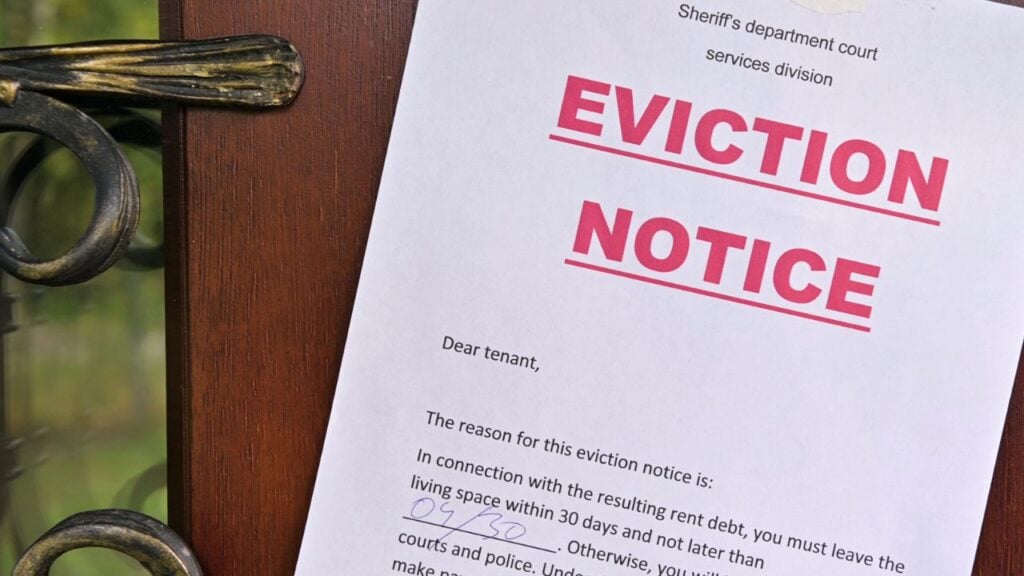
Renting a place after selling the family home feels simple until the lease fine print starts working against you.
From entry rules to fees you didn't know you agreed to, Georgia law hands landlords more room than most tenants expect.
9 Things a Georgia Landlord Can Legally Do That Tenants Never See Coming
13 Yard Sale Mistakes That Cost Georgians the Best Finds

A Saturday yard sale in a Georgia driveway can fund a weekend or waste one, depending on a few small moves.
Price it wrong or open late, and the good stuff walks off before you've finished your coffee.
